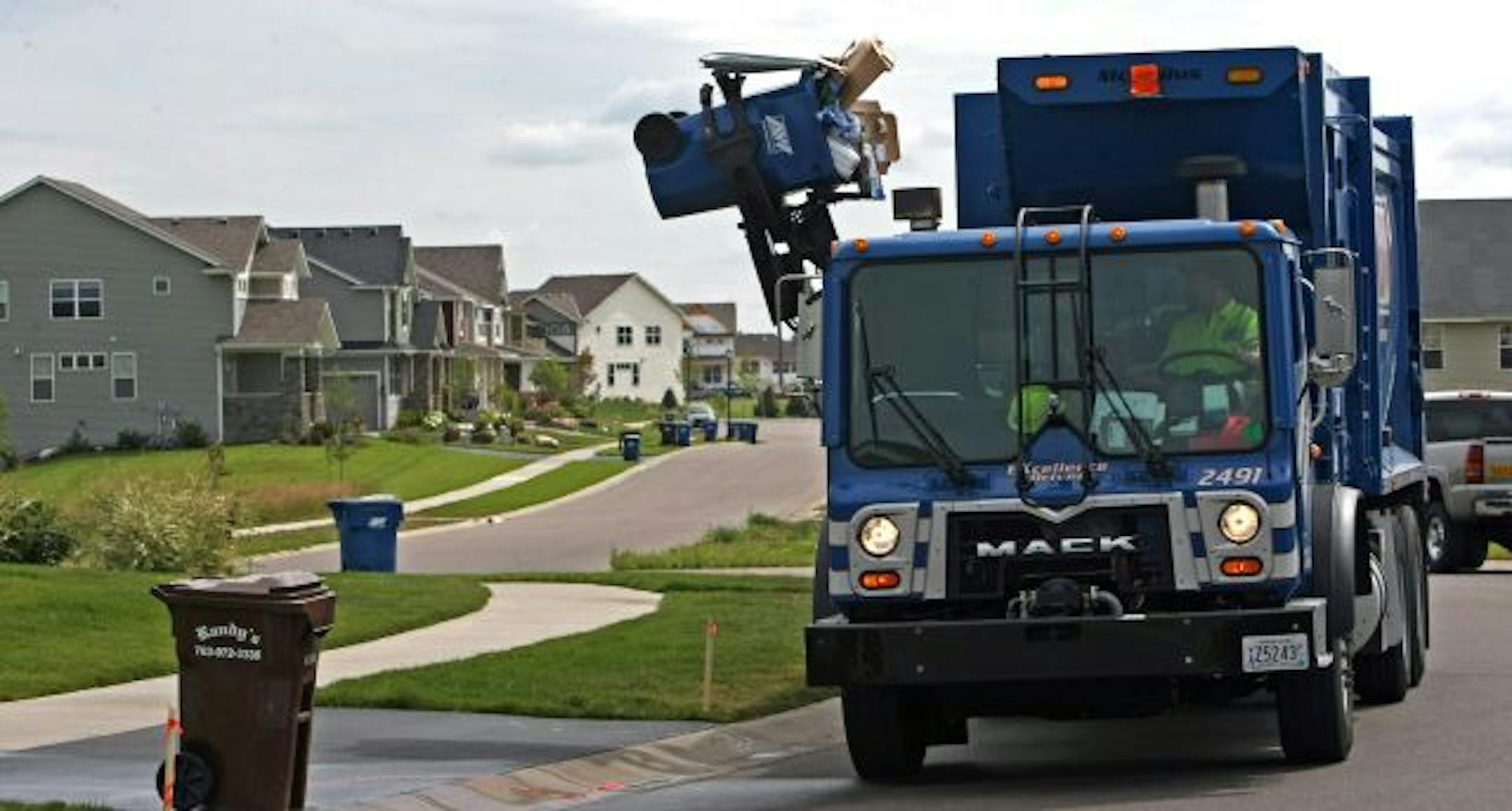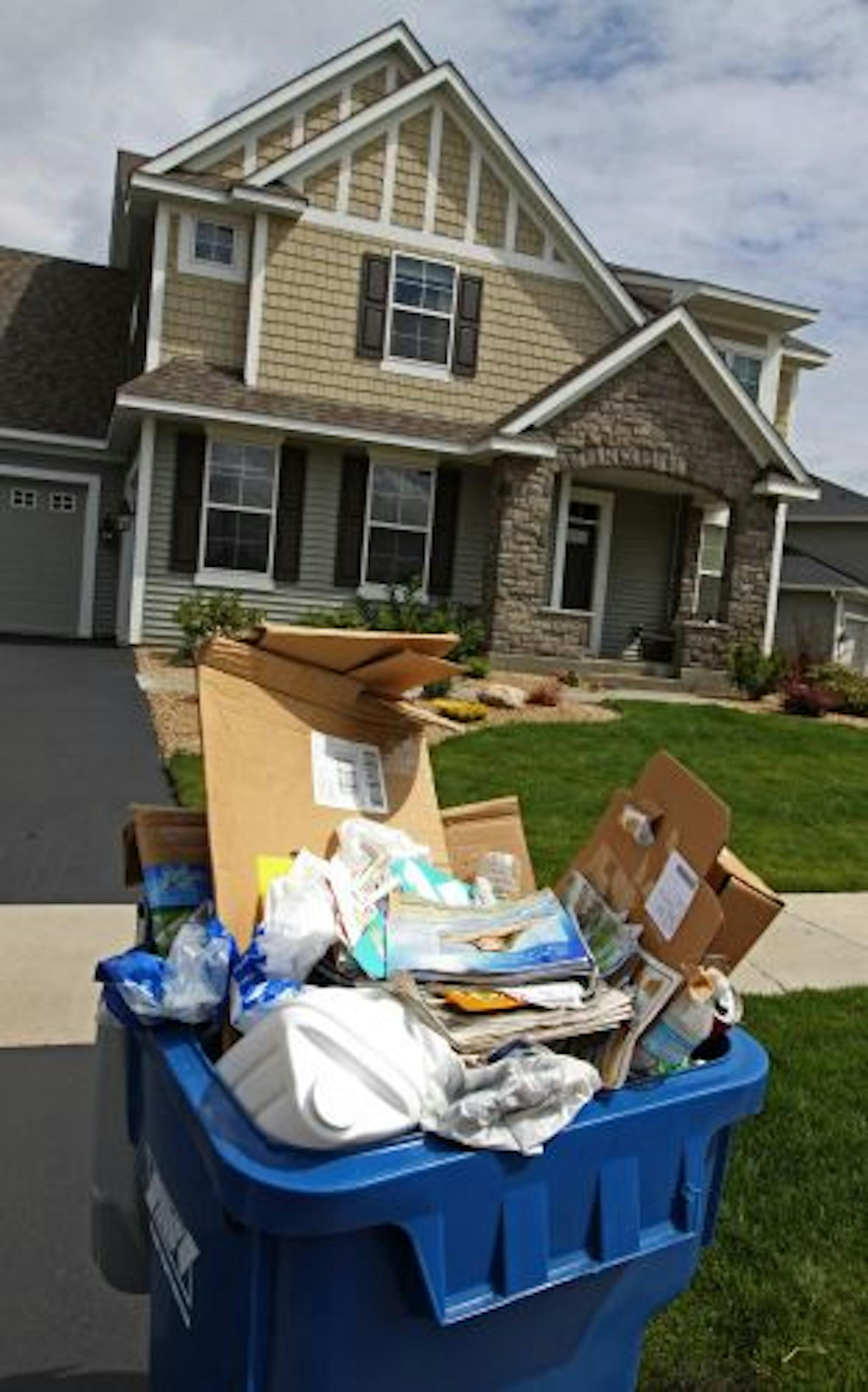
Here's one barometer of the recession that doesn't come right to mind: Garbage. Or recycling.
Both have changed, according to Twin Cities experts in the field, and they link the shift to the economic downturn.
According to the people who monitor our waste, we've been sending less to the landfill and the incinerator, a result of buying less stuff. While recycling participation has held steady, they say, tonnage is down because what we're recycling has changed: less paper (newspapers, advertising circulars and packaging from the stuff we're not buying) and more of the detritus of a simpler life: containers from food, beverages and other staples.
Aside from being a sign of shrunken spending, the changes mean less energy spent hauling and processing garbage, more landfill space available and less environmental impact from mining and processing virgin materials.
Haulers, meanwhile, are feeling the pain of less product and lower prices, but they're making adjustments to weather the storm, just like everyone else. It's not clear, yet, how changes in the industry will affect Minnesotans' pocketbooks.
Paul Kroening, supervising environmentalist at Hennepin County Environmental Services, is one of those who peg the changes to the economy.
A series of monthly drops in refuse delivery to Hennepin County facilities started in November 2007, just before the downturn began. From the first half of 2007 to the first half of this year, deliveries of solid waste to the county refuse burner and landfills fell by about 15 percent, Kroening said.
"Clearly, the economy was resulting in less generation of waste," he said.