

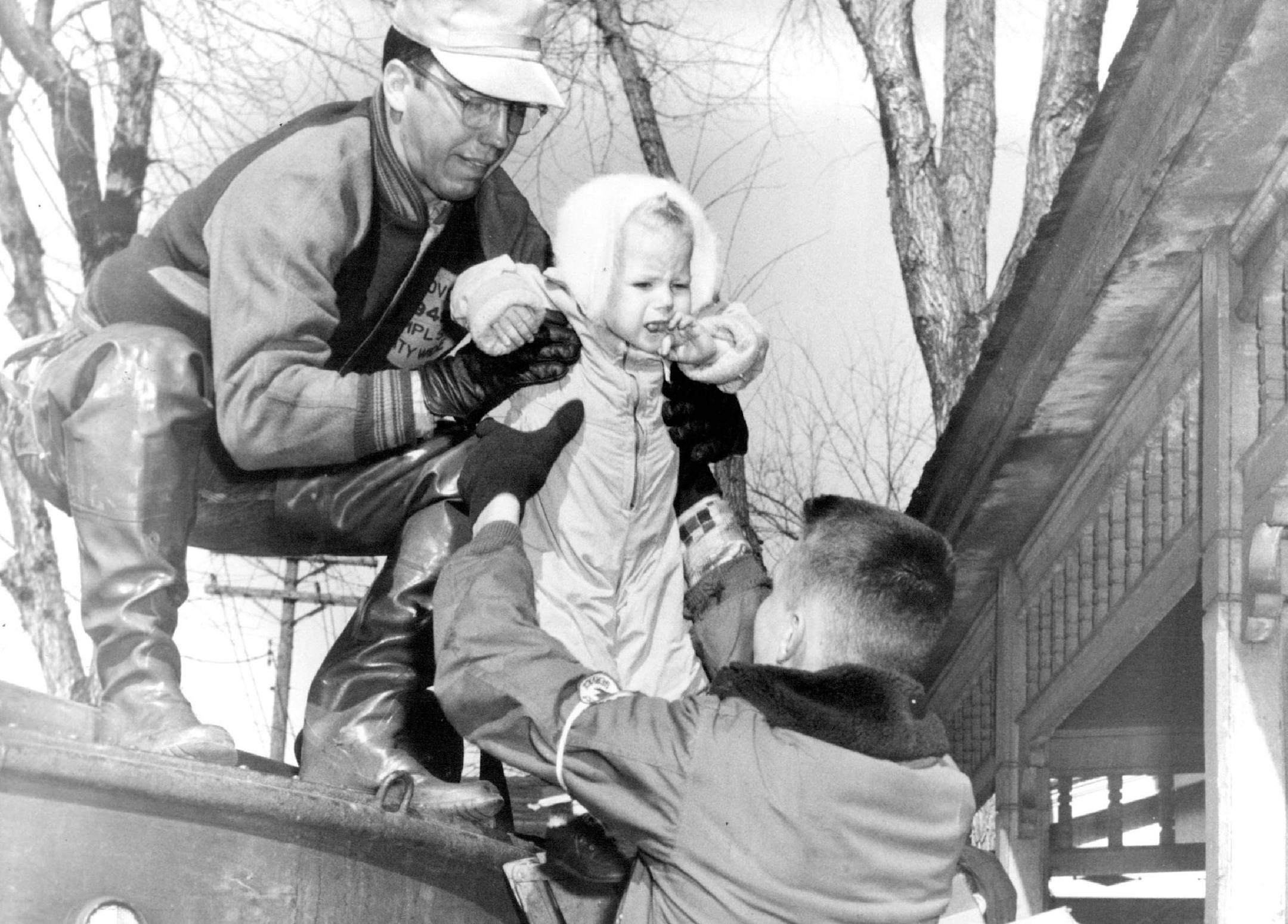
The radio crackled with an urgent message for the exhausted volunteer rescuers aboard a Red Cross amphibious duck boat.
"Go to 56 West Fairfield," the dispatcher barked. "Nine kids trapped upstairs."
The volunteers had been plucking flood victims to safety since 3 a.m. along the swollen Mississippi River in St. Paul. It was April 1952, and the melt from winter's snow had combined with spring rains on frozen turf to plunge 2 square miles of the city under water, breaching more than 1,200 homes.
As the rescue boat skimmed across the floodwaters soaking the West Side Flats, the Minneapolis Tribune reported, "The row of two-story wooden houses looked deserted. But in one window, rescuers could see small faces."
One of those faces belonged to 6-year-old Michael Kluznik. He's now a retired teacher living in Mendota Heights, and his flood memories from 68 years ago offer both a child-eye's view of hard times and a lesson about resiliency that he hopes will resonate in 2020.
At the time, Kluznik said, he thought the flood a great adventure "with echoes of Tom Sawyer and Huckleberry Finn finding adventure on the river."
The duck boat delivered young Michael, his widowed mother, Ruth, and his three siblings to the Wabasha Street Bridge, along with five children from next door Ruth had been watching. A photo of Kluznik's 1-year-old sister, Carol — passed between rescuers by the armpits beneath a furry winter bonnet — ran on the front page of the Tribune on April 15, 1952.
But the crisis was far from over for the Kluzniks, residents of a hardscrabble, diverse community that called the Flats home across the Mississippi from downtown St. Paul.


