2:28
2:28Last month, at age 82, Bryan Moon led one last adventure into the jungle in search of America's missing soldiers.
Moon has spent the last 20 years wading through New Guinea streams, being chased by warring native tribes and fleeing gunfire from Italian mobsters -- all while tracking down crash sites of World War II airmen missing in action.
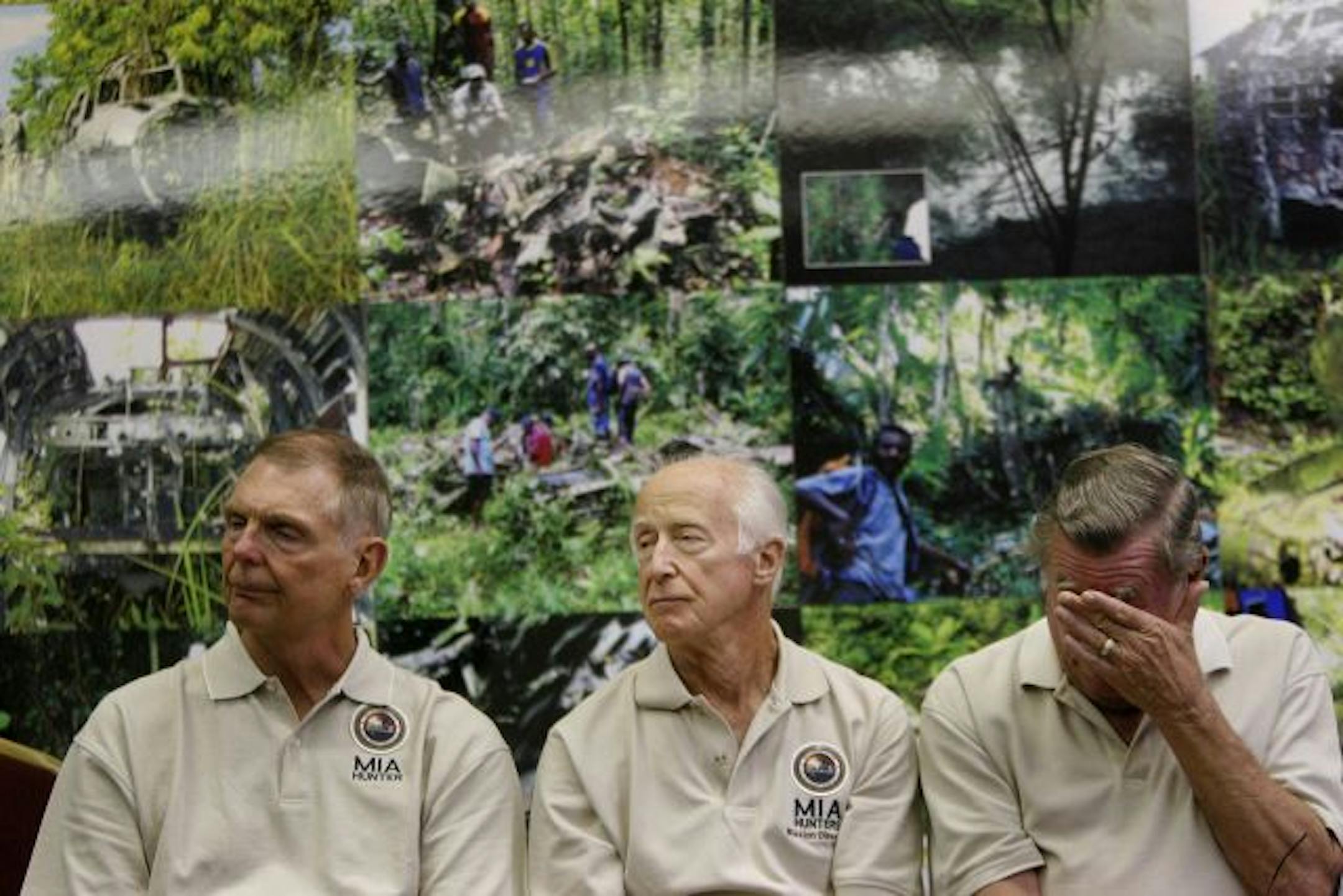
Moon, through his nonprofit MIA Hunters, led 32 volunteers, including 25 from Minnesota, on a search for crash sites and closure for missing soldiers' families. The group was the largest such U.S. civilian mission ever.
Using firsthand accounts from villagers and pilots' families, they said they found 50 possible sites of downed American pilots. That information, turned over to the U.S. government, could help answer questions about what happened to 250 or more lost airmen.
At a press conference on Monday at a Bloomington hotel, Richard Carroll, an 89-year-old WWII veteran who still has a German bullet lodged in his heart, thanked the volunteers for searching for his fellow soldiers. He was shot down and captured in Hungary in 1944 and was considered MIA for six months.
"Every POW was once an MIA," said a tearful Carroll, who lives in Eagan. "You can't imagine the feeling that I have today, how to express my thanks to you people."
A passion for the missing
Moon, a retired Northwest Airlines vice president, found his passion for MIAs through his curiosity about planes.