

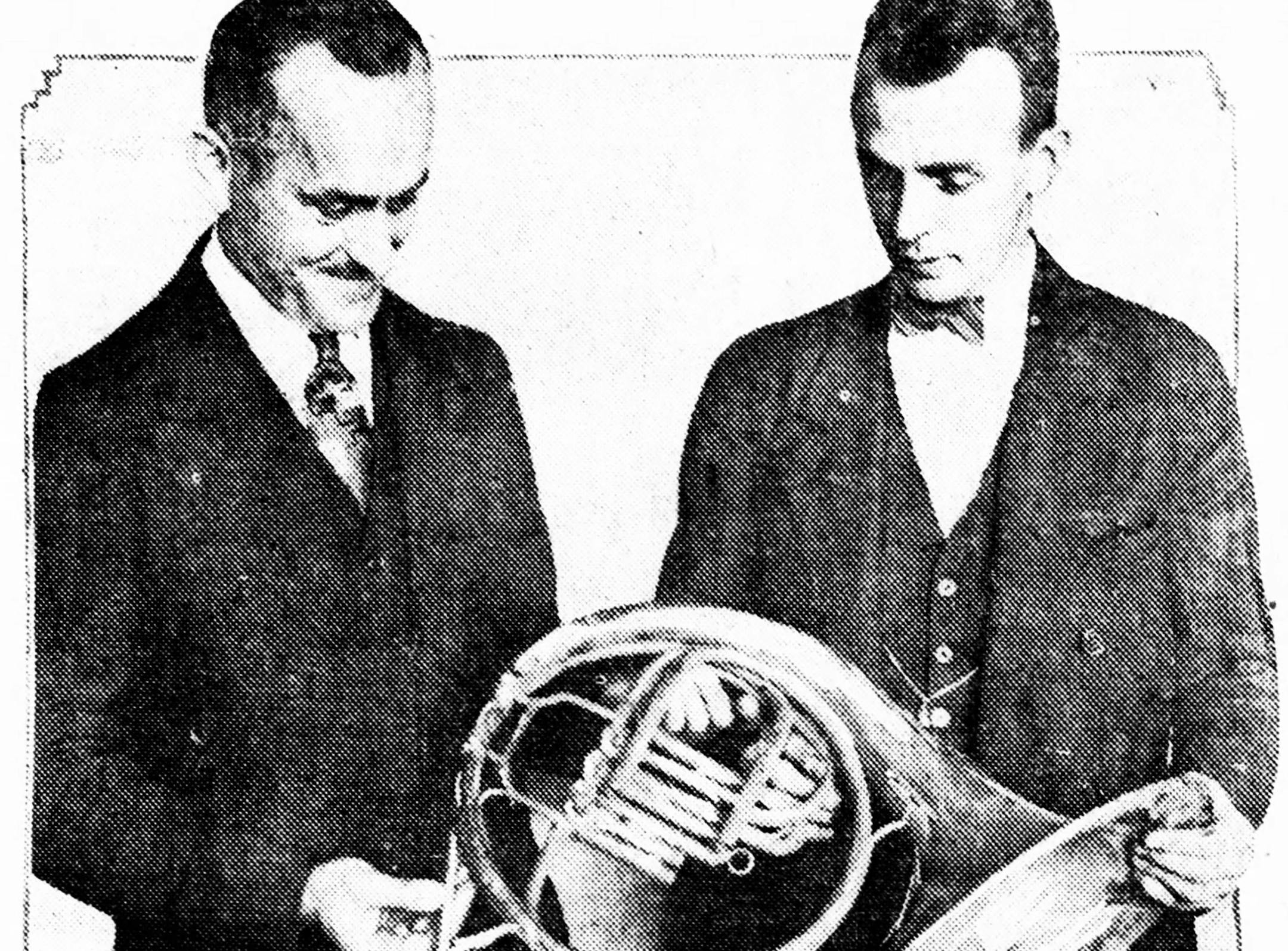
With all its brass curves, a lost French horn wound up in what the 1927 Minneapolis Daily Star called "the center of one of the most amazing coincidents …"
Wilhelm Muelbe and Fred Keller were born nearly seven years and 4,300 miles apart in the late-1800s. They wound up fighting — and playing in military bands — on opposite sides of World War I a century ago.
Muelbe, a German musician born in Rostock in 1888, gave up his chair with the famous Grand Opera orchestra in Cologne to fight with the Germans along the Russian and Western fronts from 1914 to 1918. He survived unscathed, although a bullet once pierced his knapsack.
Keller was born in Minneapolis in 1895, the son of a German immigrant father and Wisconsin mother. Census rolls show Fred as a newspaper circulation manager in 1930, a leather salesman in 1940 and an ammunition maker in New Brighton by 1942.
Back in 1918, Keller was a member of the band connected with the Army's 151st field artillery battery made up largely of Minneapolis men. They went on the offensive near Saint-Mihiel in northeastern France.
During five hellacious days in mid-September, American forces deployed one of their most audacious combat operations, using war planes for the first time and aggressive tank assaults under the command of young Col. George Patton, who would become famous in the next world war. The victory at Saint-Mihiel came at high cost: 7,000 American casualties, but more than 10,000 Germans taken prisoner.
"The first few shells of the great drive came over," Muelbe later recalled, "and the German army was declared to be in a state of 'high alarm.' "
With the terrain pocked with shell craters, the German retreat was cut off. "Then came the zero hour," Muelbe said, "and the first waves of American troops moved ahead against the German trenches."


