

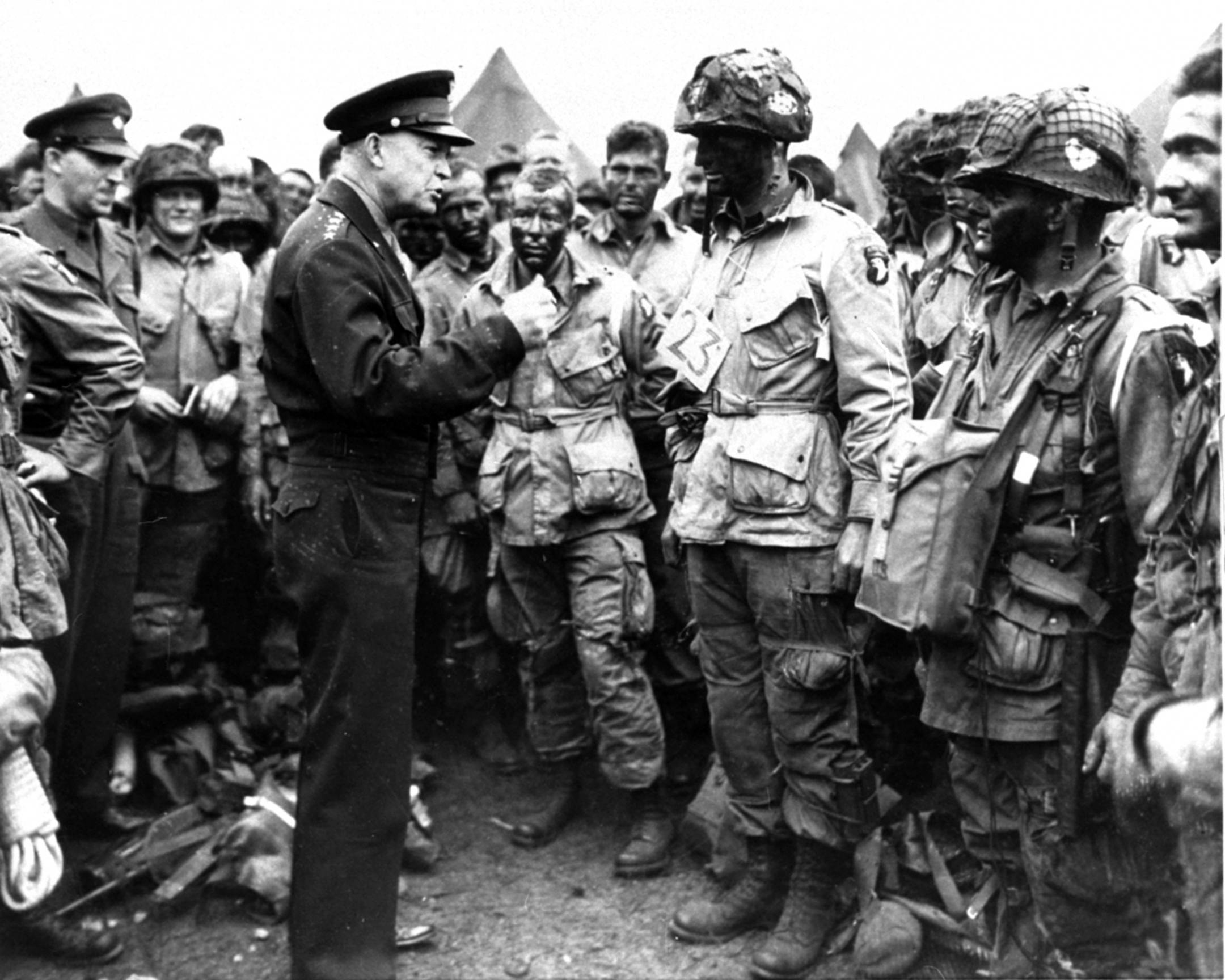
In the past several weeks, following tidal waves of criticism directed at the Obama administration's handling of the Ukraine crisis, supporters have risen up to defend the president, including James Traub in Foreign Policy and Fareed Zakaria in the Washington Post. There is a good deal to be said for their point of view; Putin's cold power politics is driving him, not Obama's past errors, and the administration has taken steps not unlike those of the Bush administration in the 2008 Georgia crisis. But both Traub and Zakaria go further, comparing the president's overall approach approvingly to that of President Dwight Eisenhower.
There are similarities, but the differences are significant. Nonetheless, Traub and Zakaria do a service by sketching a direction this administration could take in "Ike's footsteps," as the administration must react further to Putin's running over the objections of the United States, Europe and almost the entire U.N. Security Council in his goal to annex Crimea.
What links the two administrations, almost 60 years apart, is a reluctance to get bogged down in significant ground wars for uncertain ends. Eisenhower refused to get involved in any of our European allies' colonialist adventures, be it Indochina, Suez, or Algeria. Wisely, given the correlation of forces, despite much criticism he did not aid the Hungarians in 1956 or the East Berliners in 1953. Likewise, we can see in this President Obama's reluctance to continue indefinitely armed nation-building in Iraq or Afghanistan, or to put boots on the ground in Syria.
But Zakaria and Traub misconstrue Eisenhower's extraordinary power politics activism, albeit without deployment of large-scale American ground troops to new hotspots in Eurasia or Latin America. Eisenhower ended the Korean War while ensuring South Korea remained independent, both by committing that U.S. forces would remain on the peninsula and by sticking to a line of tough rhetoric — including references to possible use of nuclear weapons. His policy of threatening nuclear strikes, naval deployments, and the delivery of advanced weapons to the Nationalist Chinese between 1954 and 1958 led to the military defeat of Beijing in the Quemoy and Matsu islands. Eisenhower put combat troops ashore in Beirut in 1958, sent advisers to South Vietnam, and used the CIA and surrogates against unfriendly regimes in Iran, Guatemala, and Cuba. While "ending wars" (not starting new ones) was important to Eisenhower, he did not give the impression, as we have seen at times with the current administration, that this was his only goal.
Understanding the rationale for Eisenhower's actions requires a glance back at Cold War strategy. The original formulation by State Department official George Kennan was focused on containment and deterrence. But the formal U.S. government plan for the Cold War, NSC-68, was more ambiguous, adopting Kennan's strategy but also citing the possibility of offensive military action and rollback. The latter was applied with disastrous consequences when the United States marched into North Korea in the fall of 1950 after liberating South Korea, provoking Chinese intervention, a U.S. retreat from the North, and 31 more months of war. Nevertheless, rollback reemerged as the foreign policy doctrine of the 1952 Eisenhower campaign, particularly associated with Secretary of State John Foster Dulles.
But it wasn't the case with his boss, President Eisenhower, who became the greatest of Kennan's pupils. Eisenhower did not seek to challenge territory in Soviet hands, including Berlin or Hungary, but was relentless in pushing back Communist forays or even the rise of pro-Communist forces on the U.S. side of the line. While not completely eschewing "boots on the ground" (e.g., Lebanon) Eisenhower generally worked with "economy of force" action through surrogates and allies, backed by CIA covert ops, arms deliveries, advisory teams, and nuclear threats. While some of his push-backs ultimately failed in Cuba and Vietnam, and others in Iran and Guatemala were morally questionable, the overall effect of his policy was a worldwide alliance system whose member states — and their foes — knew that Washington had their back.
In the Obama administration, while some specific foreign-policy decisions can be justified as ending or avoiding quagmires, the overall effect has been to place that alliance system in question.
This is thus a lesson the Obama administration still is learning. Some of its assessments on the Ukraine crisis seem based on a "those on the wrong side of history will lose in the end" attitude. Traub attributes the same thought to Eisenhower: As he writes, "1/8President Eisenhower3/8 felt confident that, in the end, the Soviets would not dance on the grave of the West." Perhaps, but Ike didn't just sit back and await this happy state. Eisenhower knew a Soviet Union that was gaining ground internationally would undermine the West's alliance system. Likewise today, our system cannot simply be assumed to eventually triumph on automatic pilot — regardless of the challenges.


