

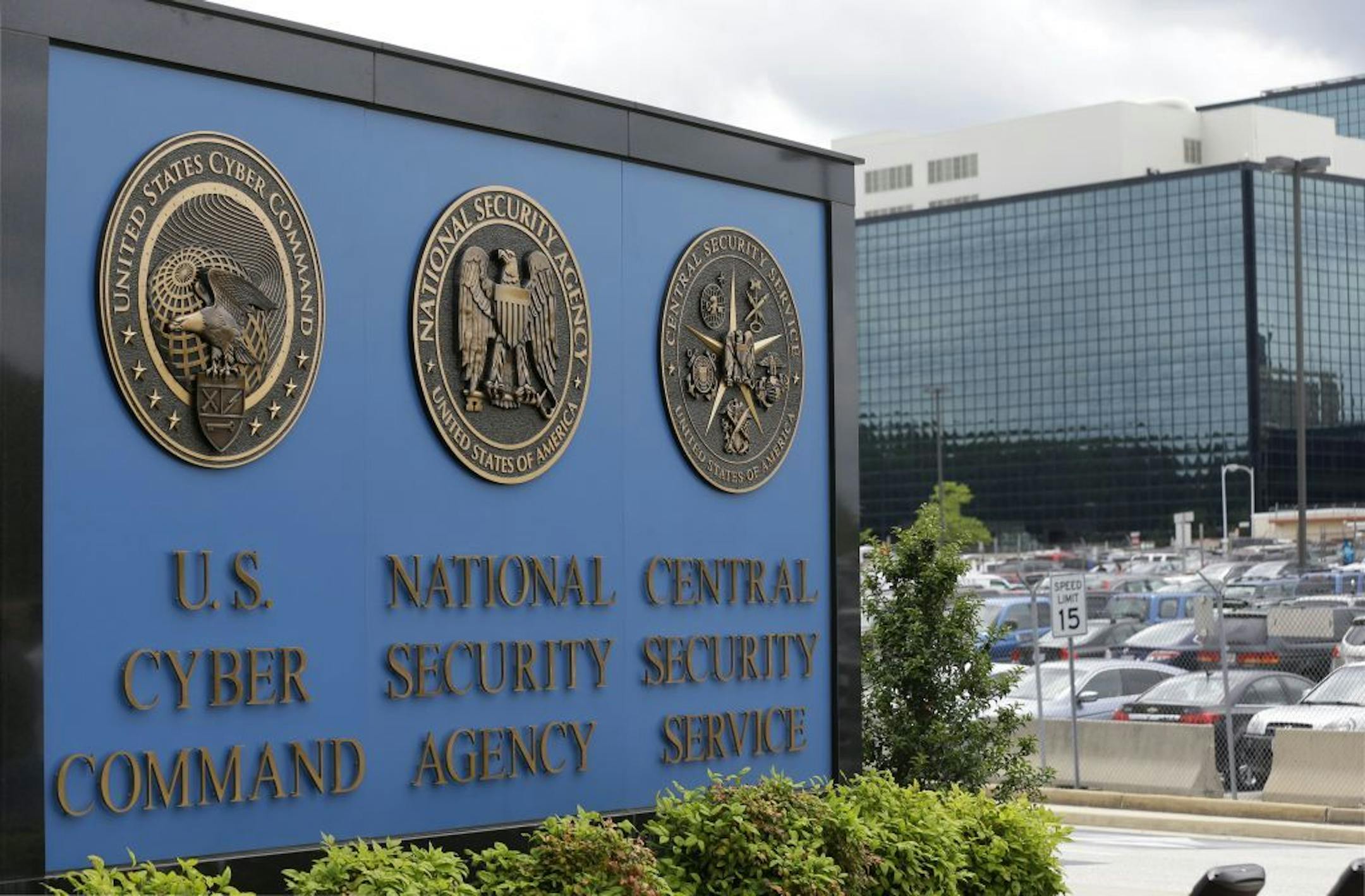
Footnote 14 should scare every American.
The footnote is contained in the just-declassified 2011 opinion by U.S. District Judge John Bates, then the chief judge of the Foreign Intelligence Surveillance Court.
In the ruling, Bates found that the government had been sweeping up e-mails before receiving court approval in 2008 and even after that was illegally collecting "tens of thousands of wholly domestic communications."
That's not the really scary part. This is: "The court is troubled that the government's revelations … mark the third instance in less than three years in which the government has disclosed a substantial misrepresentation regarding the scope of a major collection program."
Bates cited a 2009 finding that the court's approval of the National Security Agency's telephone records program was premised on "a flawed depiction" of how it uses metadata, a "misperception … buttressed by repeated inaccurate statements made in the government's submissions, and despite a government-devised and court-mandated oversight regime.
"Contrary to the government's repeated assurances, NSA had been routinely running queries of the metadata using querying terms that did not meet the required standard for querying. The court concluded that this requirement had been 'so frequently and systemically violated that it can fairly be said that this critical element of the overall … regime has never functioned effectively.' "
This is followed by two full paragraphs of redactions. We can only imagine what that episode entailed.
To judge the significance of Bates' footnote, it helps to know something about the judge. This is no wild-eyed liberal. He spent almost two decades in the U.S. Attorney's Office in Washington. He served as deputy to Independent Counsel Kenneth Starr during the investigation of President Bill Clinton. He was named to the bench by George W. Bush.


