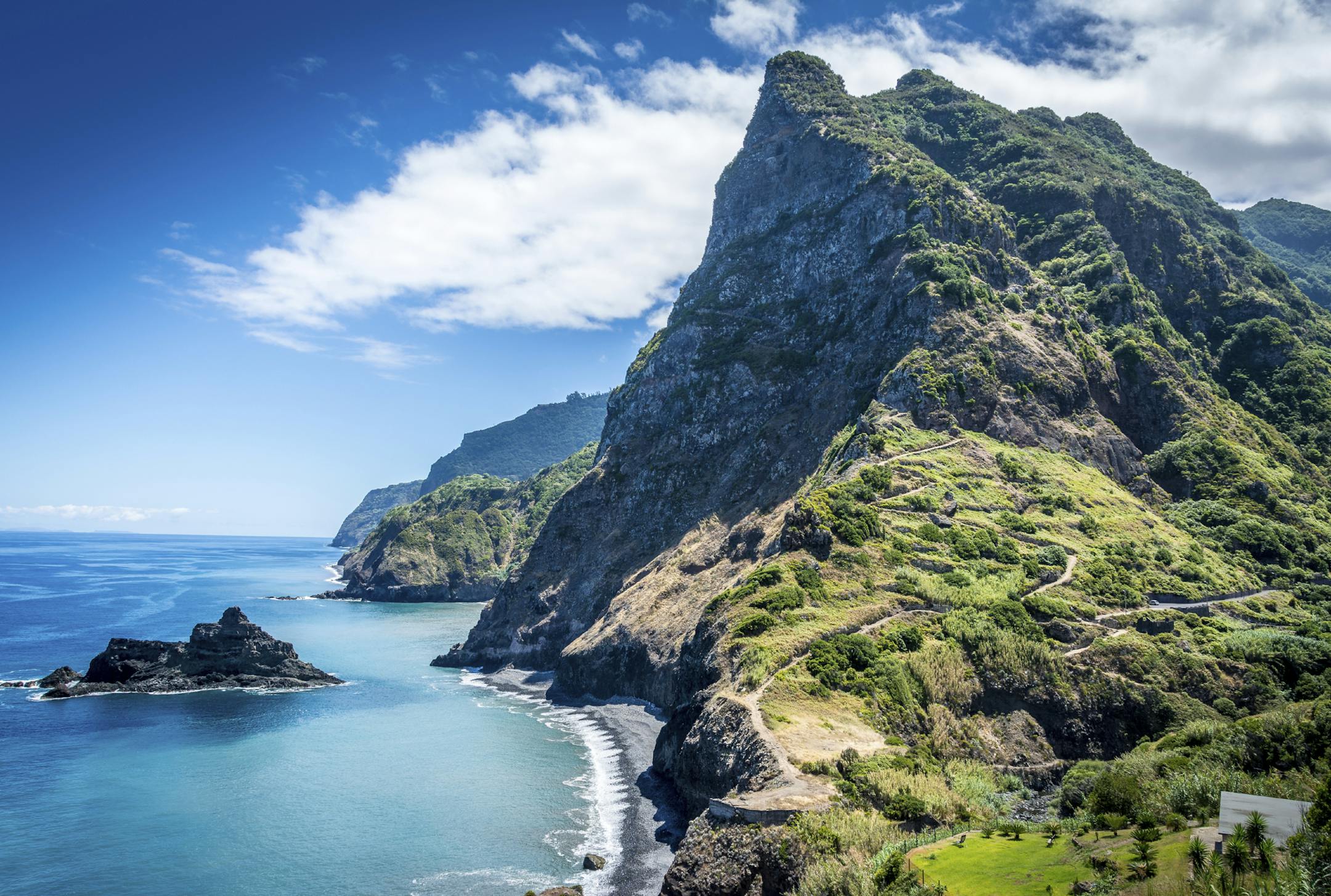
Feet propped on a balcony rail, I'm gazing at a small vineyard lined with palms, then out over the edge of a thousand-foot seacliff. And on the far Atlantic horizon, a sudden apparition: probing forelegs, followed by a colossal spider.
That was just optics. The spider, a small and ordinary one, had suddenly crawled onto the top rail at eye level, a few inches away. But here on the island of Madeira, west of North Africa and Europe and a long way from either, the traveler's musing question applies to both me and the spider: How did we get here?
Each of the hundreds of species of birds, plants and insects within the rich mantle of rain forest that greens Madeira is a miraculous wanderer. They have drifted in on the wind, or on floating debris, over epic spans of time and ocean, since volcanic convulsions pushed this seamount a mile above the surface, 5 million years ago.
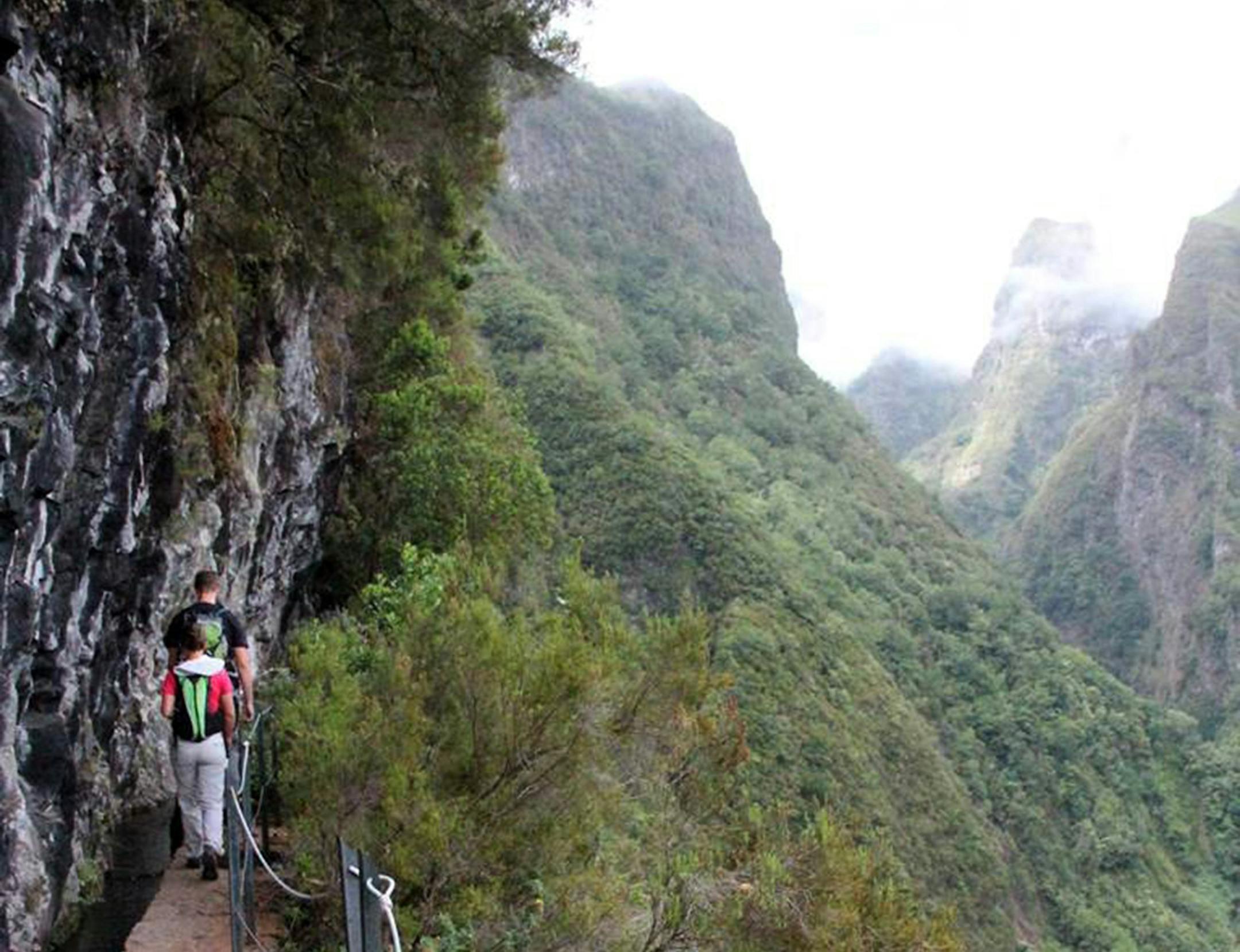
I got here more conventionally, looking for an easy but unfamiliar destination to explore. Madeira, though part of Portugal and only a 90-minute flight from Lisbon, qualifies. It offers some options that may sound zany — a narrated tour in a motorcycle sidecar, for example, or a slaloming ride in an upholstered toboggan, sans snow. The best reason to visit, though, was a week of hiking on remote, high-elevation rain forest paths.
There are a quarter-million permanent residents here now, but Madeira is still in the process of being discovered, at least by Americans. The U.S. accounts for a small fraction of its tourism — most visitors are Europeans. We may figure that with the Caribbean and Hawaii closer by, another tropical island destination would be redundant. But in its venturesome recreations, history and stunning landscape, Madeira is a place quite apart. Its even climate invites travelers year-round. We had come through Madrid and its string of sweltering days in the high 90s prior to our arrival here in late July. Madeira's high 70s occasionally tipped into the low 80s.
This island was among the first encounters of the agile Portuguese when their Age of Discovery gathered conquests in the 1400s.
It was a rarity: a big green fertile island, completely uninhabited. By people, anyway.
On the much smaller neighboring island of Porto Santo, settlers let loose a litter of rabbits to multiply, and they soon ate everything but the geology. That island is now a desert that has persisted 500 years.