

Opinion editor's note: Star Tribune Opinion publishes a mix of national and local commentaries online and in print each day. To contribute, click here.
•••
In late 2008, toward the end of my pregnancy with Orli, I interviewed the actor Harvey Fierstein, then starring in "Hairspray." As I made my way through the crowd backstage at the Neil Simon Theater, past cast members and stage managers, hangers-on and well-wishers, Mr. Fierstein caught a glimpse of my belly. "Make way!" he barked, raspily. "This woman is carrying the hopes and dreams of her entire family!" Everyone laughed.
I have thought of that moment often in the bewildering, terrible weeks since Orli's death, at 14. I have thought of how incredibly buoyant I felt, how much anticipation we all seemed to share.
I thought of that night when I added woeful words to my vocabulary. My partner, Ian, and I are, in Hebrew, "av shakul" and "em shakula" — a bereaved father and mother. In English the term "bereaved" feels polite, even sanitized. I needed a word as crushing as the experience. We are parents who have seen a future stolen. To raise a child is to assume you will leave that child first, but we have buried our firstborn. I have tried to process it through other languages. "Estoy de luto" — I am grieving for all that was, and all that could have been. "Je suis en deuil" — I am in mourning.
Some weeks after Orli was born, I took her along with me on a reporting assignment. She began to fuss. "Who are you going to be, girl?" the man I was interviewing cooed at her. "Who are you going to be?" The world then seemed open, awakened by her newness, with that guileless sense that, as my father assured me early on, I need not fear mucking it all up. After all, we had survived as a species.
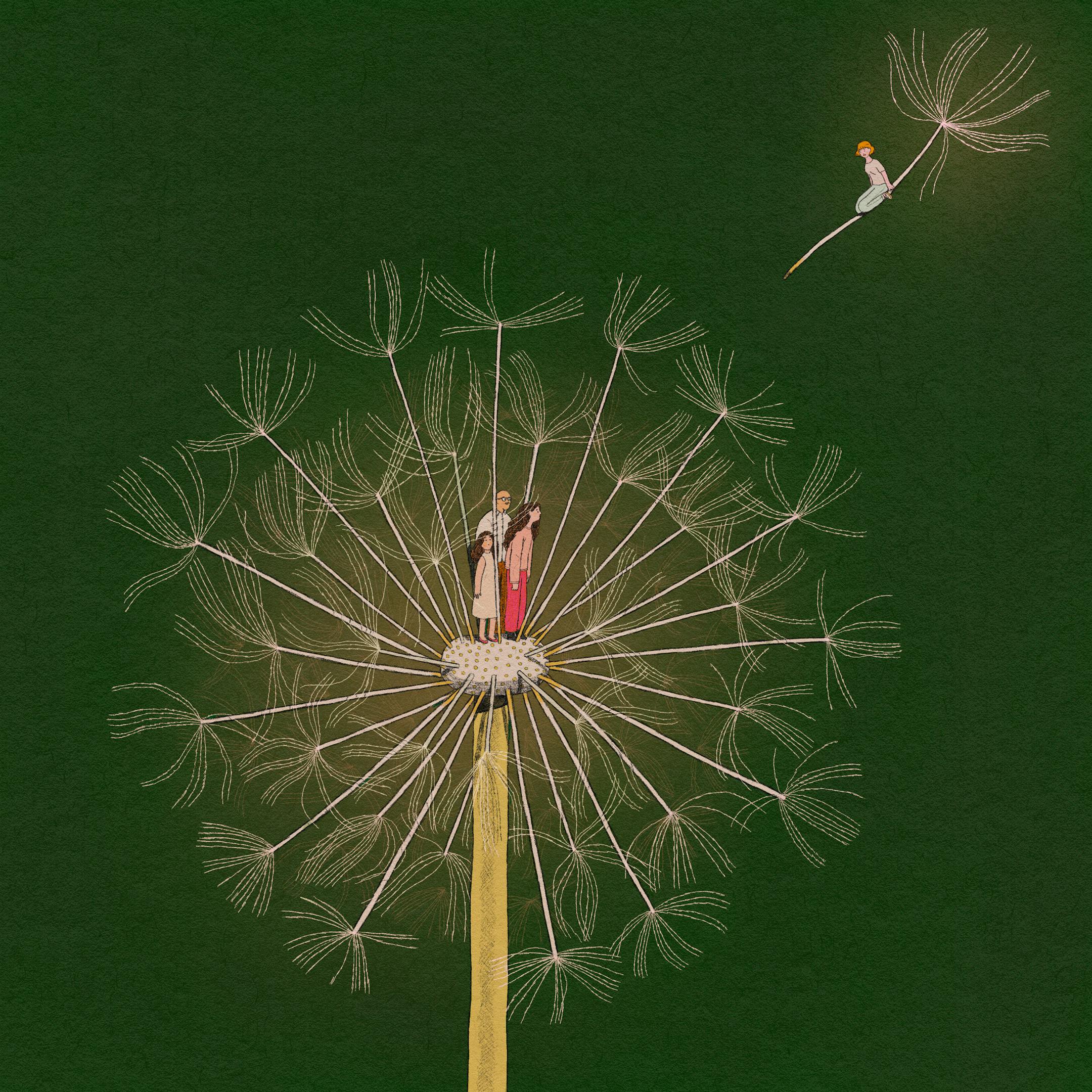
All that potential seemed to bear out, too, in Orli, and then later in her sister, Hana — in their temperaments, in their curiosity and, eventually, in their resilience over three and a half years of terrible illness. Orli's cancer diagnosis didn't warp the wonder they shared; it sharpened it, made it less random. There were no minor experiences once so many hours of so many weeks had been swallowed up by hospital days of leaden time in airless, fluorescent-lit hallways, endless blood draws and treatments that at times seemed to draw more from the era of barbershop medicine than modern science. Joy could be found in a late-night city walk, a streaming series binge, a bowl of great ramen, a round of laughter, a perfect dandelion puff, a shareable tree swing or in unexpectedly adding an extra night to a vacation. Pride came in the hard-won knowledge Orli would impart to others in how to navigate some of the most impossible things a person can face.
I have struggled, since writing a eulogy for my 14-year-old, to use the past tense. How can I apply the past tense to someone so fully present? So fully herself, so fully formed, so insistently alive? When doctors asked her if it was really her wish to continue treatment, she replied, insistently and with exasperation, "Yes! You've given up on me!"


