"King Kamehameha fought lots of battles on this island," said Kahakahi'i, who was sitting cross-legged in the sun, carving what he described as a battle knife, when we stopped to watch him work.
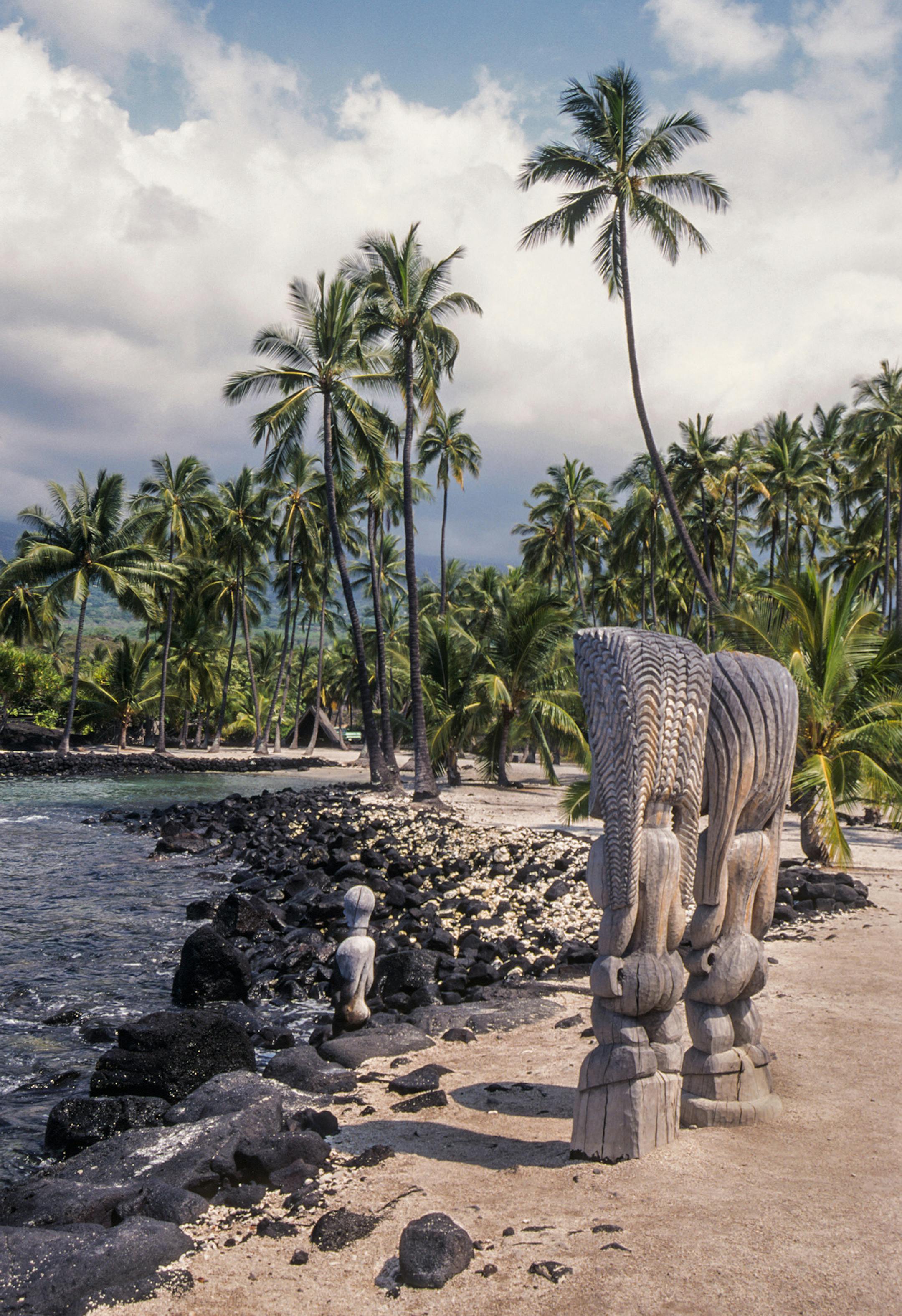
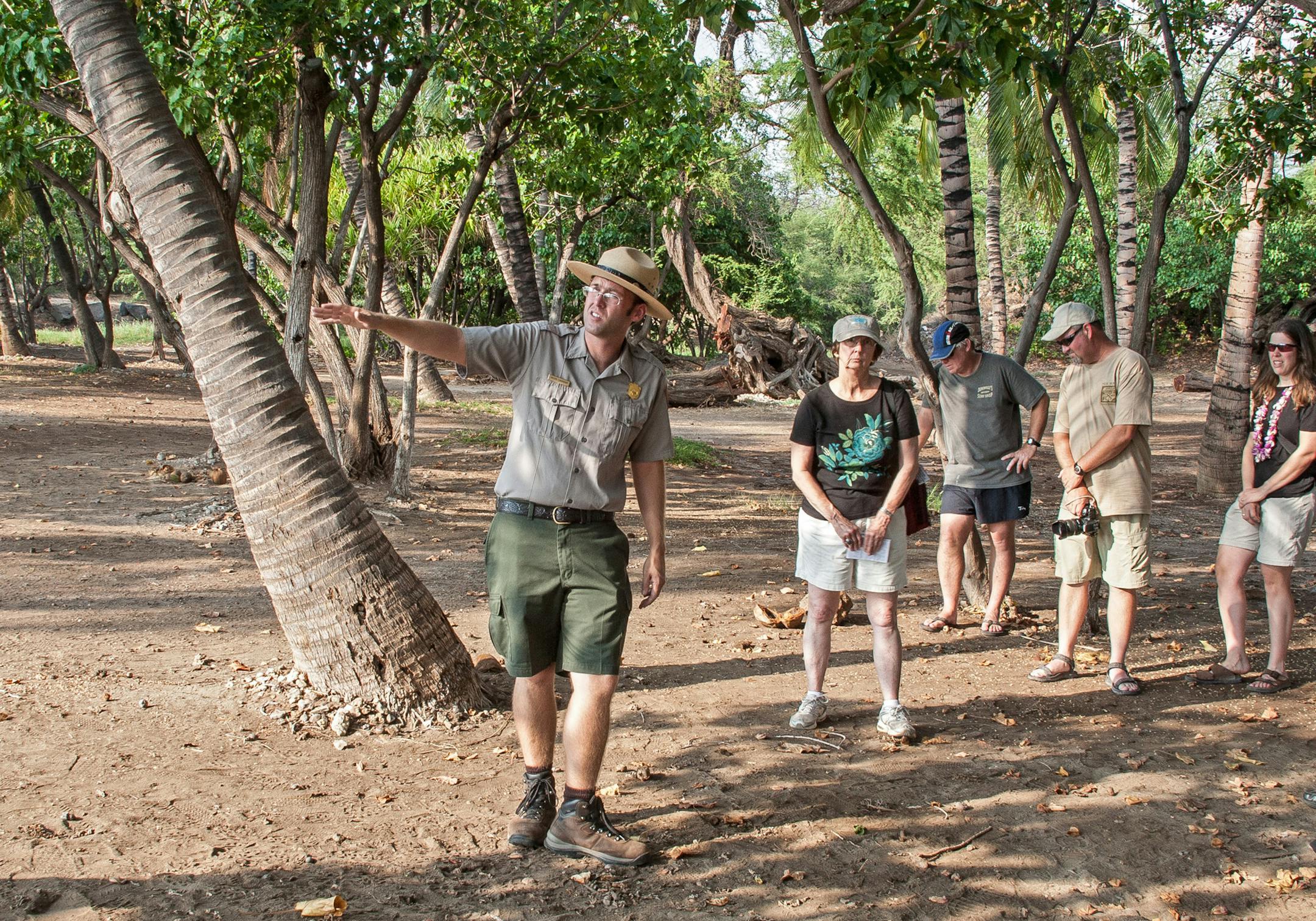
"But there was no fighting here, not in the City of Refuge," said this docent, naked to the waist as a traditional warrior would have been, at the Pu'uhonua o Honaunau National Historic Park, on Hawaii's south Kona Coast.
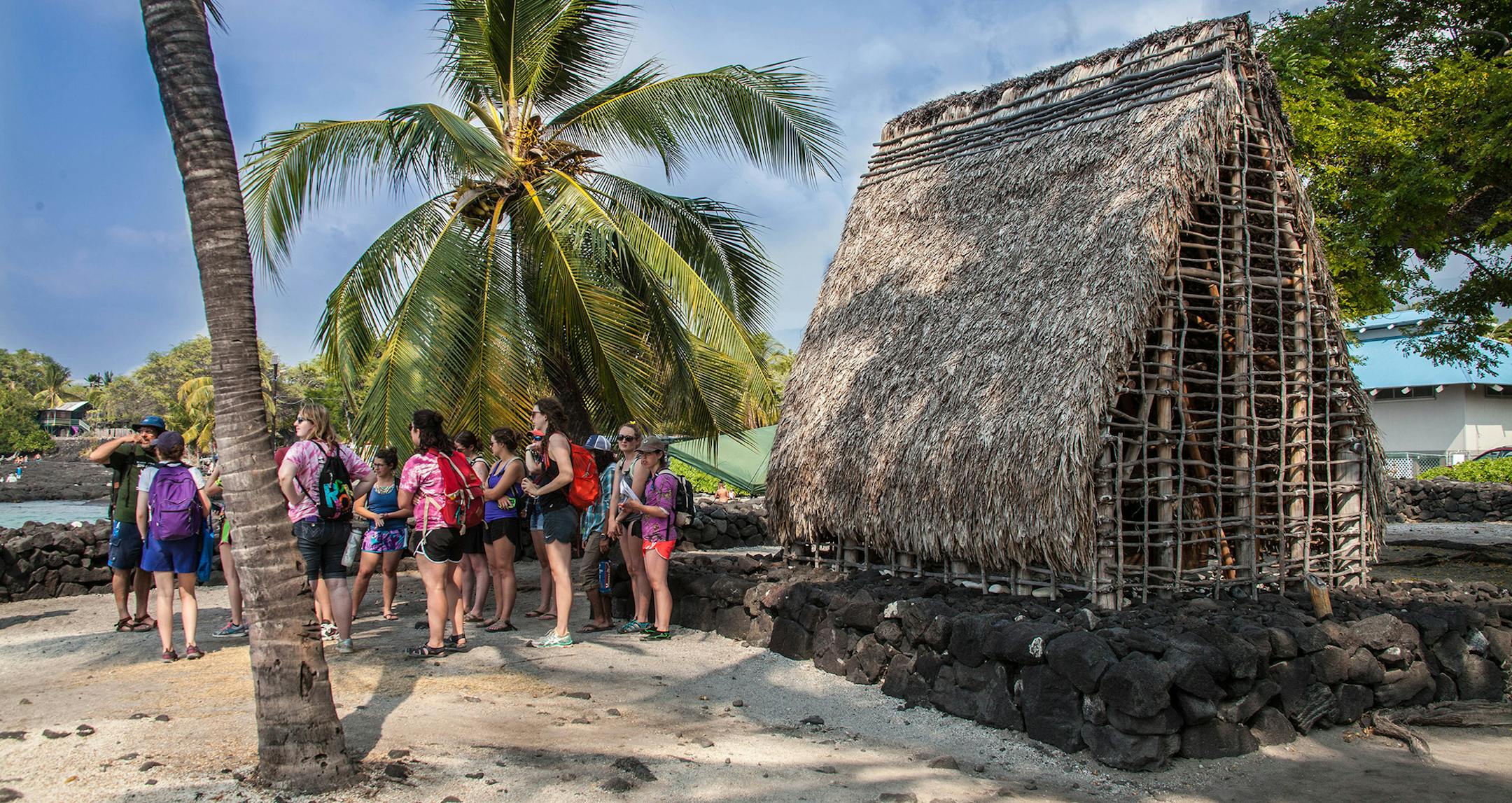
"This was a sacred place, a retreat where kahunas performed secret ceremonies," he explained to a group of visitors from Iowa who crowded around the thatched, Polynesian-style shelter to listen. "The king was a great general. But he came here to pray."
When the talk turns to famous generals, you could make the argument that King Kamehameha I, also called Kamehameha the Great — who conquered the Hawaiian Islands between 1781 and 1810, was every bit as skilled as his better-known contemporary, George Washington.
Unlike Washington, however, Kamehameha the man remains something of a mystery. Though the number of rival chiefs he defeated and the valleys and coastal villages where he pursued each campaign for weeks or months are legion, his reputation rests primarily on oral histories.
Burnished in the glow of the past, he's described today as charismatic, powerful, confident and a fair but autocratic leader. Beyond that, what little we know comes from the few foreign visitors who, after having met him, recorded his commanding presence, courteous hospitality and thoughtful intelligence.
But there's another way to see this remarkable man and the culture and era in which he rose to power. Set aside a day to go where he went, to some of the places, parks and historic sites on the Big Island that mark his evolution from fiery youth to revered leader.
We hadn't expected to trace Kamehameha's footsteps when we flew into Kona International Airport, on the Big Island, and checked into the Courtyard King Kamehameha's Kona Beach Hotel, in Kailua-Kona. The Volcano National Park was first on our agenda.