

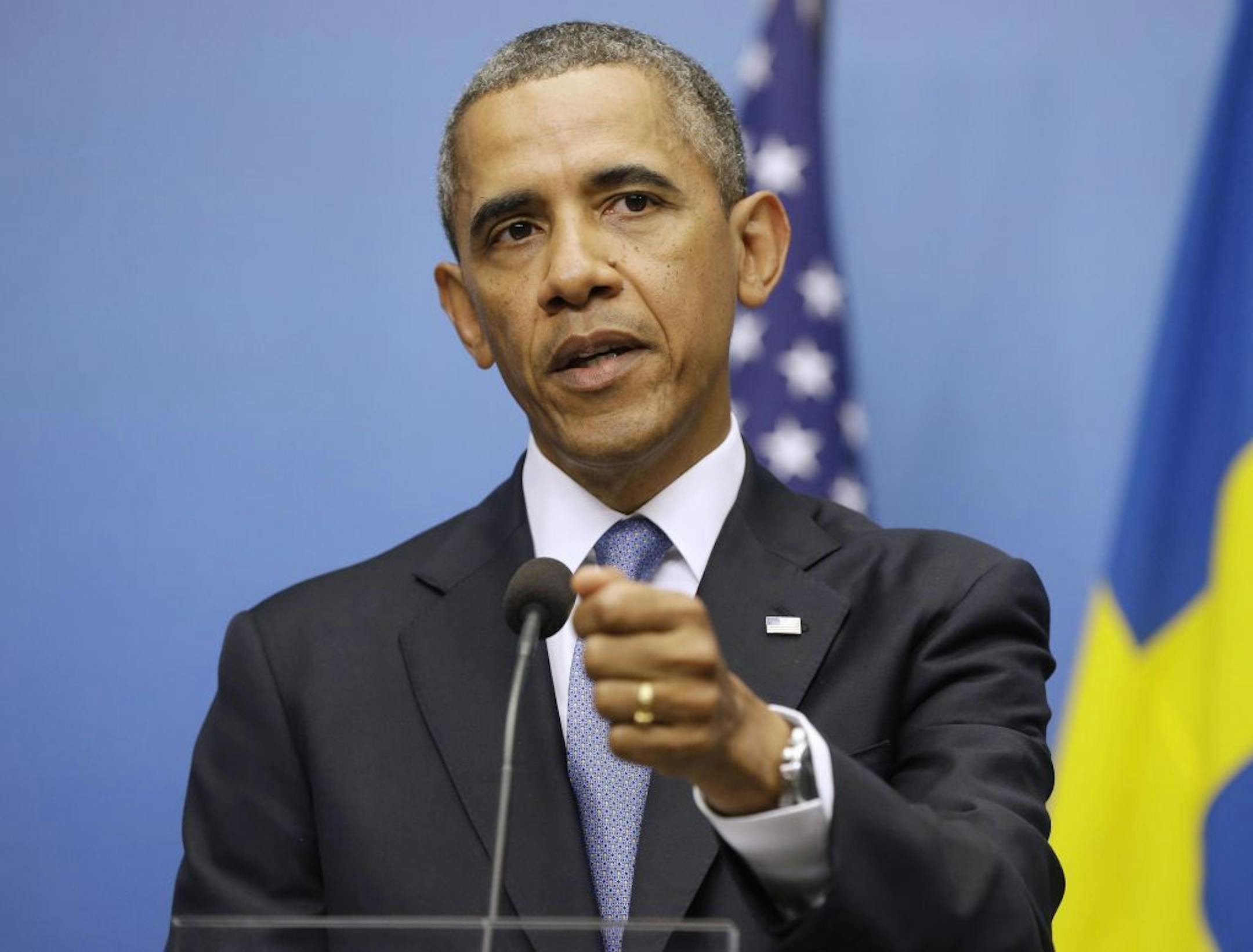
Mirroring America's inward turn, nearly all the public, political and media focus on President Obama's Syria strategy has been about his decision to seek congressional approval for a military response to the use of chemical weapons.
But buried within the president's presentation in the White House Rose Garden last weekend was this statement: "So just as I take this case to Congress, I will also deliver this message to the world. While the U.N. investigation has some time to report on its findings, we will insist that an atrocity committed with chemical weapons is not simply investigated; it must be confronted.
"I don't expect every nation to agree with the decision we have made. Privately we're heard many expressions of support from our friends. But I will ask those who care about the writ of the international community to stand publicly behind our action."
Many of these "friends" will be at this week's G-20 summit in St. Petersburg, Russia. Obama should be careful not to hijack what's mostly an economic confab, but he should privately press for public support from those G-20 leaders present who may only have signaled tacit support.
"International politics in 2013 is messy," said David Shorr, a policy analyst at the Stanley Foundation. Speaking from St. Petersburg, Shorr, a longtime observer of high-level diplomacy, told an editorial writer that the G-20 is a "creature of shared interests" among key economic players in the global economy. But Syria is going to be "topic A" even if it's not on the agenda.
"That gives the president a chance to the extent that he can to build consensus and get more of the world's leaders on the same page in the hopes of making Syria ultimately a topic of consensus rather than discord," Shorr said.
Further, Obama should press nations not taking part in the summit, especially those in the Middle East, to clearly clarify their positions. So far, the results are not encouraging. The Arab League, which expelled Syria in 2011, called the alleged attack a "heinous crime" and asked the U.N. Security Council to take action.
But every Arab leader knows that Russian and Chinese leaders have self-servingly and immorally blocked the Security Council from coalescing around corrective measures. This diplomatic protection racket has enabled Syrian President Bashar Assad to wage a vicious civil war that has resulted in the more than 100,000 deaths, has forced more than 2 million to flee to neighboring nations and has displaced more than 5 million within the war-torn nation itself.


