Bison run faster than humans, I thought on my morning jog, as I panted down the slope.
They weigh more, too — around 1,400 pounds. One of those beasts could crush me flat and not even notice.
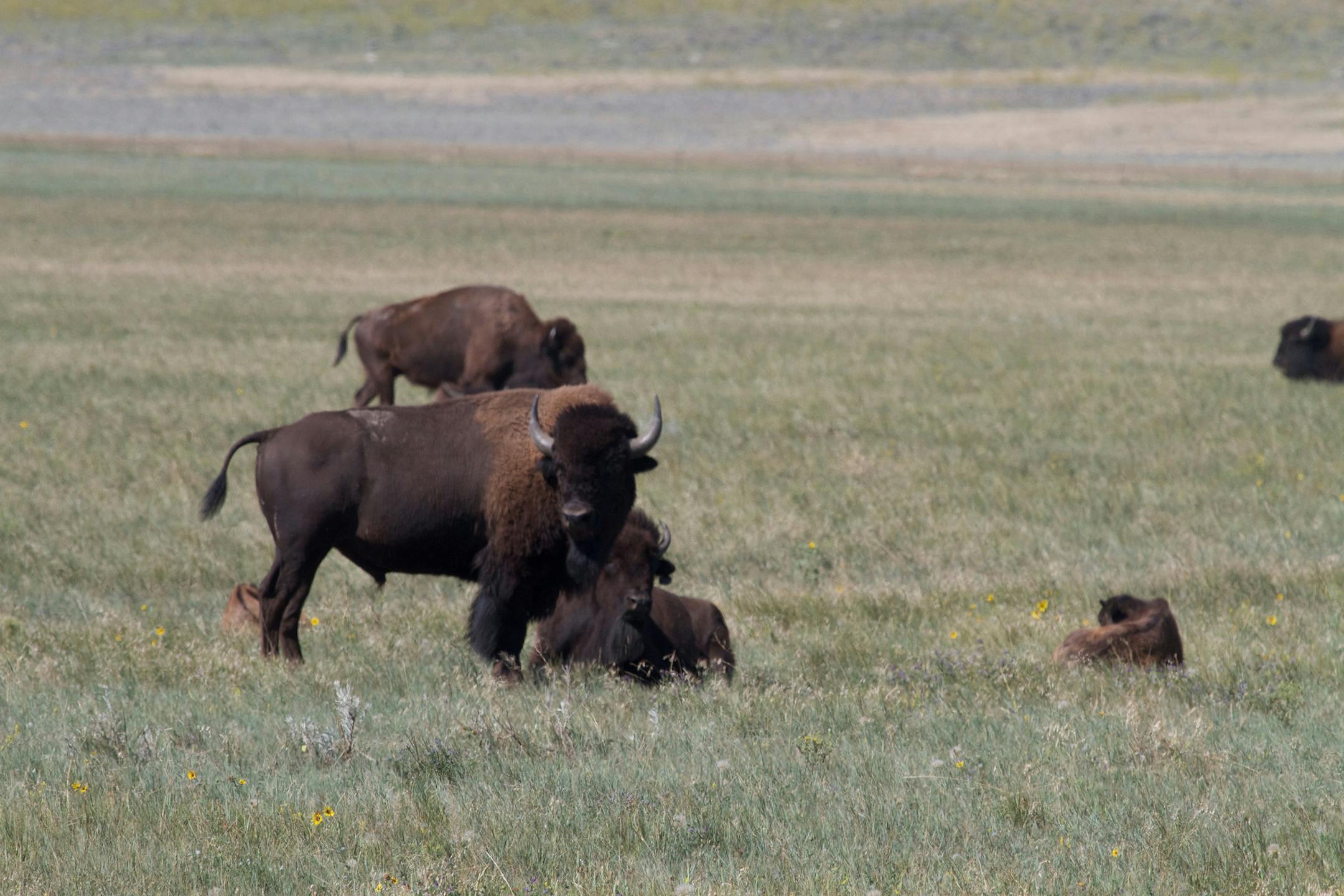
I ran a little distance before looking back at the low ridge, where 50 or 60 bison posed like breathing statues, the morning sun lighting up the smoky exhale of their nostrils. The massive animals showed less interest in me than in the dewy grass around them, but they had surely seen me running, just a few hundred yards away, with nothing between us but the wild, uninterrupted prairie.
There was no shortcut back to camp and no easy way around the herd of buffalo. I would have to wait for them to finish grazing and move onward. I continued my run, leaving the faded trail and plodding across the undefined landscape of dirt, sage and scrub. My eyes watched the busy ground, flexing with ant highways and beetles, jumpy locusts and white butterflies. As I ran, I could hear only my shoes slapping the earth and the squeaky whistle of an unseen Western meadowlark. In every direction, the horizon was wonderfully empty.
It's not easy reaching the middle of nowhere. We flew to Bozeman, Mont., and drove six hours into the infinite grasslands of north-central Montana. Phillips County is one of the least densely populated counties in the U.S., with less than one human per square mile. Our paved road ended in the gold-mining outpost of Zortman, where we turned westward, into the glowing green heart of the reserve. Like so much of Montana, the unbound sky was bold and giant, rolling with storms, then cast with sunbeams and blue. Flippant Americans call this flyover country, but it looks more like America than anywhere else I know — the America of the Sioux and Assiniboine, of Lewis & Clark and Norwegian homesteaders, and the America of virgin prairie and healthy wildlife.
Few places remain where you can witness American bison roaming fenceless in their native habitat. Yellowstone National Park is such a destination, with more than 4 million visitors a year and bumper-to-bison traffic through summer. The American Prairie Reserve is a lesser-known site, a bit more off the beaten path, but utterly immense in its scope and vision.
Like a pioneer patchwork quilt, this nature reserve-in-progress is stitched together from public and private lands, linking the Upper Missouri River Breaks National Monument and Charles M. Russell National Wildlife Refuge and expanding their reach with Bureau of Land Management claims and purchased ranches that culminate in the world's largest protected fence-free prairie.
Returning cultivated land to wilderness is a labor of love that is more often legal and financial than physical. Pulling down rusty barbed wire fences is the easy part. The less glamorous side of prairie conservation involves raising lots of money, purchasing strategic properties, retiring cattle leases, getting local buy-in and navigating the multilayered bureaucracy around land use in the no-longer Wild West.