

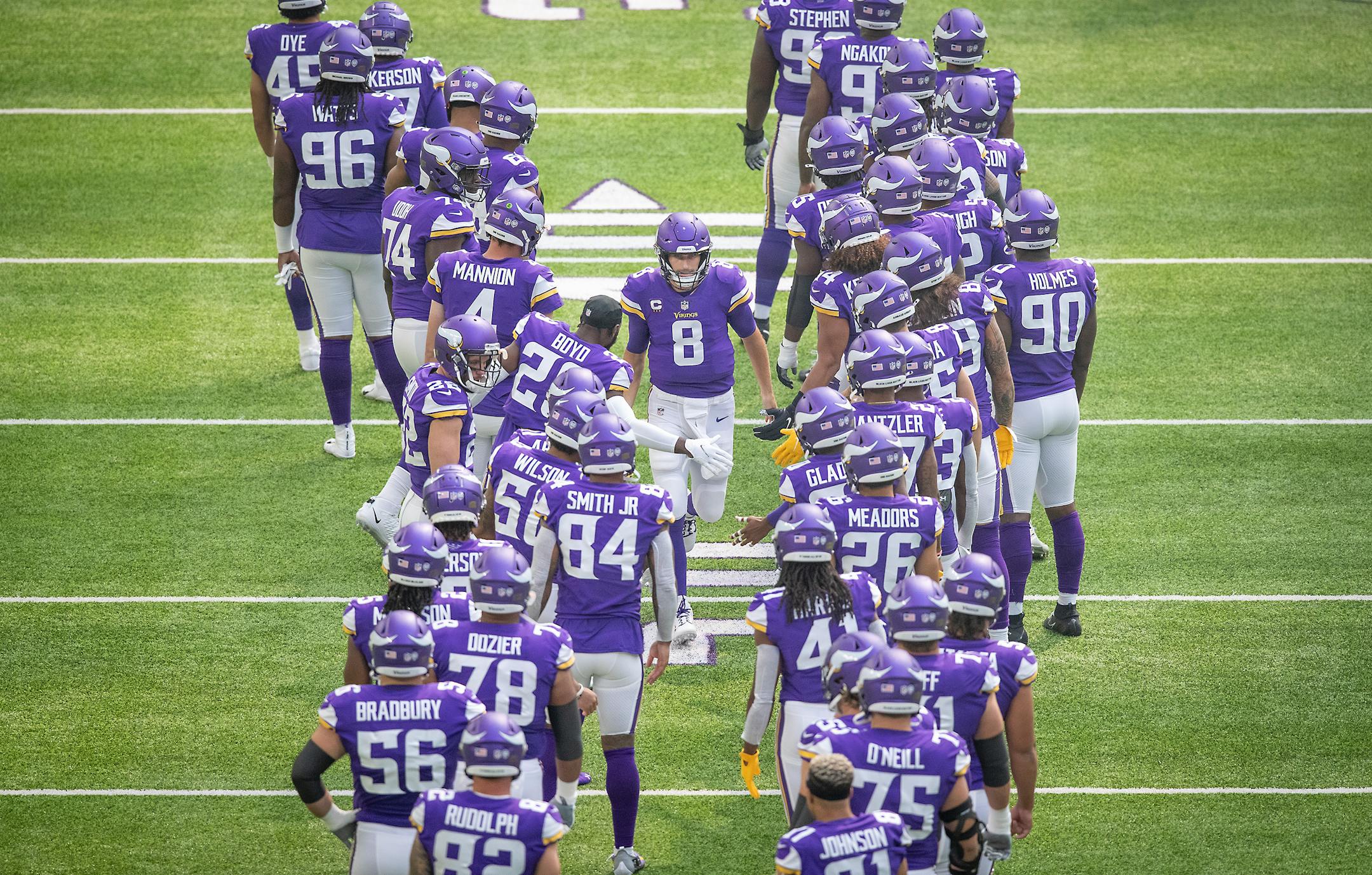
The biggest victory of the NFL's Week 1 happened in the run-up to Week 2: No players were added to the COVID-19 reserve list Monday through Friday, signaling a successful first weekend of travel for teams amid a pandemic.
Outside of a lab contamination that turned up 12 "false positives" on Aug. 23, the Vikings have been without a player on the COVID list since Aug. 13. Strict leaguewide traveling protocols are designed to keep it that way during the team's first road trip of the season for Sunday's game against the Colts in Indianapolis.
Players often talk about road games as "business trips" to avoid distractions that come with visits to places like Los Angeles and Miami, but under new road rules for the 2020 season they won't be able to do much but focus on the game. Hosting family, taking an Uber ride and eating at a restaurant are among the prohibited actions for road teams this year.
"My family in previous years have flown to games and I've met them at the hotel," cornerback Mike Hughes said. "Obviously, we can't do that this year, so it'll be pretty different. It's a business trip at the end of the day. We go there to do one thing, and that's win a football game, so that's what we're focused on."
Personal responsibility has been a topic in Vikings team meetings throughout the pandemic. Because all NFL teams — home or away — are required to stay at a hotel the night before games, the Vikings got a dry run of sorts before the season opener against the Packers for the protocols they'll follow in Indianapolis.
"The whole thing is different, but it was different last week, too," coach Mike Zimmer said.
He added, "This might be a little bit more normal now that we've been through this one time."
Road trip rules
Vikings players, coaches and personnel took the week's final COVID-19 test on Saturday before boarding flights for Indianapolis. The NFL has encouraged teams to charter two planes to maintain social distancing requirements. One empty seat is required between members of the traveling party, which is limited to 70 non-players, including coaching and medical staffs and other essential personnel. Players are not being tested on game days, and therefore aren't allowed in team facilities the day after games.


