
On outdoors: Lonesome dove deserves company

Mourning dove hunting hasn't taken off here, but those who try find it to be a rewarding experience.

September 6, 2009 at 2:40PM
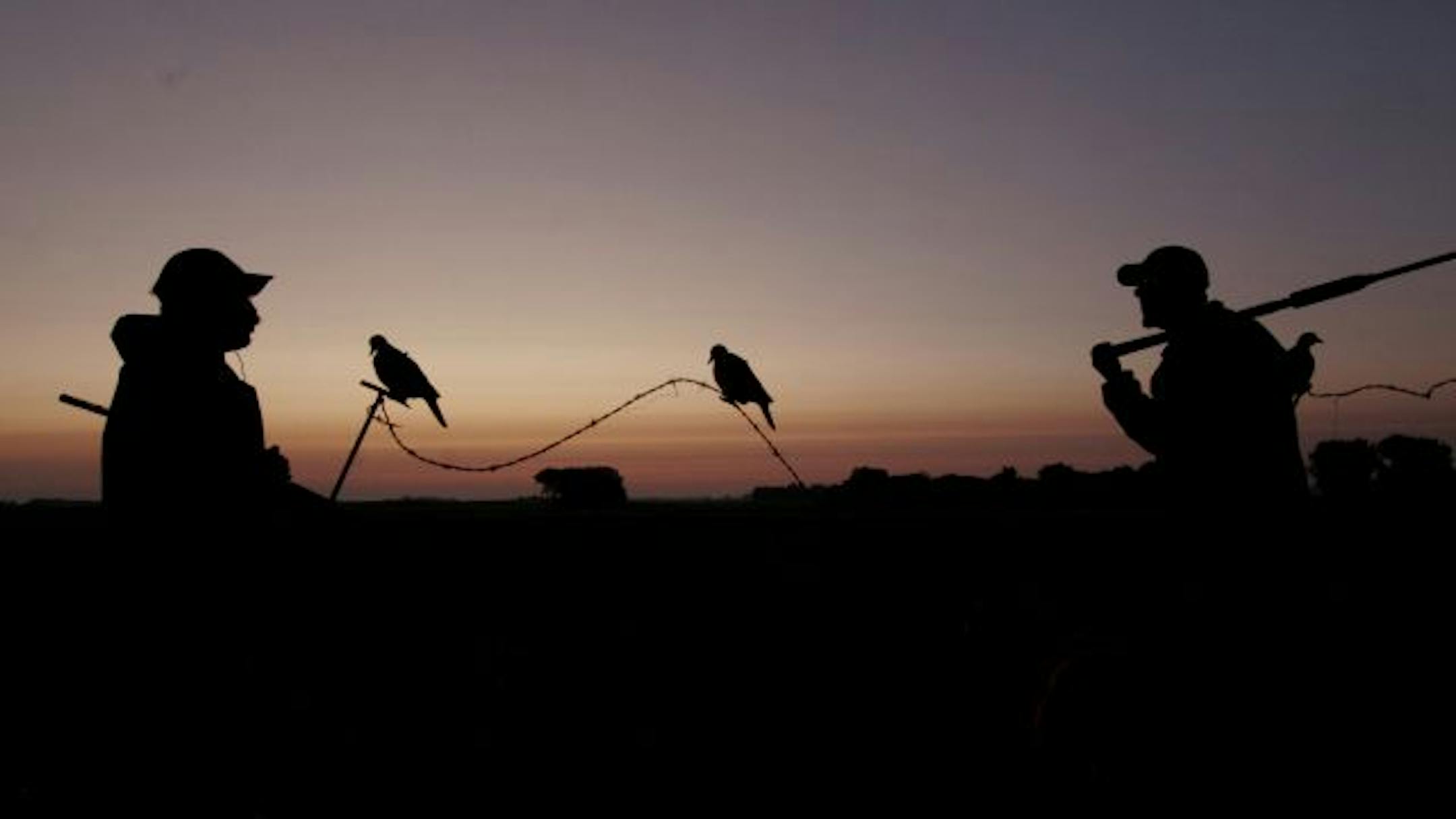
Doug Smith/Star Tribune; Sept. 2, 2009; near Sacred Heart, Minn. Tom Kalahar (right) of Olivia and Tom Ellig of Redwood Falls plan strategy for their mourning dove hunt at dawn. Between them are mourning dove decoys Kalahar has placed on strands of barbed wire in an attempt to coax birds to within shotgun range.
Mourning doves, morning hours: From left, Tom Ellig of Redwood Falls, Minn., and Tom Kalahar of Olivia, Minn., planned strategy for their mourning dove hunt at dawn. Between them are decoys on a wire. (Star Tribune/The Minnesota Star Tribune)

It's not much of a tradition. Yet. But mourning dove hunting is showing signs of becoming one.

As Minnesota's sixth mourning dove hunting season got underway last week, it was clear that doves might never rival pheasants, waterfowl or ruffed grouse as Minnesota's most coveted game birds.

Those other species have acquired a devoted following with decades of tradition handed down from generation to generation. Dove hunting was reinstated by the Legislature in 2004 after a nearly 60-year absence. Officials had estimated 30,000 to 50,000 hunters might pursue them, but that turned out to be overly optimistic. About 16,000 tried dove hunting the first year. Since then, the number has averaged about 12,000. That's small potatoes compared to the 81,000 duck hunters, 87,000 ruffed grouse hunters and 107,000 pheasant hunters in 2008.

"We started out with almost nobody who even remembered hunting doves here," said Bill Penning of the Department of Natural Resources. "We had no tradition whatsoever. But I think we'll build that over time. It will continue to increase in popularity as hunters figure out how to do it and then bring their friends and kids into the fold."

Count me among those who are hooked. The bird is a blast to hunt, gives canines a ton of retrieves, launches the hunting season early and with gusto and is as tasty as any wild game I've put on the table.

Last week, I hunted three days in southwestern Minnesota, near Olivia, and one day near Appleton in the far western part of the state. I hunted with several dove-hunting veterans and three newcomers, including a couple of youngsters. The smiles on the novices' faces said they were converts.

"It's pretty fun," grinned Travis Fagen, 16, who along with his brother Trevor hunted doves for the first time. Added Trevor, 14: "It's hard to hit 'em."

Yes, doves can humble even a crack wing-shooter.
The boys live near Sacred Heart, Minn., and joined us in a field on the dove opener. They bagged some birds and missed plenty of others -- just like the four of us adults who hunted the same field. All told, though, we dropped more than 50 doves. The hunts varied in success, but we always shot doves. One morning I bagged a 15-bird limit, another time I shot just three birds. The trip was a windfall for my hunting dog, who retrieved more than 60 birds.

Here's a sign that dove hunting is gaining a foothold here: While hunter numbers have remained steady, harvest last year hit 133,000 -- the highest since dove hunting was reinstated. And the DNR estimated hunters bagged 11.4 birds per hunter -- a whopping 48 percent increase from 2007.

"It tells me our hunters are getting to be better dove hunters," Penning said. "They're figuring it out."

And make no mistake, there's some figuring to do.

"Scouting is absolutely key," said Tom Kalahar of Olivia, a friend and dove-hunting addict whom I joined for several hunts. He started scouting and securing potential fields to hunt in June -- before he even knew if those fields would hold doves.

Doves love small grains and won't usually land in tall grass, so we hunted in fields of harvested wheat.

Kalahar agrees doves are perfect for young hunters: September generally is warm, dove hunting requires little equipment and the action can be brisk.

"How much more fun can you have hunting than this?" Kalahar said after one successful morning.

Birds flew coop?

A big problem for dove hunters in Minnesota is that the migratory birds head south at the first hint of cold weather. Though the season runs until Oct. 30, often it's essentially done after two weeks.

"Any time from mid-August on, if you get a cold front, they'll leave," Penning said. "They can be there one day and gone the next."

And a cold snap right before the opener might, indeed, have driven some doves from the state. Kalahar said fields in his area that had been full of doves a few weeks before the opener were nearly empty as the Sept. 1 opener approached.

"I think 50 percent have left," he said.

Still, we saw good numbers of doves.

Decoys seem to work

Doves are most active in morning and late afternoon. So we were up by 5:30 a.m. and arrived at our fields at dawn. Some in our group hunted without decoys, just hunkering in a likely spot and waiting for birds to fly by. Kalahar and I used spinning-winged dove decoys. It was a first for me. My impression: They aren't dove magnets, but they definitely seemed to help attract some birds.

On the other hand, we stood by hay bales one afternoon, without decoys, and did well. Intercepting birds as they travel between food, water and resting areas is key.

Population healthy

Nationwide, the U.S. Fish and Wildlife Service estimates there are about 350 million doves. Historically, data on doves in Minnesota has been slim, and there are no good population estimates. "We believe our numbers are pretty much stable," said Molly Tranel, DNR wildlife research biologist.

Nationwide, the population has trended down somewhat, Tranel said.

While dove hunting is in its infancy here, it's big elsewhere. Doves are the No. 1 migratory gamebird in the nation. Hunters bagged 17.4 million last year, compared to 13.6 million ducks and 3.7 million geese.

Hoping to learn more about their migration, survival and harvest, officials have been capturing, banding and releasing doves in Minnesota the past three years. This year, 720 birds were banded, and hunters who shoot one are asked to call the toll-free number on the band to report it.

So far, birds banded in Minnesota have been found as far south as central Mexico.

Future ban?

Since 2004, opponents have talked about trying to reinstate the hunting ban. Bills were introduced in the House and Senate last year but went nowhere. Sen. Satveer Chaudhary, D-Fridley, chairman of the Senate Environment and Natural Resources Committee, said there appears to be little support in the Legislature to reimpose a ban.

Meanwhile, dove hunting opponents who claim hunters are only using doves for "target practice" haven't tried dove breasts wrapped with onion, green pepper and bacon and toasted brown on a grill.

Wild game simply doesn't get any better.

Doug Smith • dsmith@startribune.com

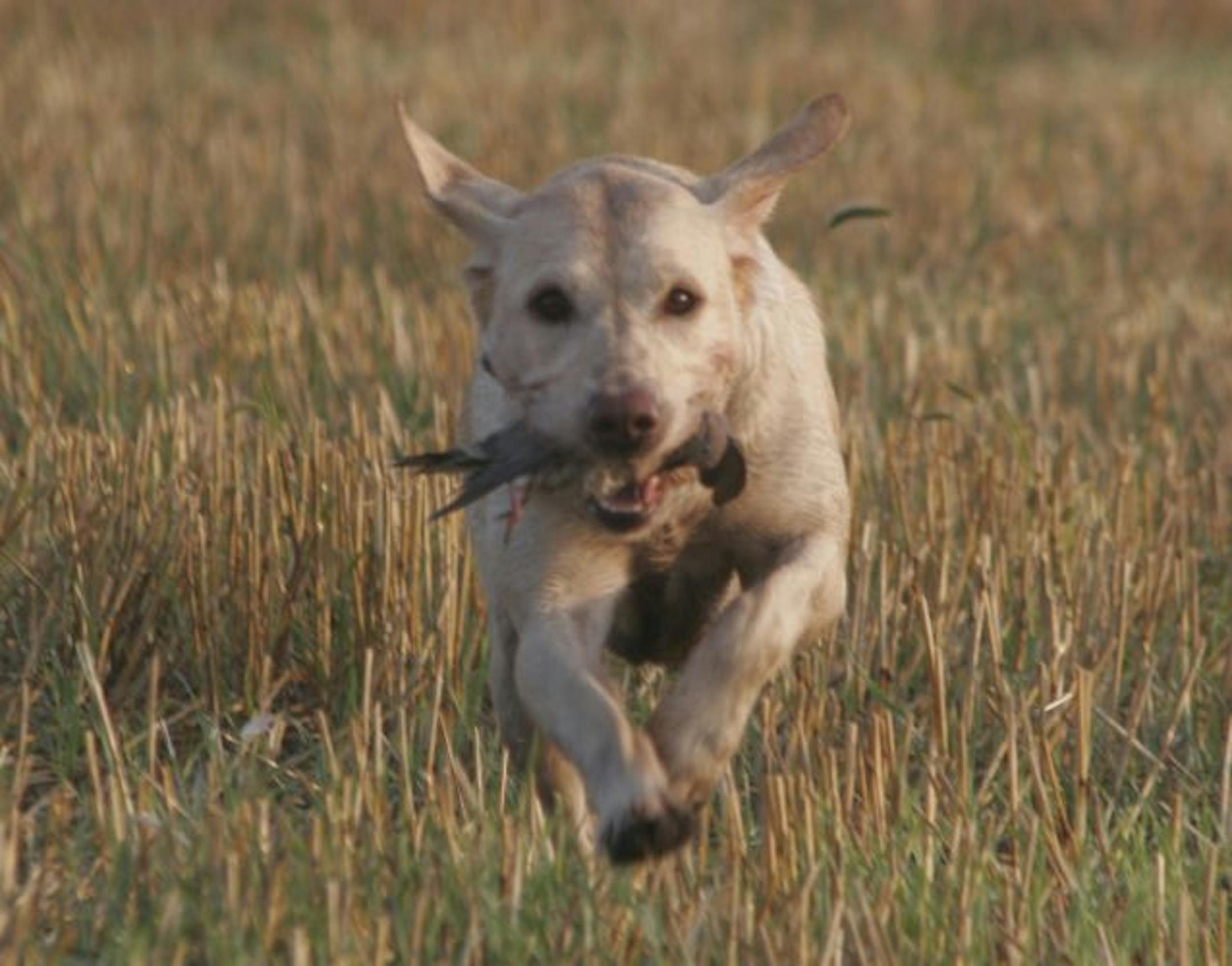
Doug Smith/Star Tribune; Sept. 1, 2009, Sacred Heart, Minn. Macy, a yellow lab, retrieves a downed mourning dove during the 2009 dove season opener on Tuesday.
Macy, a yellow lab, retrieves a downed mourning dove during the 2009 dove season opener on Tuesday. (Star Tribune/The Minnesota Star Tribune)
about the writer

about the writer

DOUG SMITH, Star Tribune