

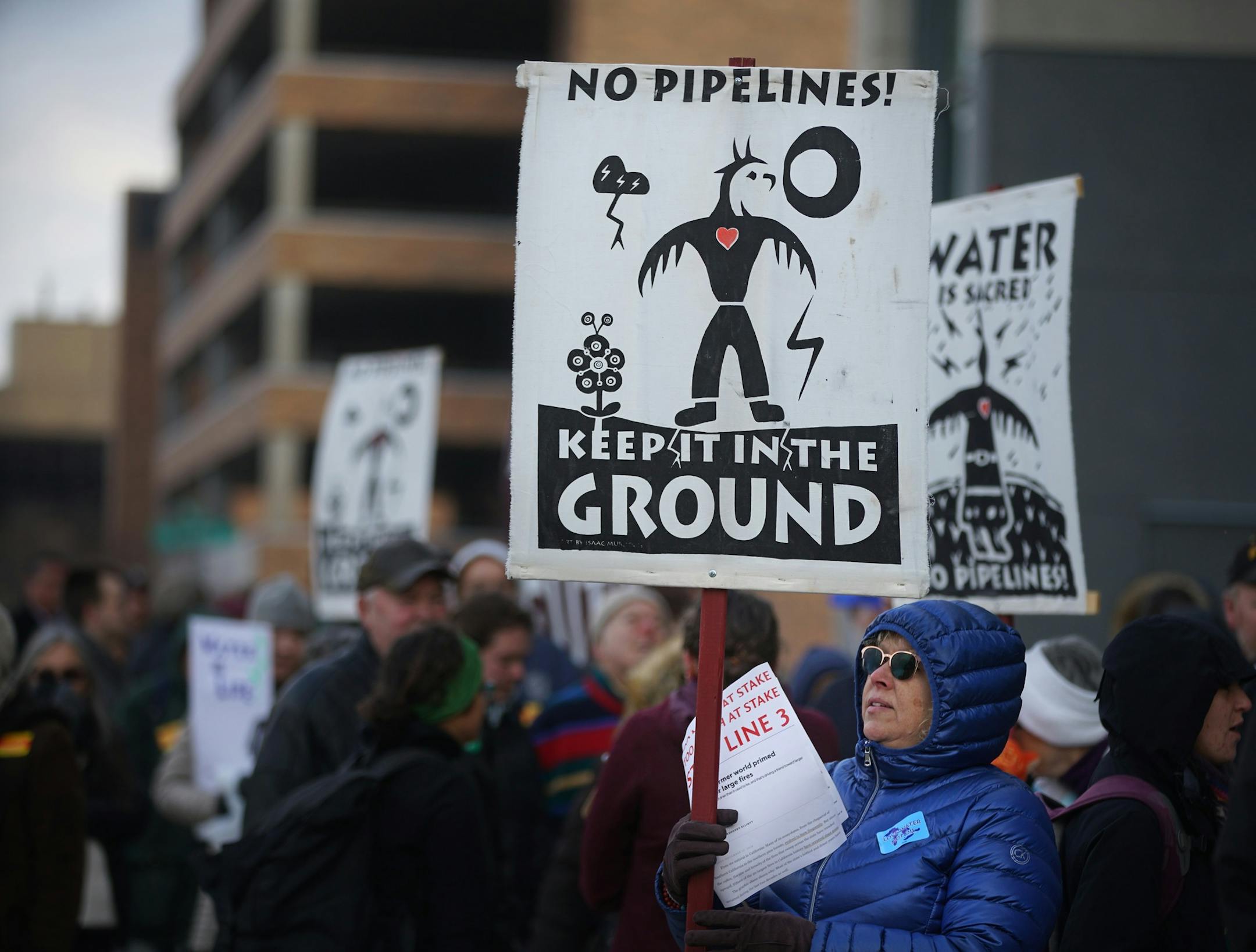
They say crisis is opportunity. That's for sure this time. The world is in crisis, and there's pressure for a quick fix and to make some jobs. Let's do that, but let's do it in a visionary way.
Gov. Tim Walz seized an opportunity this month to be that visionary leader. The governor decided on Aug. 18 that the state Department of Commerce will continue its challenge to the Enbridge Line 3 pipeline. By renewing his opposition to this obsolete, outmoded and risky pipeline, the governor took a daring political leadership role in what's called the "just transition," the changes necessary to make a healthy society and a healthy planet.
Let me place the governor's decision in the larger context. The oil age is ending. Tar sands oil, the dirtiest oil in the world, is going to stay in the ground. Line 3 is the equivalent of 50 new coal-fired power plants. It's time to get serious about making the transition from fossil fuels to a green, renewable economy.
The COVID pandemic is just a taste of the crisis ahead. And the investors know that; they are moving on. That's to say, some of the biggest new mining projects have been canceled (for example, the Teck Mine in Canada in February) while financial divestiture is widespread and growing. Deutsche Bank dumped financing in the Alberta tar sands oil — the stuff coming through Line 3 — in July; in February, BlackRock, the world's largest asset manager, announced one of its fast-growing green-oriented funds would no longer put money into it as well.
And, according to the New York Times, "In December, the insurance giant the Hartford said it would stop insuring or investing in oil production in the province, just weeks after Sweden's central bank said it would stop holding Alberta's bonds."
The handwriting is on the wall: Last year, Norway's sovereign wealth fund — a state-owned investment fund that's worth approximately a trillion dollars — announced it was terminating its funding of oil and gas exploration companies around the world. Enbridge itself has now cut the oil going through all its pipelines by almost 400,000 barrels a day — the equivalent of what is in the present Line 3.
Opponents to Line 3 challenge its supporters who want the jobs the line will bring. Instead, we argue, "Let's make jobs that don't operate the equivalent of the gas chamber for the planet. Let's make jobs that don't cause conflict."
My suggestion? Just dig up that old line and begin to decommission. That will cost up to $2 billion — and that's all jobs, not hardware. Employ local, and for sure Native, people to make sure it's right, since it's our wild rice and water at stake.


