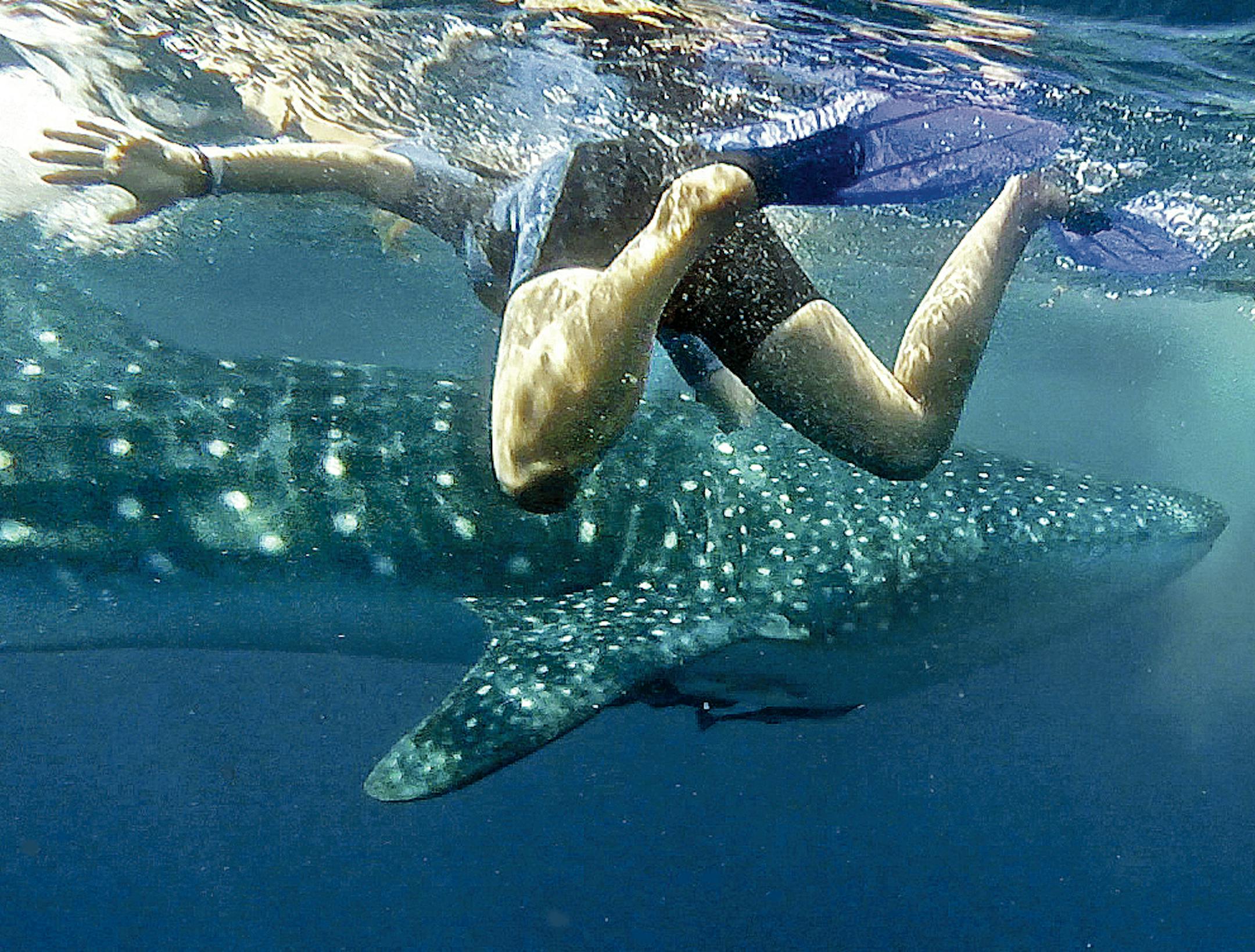
Several weeks before I found myself uncomfortably close to the world's largest shark, I told a few folks I would be going to Holbox.
"Whole what?" asked more than one.
"Holocene," corrected my smartphone.
"Ohl-bosch," corrected the locals when I arrived.
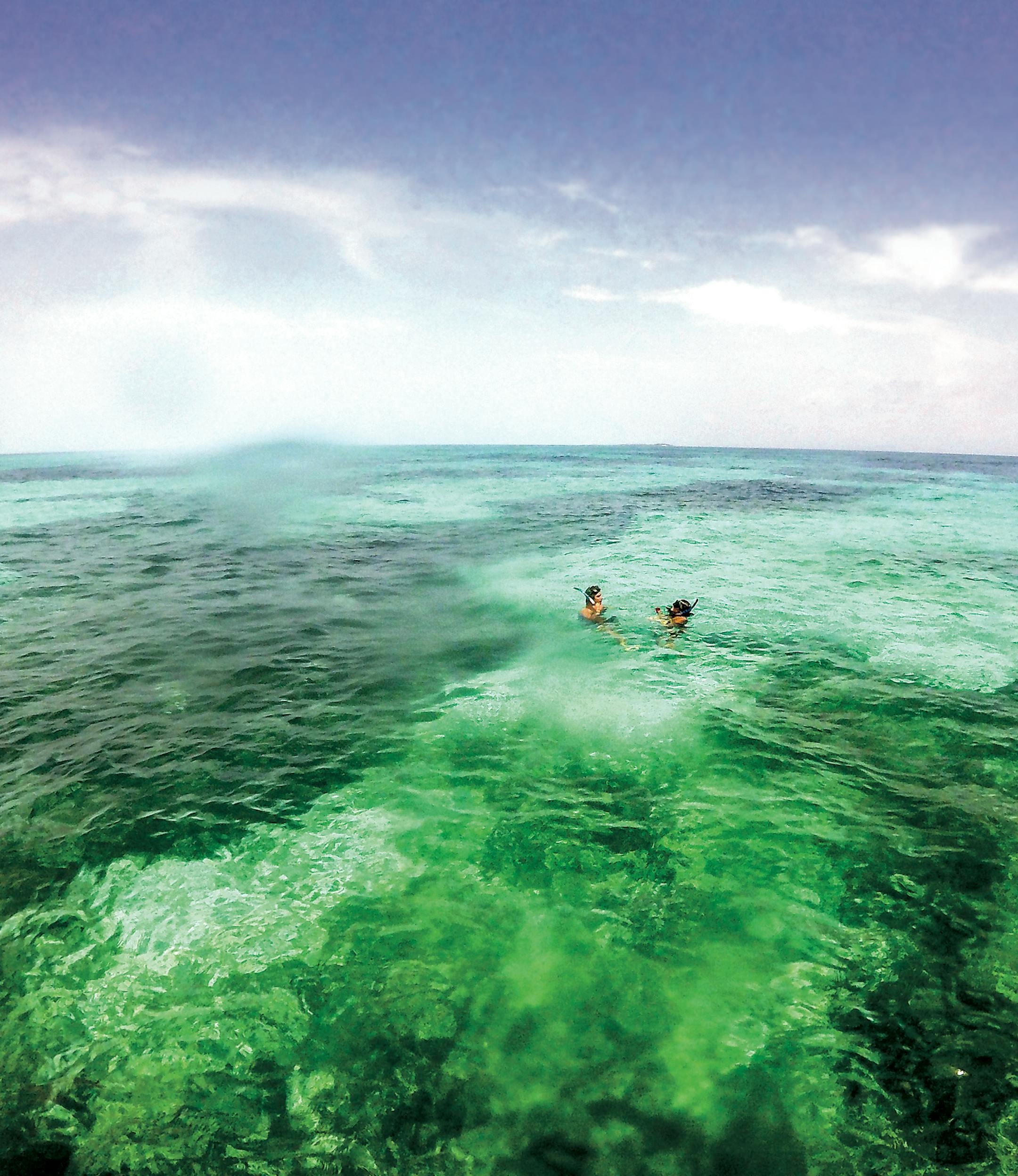
Isla Holbox, a Mexican island with turquoise waters, unpaved streets and about 3,000 residents, lies about 120 miles northwest of Cancun, 500 miles south of New Orleans.
It's not an American household name yet, but it has fine sand, palm trees, wild flamingos and beachfront hotels charging less than $200 a night.
Moreover, if you take a boat out from mid-May through mid-September, you have a good chance of swimming with a whale shark. There is no bigger fish.
They grow to as much as 40 feet long and 30,000 pounds. Their gray flanks are peppered with white polka dots. Their mouths are up to 3 feet high and 4 feet wide. Because they're filter-feeders, consuming mostly plankton, they swim through life with their wide mouths open, no teeth in sight.