

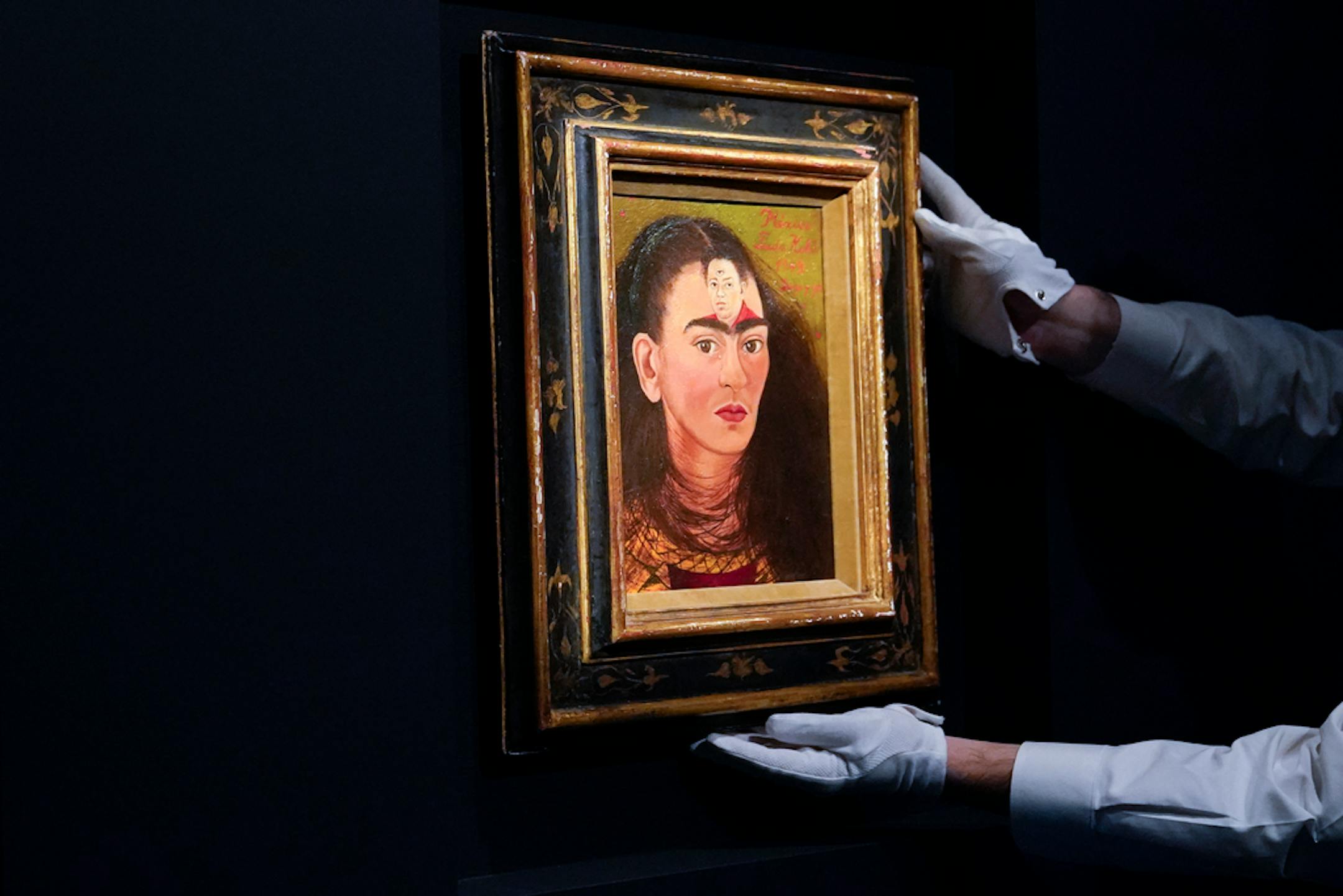
MEXICO CITY — Frida Kahlo had no religious affiliation. Why, then, did the Mexican artist depict several religious symbols in the paintings she produced until her death on July 13, 1954?
''Frida conveyed the power of each individual,'' said art researcher and curator Ximena Jordán. ''Her self-portraits are a reminder of the ways in which we can exercise the power that life — or God, so to speak — has given us.''
Born in 1907 in Mexico City — where her ''Blue House'' remains open for visitors — Kahlo used her own personal experiences as a source of inspiration for her art.
The bus accident that she survived in 1925, the physical pain that she endured as a consequence and the tormented relationship with her husband — Mexican muralist Diego Rivera — all nurtured her creativity.
Her take on life and spirituality sparked a connection between her paintings and her viewers, many of whom remain passionate admirers of her work on the 70th anniversary of her death.
One of the keys to understand how she achieved this, Jordán said, lies in her self-portraits.
Kahlo appears in many of her paintings, but she did not portray herself in a naturalistic way. Instead, Jordán said, she ''re-created'' herself through symbols that convey the profoundness of interior human life.
''Diego and I'' is the perfect example. Painted by Kahlo in 1949, it sold for $34.9 million at Sotheby's in New York in 2021, an auction record for a work by a Latin American artist.


