

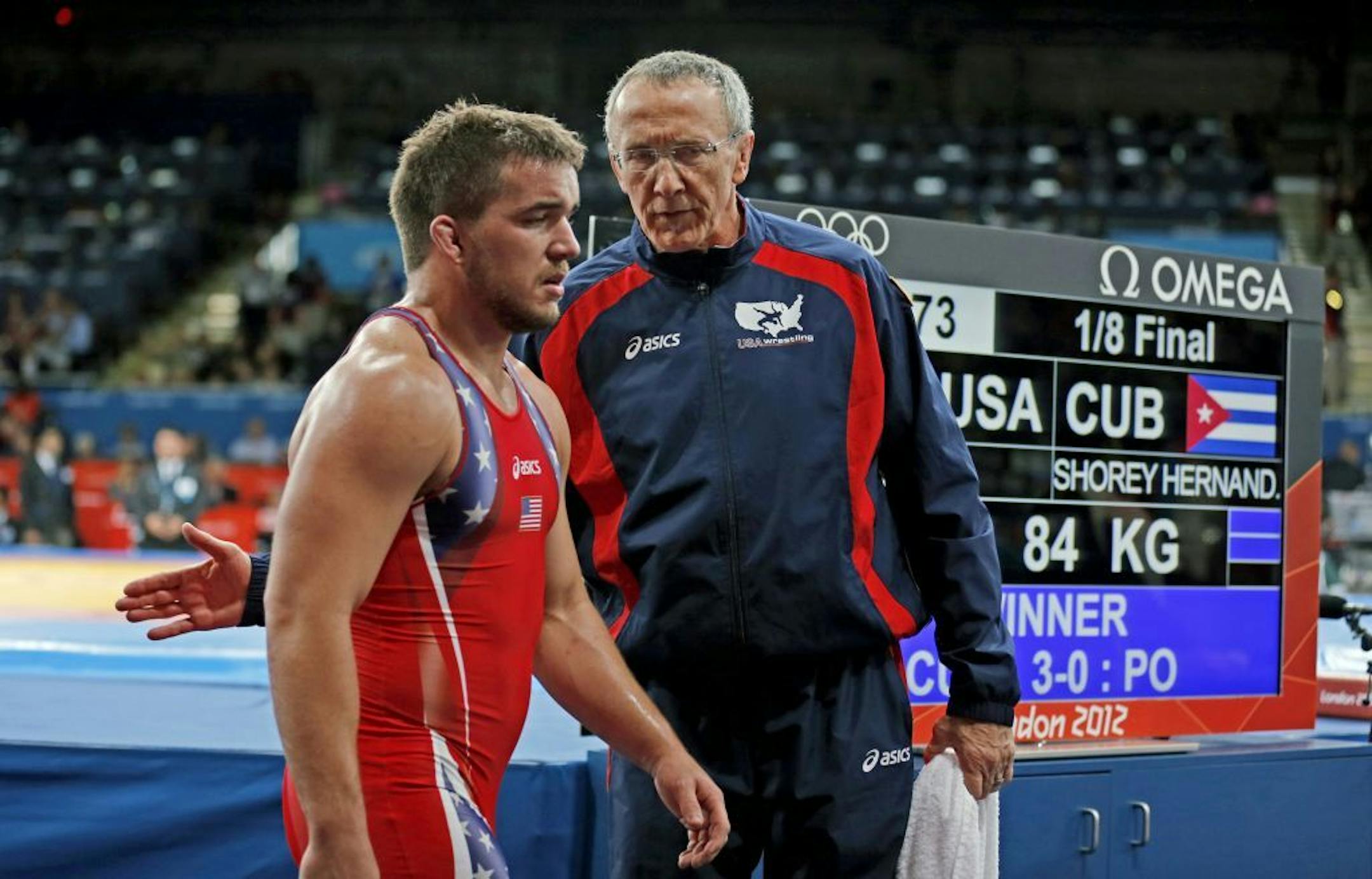
Since its Olympic status was threatened in February, wrestling has welcomed new leadership, tinkered with its rules and expanded opportunities for women. Sunday, it will find out whether those changes are enough to keep it on the Summer Games program.
The International Olympic Committee will hear presentations from three sports — wrestling, squash and baseball/softball — at a meeting in Buenos Aires, Argentina. It is expected to choose only one for inclusion at the 2020 Olympics. After the IOC's executive board recommended that wrestling be eliminated from its list of 25 core sports earlier this year, the sport's leaders scrambled to implement a major overhaul in the six months leading to this weekend's vote.
USA Wrestling executive director Rich Bender said Wednesday that the wrestling community feels confident it will maintain its place in the Olympic order. Just as important, he added, it also feels a sense of accomplishment in the changes wrought by an unprecedented international effort.
"We've made our sport better, regardless of the outcome,'' said Bender, one of dozens of wrestling officials who will be in Buenos Aires for the vote. "The changes have been well-received, and people feel good about the fact that we turned every stone.
"Through the hundreds of meetings we've had internationally, the response has been overwhelmingly positive that wrestling belongs on the Olympic program. People are feeling cautiously optimistic.''
While many were shocked at the executive board's recommendation to cut an ancient and global sport, some wrestling insiders were not surprised. FILA, the international governing body for wrestling, had long resisted the IOC's call to make the sport more fan-friendly and improve its gender equity.
After the snub, FILA elected a new president — Nenad Lalovic of Serbia — who immediately began working to address the IOC's concerns. Two weight classes were added for women, and more women were given leadership positions. Several rule changes were instituted to make wrestling more exciting and easier to understand.
Matches now include two periods of three minutes each, as opposed to three periods lasting two minutes apiece, and scoring is cumulative. The drawing of a ball from a bag to determine a wrestler's position for an overtime period was scrapped. Other new rules encourage more active wrestling.


