
Old foes leading charge against Hagel

Neoconservatives, who champion a muscular U.S. foreign policy, are united in opposing President Obama's choice for defense secretary.

The New York Times
January 13, 2013 at 4:19AM
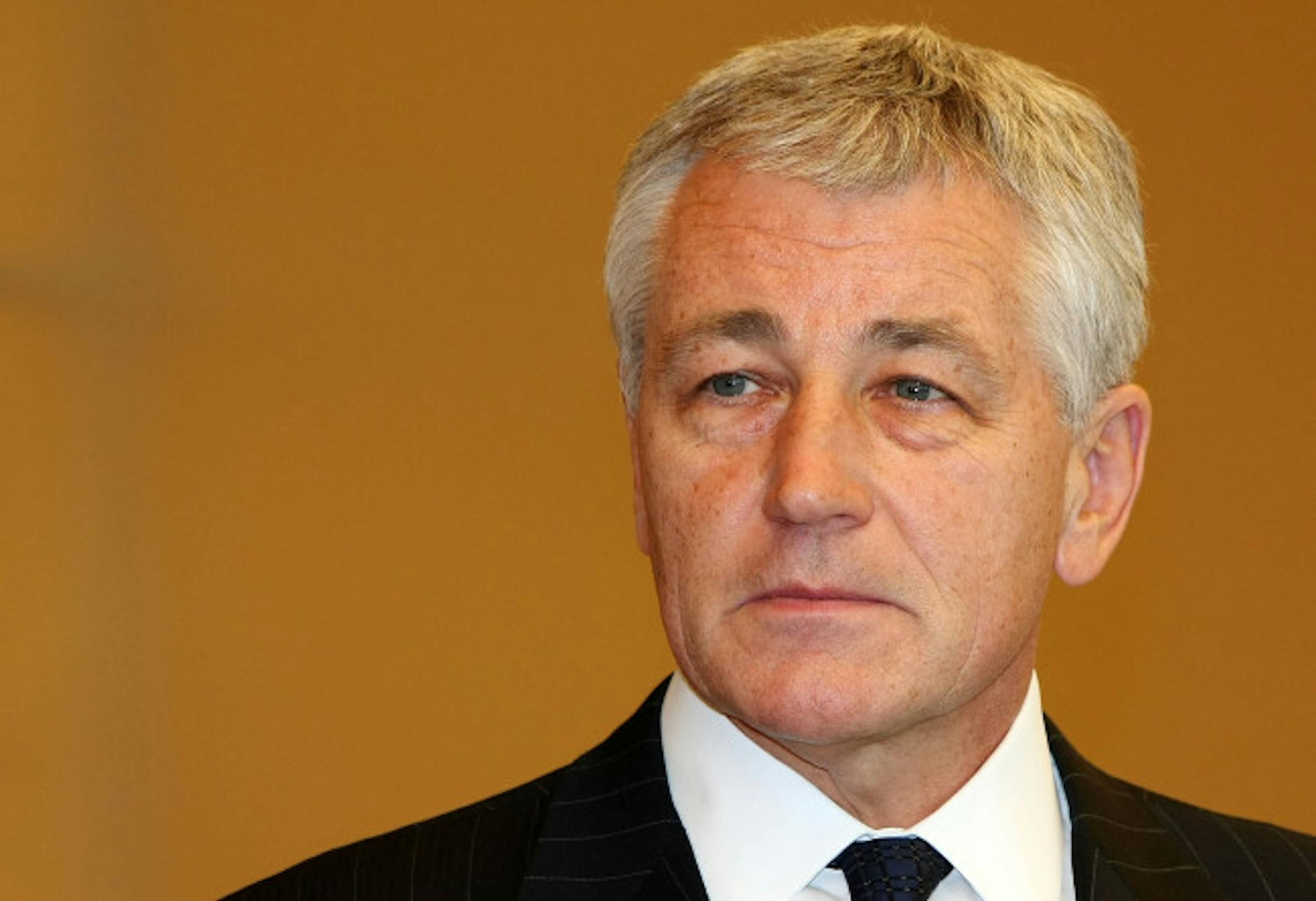
TOKYO - OCTOBER 16: Senior US Senator Chuck Hagel waits for Japanese Prime Minister Taro Aso at the premier's official residence on October 16, 2008 in Tokyo, Japan. Senator Hagel is making an official visit to meet PM Aso during his 3-day stay in Japan.
Chuck Hagel (Elliott Polk (Clickability Client Services) — Getty Images/The Minnesota Star Tribune)

In the debate that led up to the U.S. invasion of Iraq in 2003, Sen. Chuck Hagel of Nebraska said that some of his fellow Republicans, in their zest for war, lacked the perspective of veterans like him, who have "sat in jungles or foxholes and watched their friends get their heads blown off."

Those Republicans in turn called him an "appeaser" whose cautious geopolitical approach dangerously telegraphed weakness in the post-Sept. 11 world.

The campaign now being waged against Hagel's nomination as secretary of defense is in some ways a reprise of that decade-old dispute. It is also a dramatic return to the public stage by neoconservatives, whose world view remains a powerful undercurrent in the GOP and in the national debate about the nation's relationship with Israel and the Middle East.

To Hagel's allies, his presence at the Pentagon would be a very personal repudiation of the interventionist approach to foreign policy championed by the "Vulcans" in the administration of President George W. Bush, who believed in pre-emptive strikes against potential threats and the promotion of democracy, by military means if necessary.

"This is the neocons' worst nightmare because you've got a combat soldier, successful businessman and senator who actually thinks there may be other ways to resolve some questions other than force," said Richard L. Armitage, who broke with the more hawkish members of the Bush team during the Iraq war when he was a deputy to Secretary of State Colin Powell.

William Kristol, editor of the Weekly Standard, who championed the Iraq invasion and is leading the opposition to Hagel's nomination, says the former senator and his supporters are suffering from "neoconservative derangement syndrome."

Kristol said he and other like-minded hawks were more concerned about Hagel's occasional arguments against sanctions (he voted against some in the Senate), his overcautious attitudes about military action against Iran and his tougher approach to Israel than they were about his views on Iraq -- aside from his outspoken opposition to the U.S. troop surge there that was ultimately deemed successful.

"I'd much prefer a secretary of defense who was a more mainstream internationalist -- not a guy obsessed by how the United States uses its power and would always err on the side of not intervening," Kristol said.

Of Hagel and his allies, Kristol said: "They sort of think we should have just gone away."

In fact, the neoconservatives have done anything but disappear. In the years since the war's messy end, the most hawkish promoters have maintained enormous sway within the Republican Party, holding leading advisory posts in the presidential campaigns of John McCain and Mitt Romney as their counterparts in the "realist" wing of the party, epitomized by Powell, gravitated toward President Obama.

And while members of both parties think the chances are good that Hagel will win confirmation, neoconservatives are behind some of the most aggressive efforts to derail it, through TV advertisements, op-ed articles in prominent publications and pressure on Capitol Hill, where some Democrats, including Sen. Charles Schumer of New York, have also indicated reservations.

Their prominence in the fight over Hagel's nomination is testament to their continued outsize voice in the public debate, helped by outlets like the Weekly Standard, research groups like the American Enterprise Institute and wealthy Republican financiers like casino magnate Sheldon Adelson, whose nearly $100 million in political donations last year were driven largely by his interest in Israel. The Republican Jewish Coalition, of which Adelson is a part, was among the first to criticize the Hagel nomination.

about the writer

about the writer

JIM RUTENBERG

More from No Section

See More
FILE -- A rent deposit slot at an apartment complex in Tucker, Ga., on July 21, 2020. As an eviction crisis has seemed increasingly likely this summer, everyone in the housing market has made the same plea to Washington: Send money — lots of it — that would keep renters in their homes and landlords afloat. (Melissa Golden/The New York Times) ORG XMIT: XNYT58
Melissa Golden/The New York Times

It’s too soon to tell how much the immigration crackdown is to blame.