

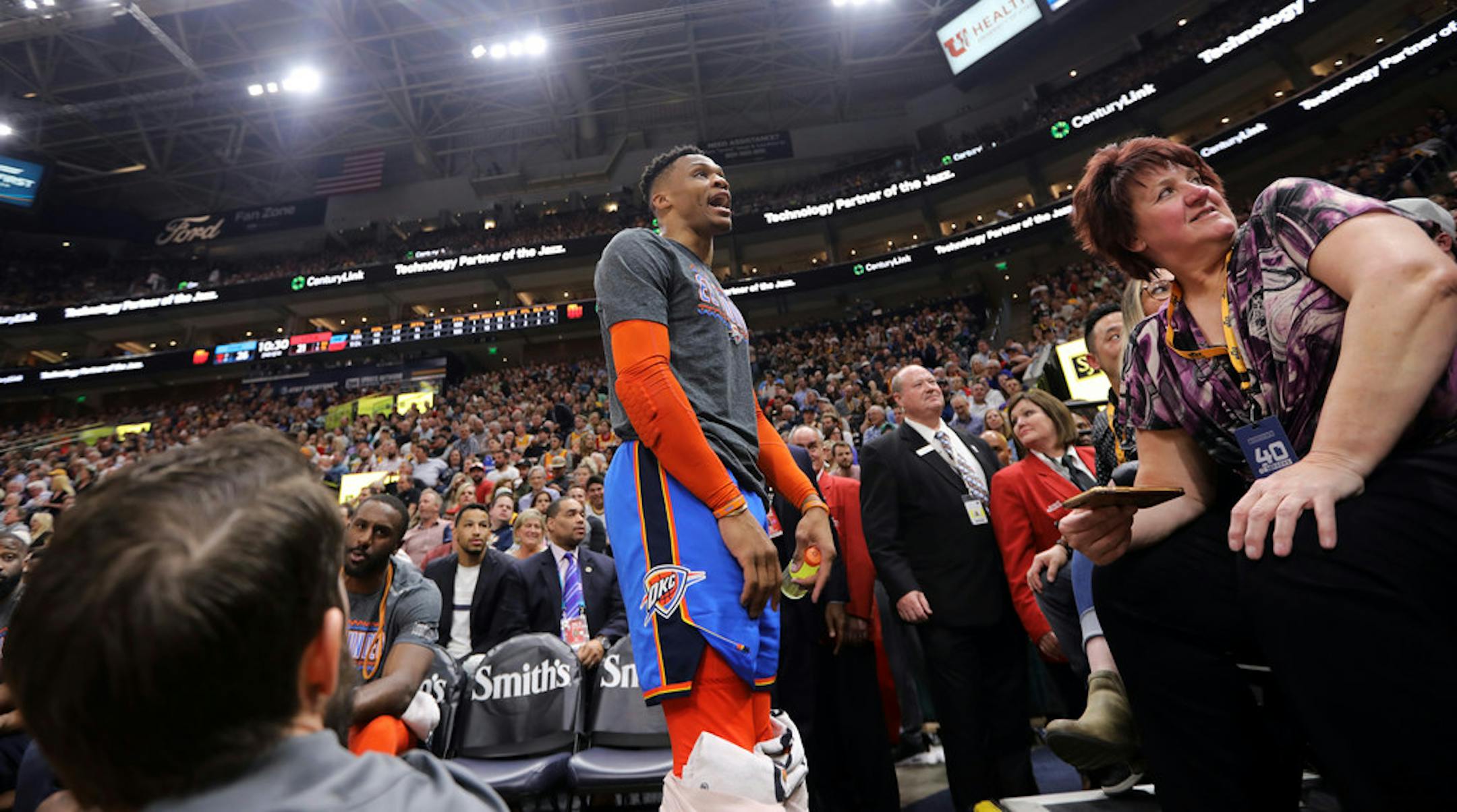
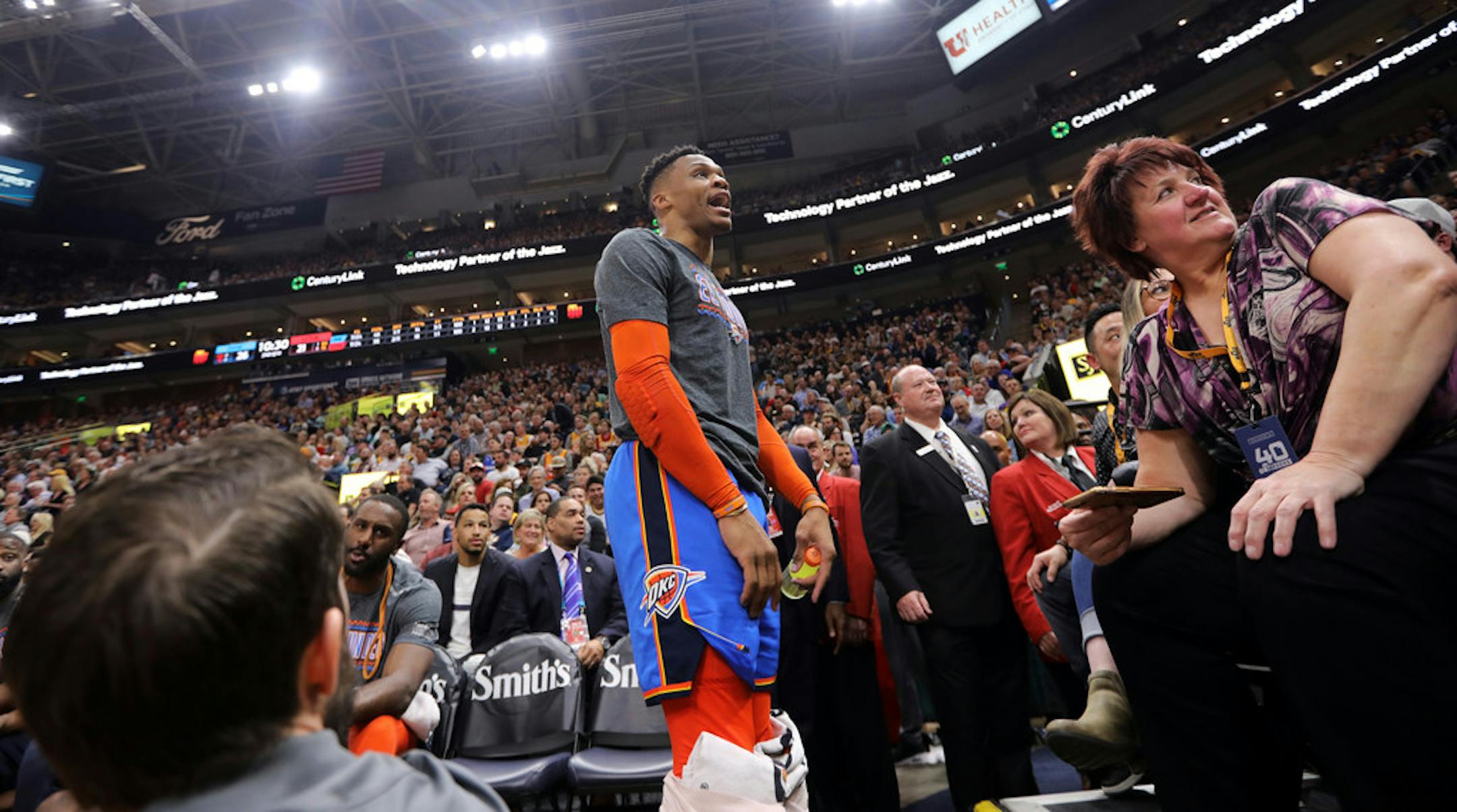
Oklahoma City's Russell Westbrook was recorded by a fan Monday in Utah issuing an expletive-laden threat at a heckler, and after the game he said he stood by what he said.
"I just think there's got to be something done. There's got to be some consequences for those type of people that come to the game just to say and do whatever they want to say," said Westbrook, who said he thought there was a racial component to the heckler's taunts. "I don't think it's fair to the players — not just to me, but I don't think it's fair to the players. And if I had to do it again, I would say the same exact thing."
The Jazz fan in question was interviewed after the game and said he thought the verbal sparring that led up to Westbrook's more heated comments were all part of "fun."
The fan is white. Westbrook is black. There's no video (at least none that has surfaced) of what the fan said exactly before Westbrook's reaction was captured. And Westbrook said he has had problems in the past with Jazz fans in Utah.
It's about as messy and complicated as it gets, which is often what happens as we get more and more details but seldom all of them.
There are cameras and microphones everywhere, and the means of distributing what is picked up on those devices creates widespread and nearly instantaneous reactions.
Sometimes, as in the case with Westbrook's interaction, what an athlete says is not in question. The debate comes over whether the response was appropriate.
In other cases, though, an even trickier grey area emerges: Did an athlete really say what we think he or she said?


