

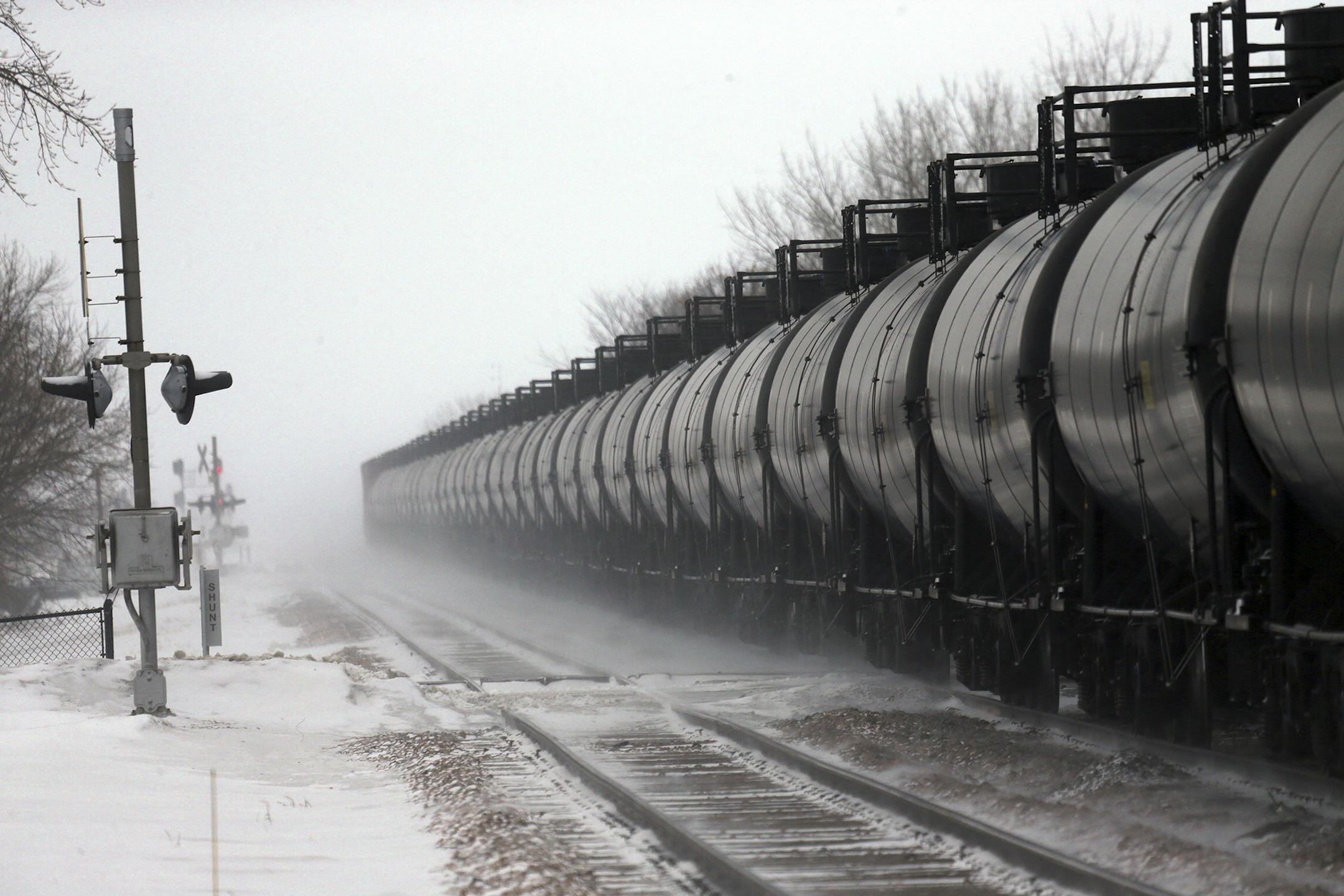
Less than 24 hours after two Minnesota lawmakers urged the state to ramp up its crude-oil transport disaster readiness, another oil train derailed in Pennsylvania, underscoring the urgency of the safety concerns and the need to act.
The 120-car train was eastbound when the accident happened around 8 a.m. Thursday. Twenty-one cars carrying oil and liquid propane went off the rails, spilling an undetermined amount of oil and slamming into a small manufacturing plant.
Accidents are still statistically rare for oil shipped by rail. But this incident and the recent explosive derailments near Casselton, N.D., and in Quebec are chilling reminders not only of accidents' disastrous consequences but also of the rapidly rising volume of oil hauled by rail — due in part to the newly productive Bakken shale-oil region in North Dakota.
It's hard for Minnesotans who grew up thinking of oil wells only in faraway states or deserts to grasp that the state is now a major oil transport hub. Today, five major railroads carry crude through the state, and eight pipelines cross it.
The oil shipments must not outpace the preparedness and knowledge of the state's first responders, firefighters, and public-health and safety officials. While railroads do already work with communities, the spotlight put on this issue this week by state Rep. Frank Hornstein and state Sen. Scott Dibble (both DFL-Minneapolis) is timely and merits applause. They are readying legislation — supported by the Minnesota Professional Fire Fighters union — that would provide additional training resources and toughen safety standards. A hearing is slated for later this month.
The legislators would do well to call on Casselton's volunteer fire chief, Tim McLean, who was willing to share lessons learned with an editorial writer this week. Key points: Coordination among agencies is critical. More training on North Dakota crude's volatility also would be useful.
Hornstein said this week he plans to introduce the legislation on the session's first day. That urgency is appropriate. Said Hornstein: "We are playing catch-up in this area, and we don't have a lot of time to do it.''


