

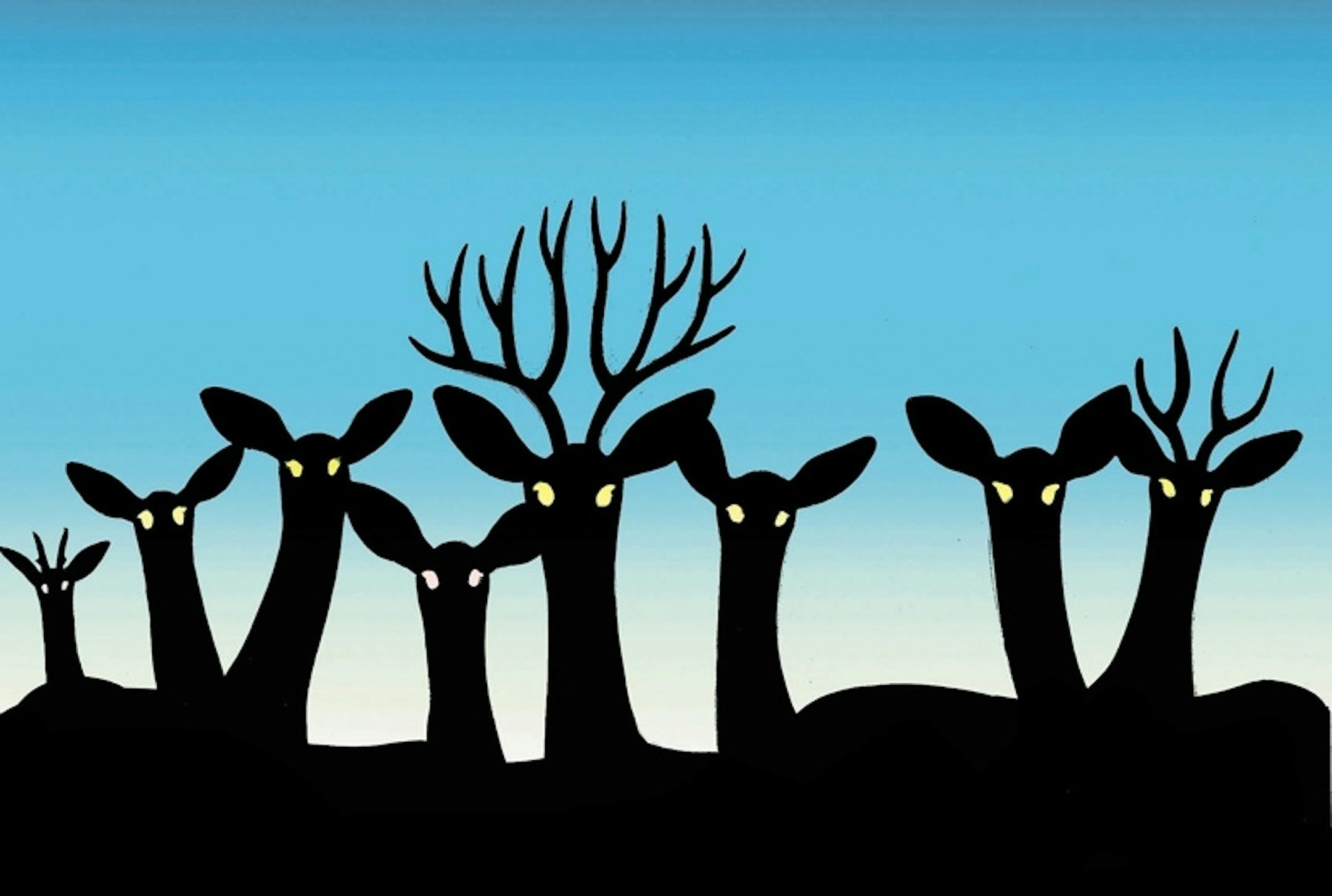
Looking over the American landscape, it's hard to think of a more insidious threat to forests, farms and wildlife, not to mention human health and safety, than deer.
Yet when it comes to reducing this costly infestation, too many elected officials sit on their hands or deflect effective control measures. There were about 1.09 million deer-vehicle collisions from June 2010 to June 2011, State Farm Insurance reports, with average property damage of more than $3,000 an accident.
Add to that a billion or so dollars for agricultural damage. Deer carry ticks that spread Lyme disease. And their voracious chomping has resulted in "ghost forests" -- particularly in the Northeast.
If a forest is healthy, it will support about 15 deer per square mile, and many scientists say that a degraded patch can't be restored unless the population is about five per square mile.
Compare that target with the actual deer densities: Some areas of the United States have 40 to 50 of them in a square mile, with much higher estimates in some Eastern suburbs.
In New Jersey, one-third of the remaining species of native plants are endangered, largely because of deer. Many warblers, thrushes and dozens of other ground-nesting birds lose the protection of native plants, and some species of native pollinators -- butterflies, moths, beetles -- vanish.
For conservationists and landowners, the main defense is to put up fences and other barriers, which make American exurbs look like minimum-security prisons.
Right now, they have few alternatives. The hunters who are supposed to control the deer want to keep the numbers up so they have a better chance of shooting a buck. They support changes such as the New Jersey measure to allow bow hunting closer to houses, but they generally oppose efforts to reduce the deer population.


