

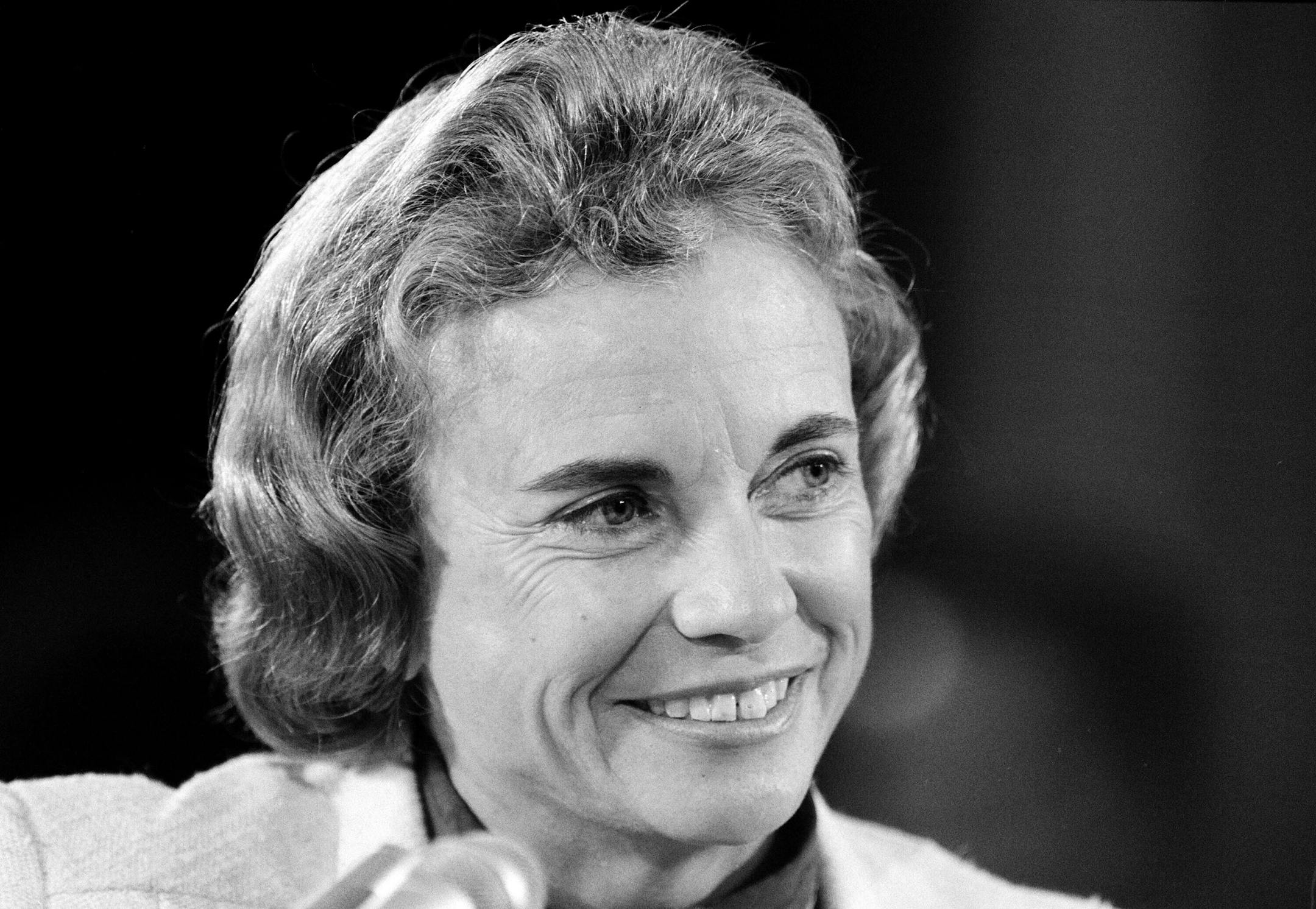
Opinion editor's note: Star Tribune Opinion publishes a mix of national and local commentaries online and in print each day. To contribute, click here.
•••
I'd never heard of Sandra Day O'Connor when the news broke that she was President Ronald Reagan's likely nominee for the new vacancy on the Supreme Court. This was in 1981, toward the end of my term as a law clerk for Justice Thurgood Marshall, and a bunch of us crowded around the one Lexis terminal in the court library — yes, one, and yes, a terminal — in hope of tracking down some of her opinions.
We didn't find much. Certainly we found nothing to indicate that she would become one of the most honored and beloved justices in the court's history.
O'Connor, who died on Friday at the age of 93, has been lauded as a role model (true), a writer of crisp and clear opinions (also true), and a warm and decent human being (true a third time). She's also been applauded as the swing vote of Chief Justice William Rehnquist's court — and there, I think, the praise misses a larger point about both O'Connor herself and the nature of the institution she once graced.
Yes, O'Connor did join a lot of 5-4 majorities. But so what? During his eight terms of service in the 1920s, Chief Justice William Howard Taft was on the winning side in a remarkable 89.5% of the 5-4 cases, the highest percentage of any justice in the court's history. But nobody thinks of him as a swing vote.
The idea of the swing vote is either a vulgarism or a myth — a story we tell ourselves to explain why a justice identified with an ideological bloc occasionally votes the other way. But the justice still mostly votes with the bloc.
Maybe O'Connor wasn't a swing vote at all; maybe we're measuring her against expectations of how "conservatives" vote, when the truth is that during her years on the Supreme Court, she drifted left.


