

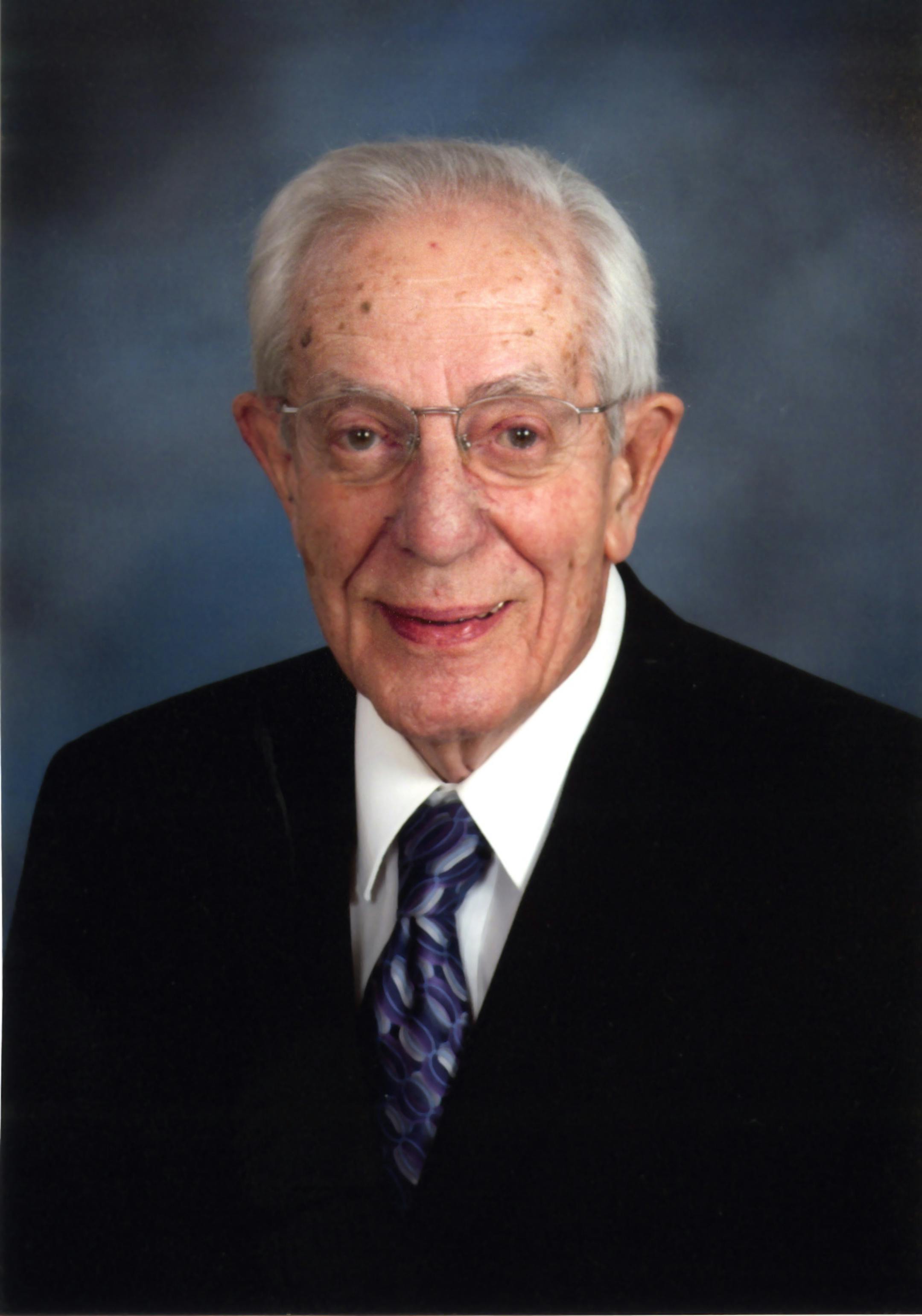
Kenneth Newcomb thought he was a goner on Sept. 12, 1944, when a German soldier who had flushed him and two other GIs from their foxhole near Belfort, France, poked him in the belly with his bayonet as he wobbled to his feet, hands held high.
The German didn't kill him, "something Dad was deeply grateful for," said Newcomb's daughter, Janet Spatafore of Maple Grove. But there would be more harrowing experiences before Newcomb was liberated from a German POW camp in June 1945. Despite them, Newcomb lived out the rest of his long life with "an extraordinarily kind, gentle, peaceful nature," his daughter said.
He died Feb. 7 at the Veterans Affairs Medical Center in St. Cloud, near the home in Rogers where he'd moved later in life to be near family members. He was 94.
Newcomb was born in St. Paul, graduated from Humboldt High School and was "a lifelong proud West Sider," his daughter said. After the war, he worked for 42 years for St. Paul's Public Works Department, earning a business administration degree from the University of Minnesota in 1955.
In 1948, he married Evelyn Perron, who like him attended Ascension Episcopal Church in St. Paul. They had met in passing before the war, and she had prayed for his safety as a POW. Their children -- Janet, Cheryl and Joanne -- were born in 1950, 1953 and 1955.
"He was blessed with such good mental health," Spatafore said. "Once when he was in his 80s, he and I were on a long walk and he described to me the whole night when he was captured, very calmly."
Newcomb was fighting with the 45th Infantry Division near the French-Swiss border in September 1944 when he and two others who had been cut off from their company were captured. "With a German guard, we had to crawl and inch our way on our stomachs down a little ditch alongside a road for about 1,000 yards ... sweat[ing] out a terrific artillery and mortar barrage from our own troops," he wrote later in a history for his family.
In the long, cold months that followed, Newcomb would be shuffled among many prison camps in Germany. At most, sanitation was nonexistent, sleep plagued by lice, fleas and shelling, and starvation routine.


