

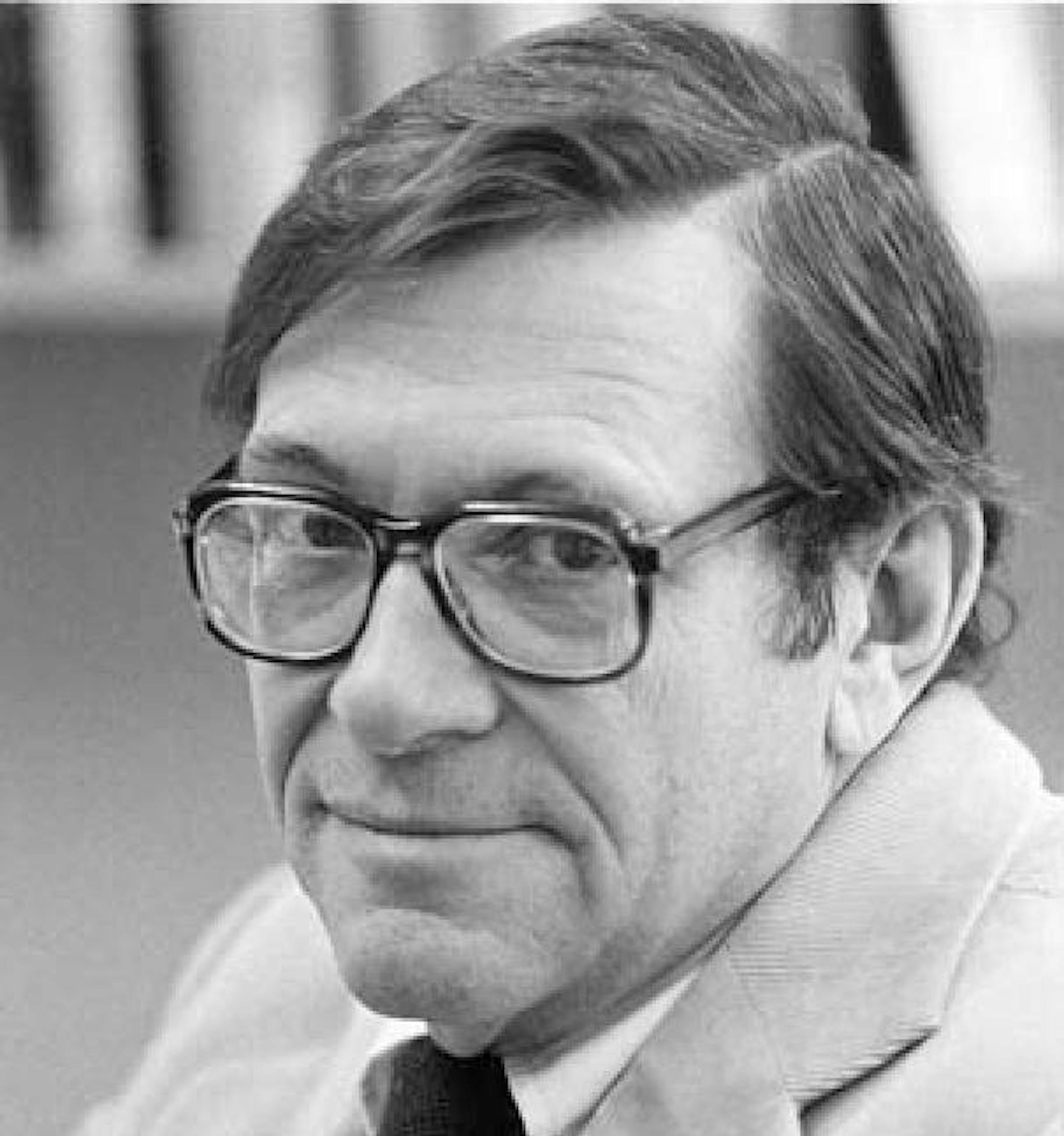
The night her father came home from the laboratory with a box, Molly Picha remembers, he gathered his children in the living room to make an announcement.
"He said 'This is going to change the course of history of all mankind,' " said Picha, who added she was too young at the time to understand what he meant.
In the darkened living room, her father, Robert J. Collins, flipped a switch on the box and there it was: a red beam of light throwing a signature laser dot on the wall.
The ruby laser he demonstrated that night was the creation of a team at Bell Laboratories that included Collins and colleagues Donald F. Nelson and Wolfgang Kaiser, among others; they were among the very first scientists to build a laser, though credit for its invention went to others.
Collins, a World War II Army veteran who earned his Ph.D. in physics from Purdue University, would go on to become the head of the Department of Electrical and Computer Engineering at the University of Minnesota, where he was known as a tough but helpful professor. He steered the department through the 1960s then, after 15 years of teaching, led the department for a second time in the 1980s as the university built the department a new home, now known as Keller Hall.
After retirement he moved to Bethesda, Md., where he continued to publish research and doted on his grandchildren.
He died July 17. He was 90.
Robert John Collins was born in Philadelphia and raised there and in Miami Beach by his mother after his father died. A high school teacher introduced him to math, and he carried a love for it into college, eventually settling on physics as his field of study.


