

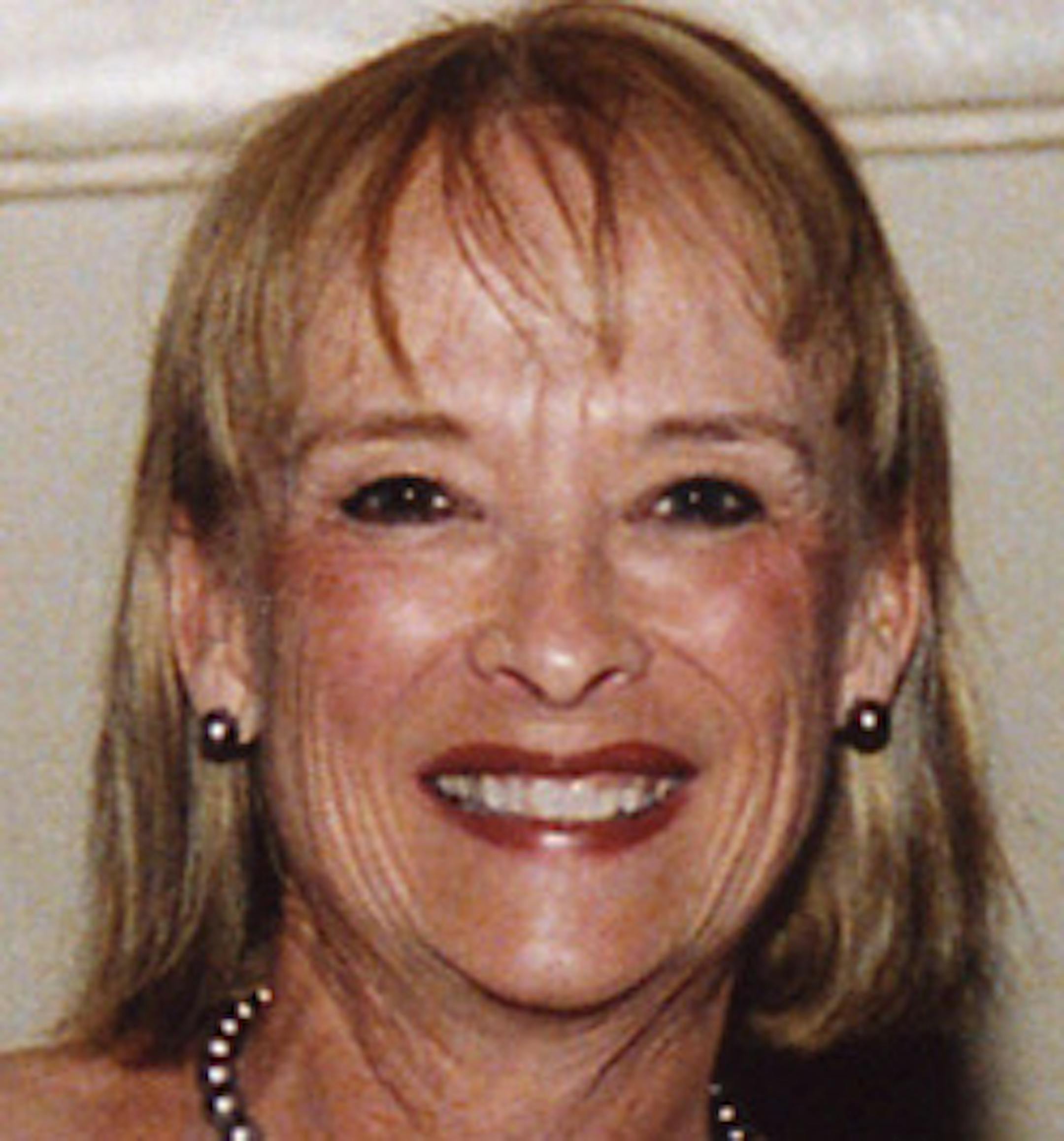
Sheridan Mellon Fenwick, a psychologist with a passion for the arts and travel, led Abbott Northwestern Hospital's Behavioral Medicine Clinic for about a dozen years until 1994. The next year she co-founded PsyBar, which became one of the largest providers of psychiatric and psychological evaluations for trials and other matters.
Fenwick, 71, died Oct. 15 at her daughter's home in New York City, said the daughter, Ashley Fenwick-Naditch Viola. Services were held Sunday at the Yale Club in New York City. Fenwick, who lived in Minneapolis for 18 years, moved in 1999 to Bonita Springs, Fla.
"She was very passionate about the arts and the community," Viola said. She said her mother kept fit playing tennis and biking and traveled to more than 30 countries. "It was more than travel for her, she liked real adventures," like safaris in Kenya or "riding a rusty old boat down the Amazon in Peru."
Fenwick was a trustee for Illusion Theater and for the Minneapolis College of Art and Design in the 1990s. In the early 90s, she chaired what became the Women's Foundation of Minnesota, which funded innovative programs for women and children.
"She was really wonderful, very committed to the community," said Michael Robins, executive producing director of Illusion Theater. He said Fenwick helped raise funds for Illusion before joining the board. He said she opened her Kenwood home several times to Illusion's guest artists.
Born in Pittsburgh, Fenwick earned a doctorate in psychopathology from Cornell University. She taught in the mid 1970s at Columbia University in New York. She wrote a book critiquing the 1970s human potential movement, Est, entitled "Getting It: The Psychology of Est," published by Lippincott in 1976.
David Fisher worked with Fenwick for 27 years after meeting her at Abbott Northwestern. He said they started PsyBar together in 1995 based on her idea of training and providing experts to do standardized, objective psychological or psychiatric forensic evaluations.
"She was extraordinarily intelligent," Fisher said. "She was also very protective of the people who worked under her, the psychologists at the hospital, including me. … Nobody pushed her around. She was a small thing, physically, but she was a powerhouse. Some people disagreed with her, but I never met anyone who didn't respect her."

