

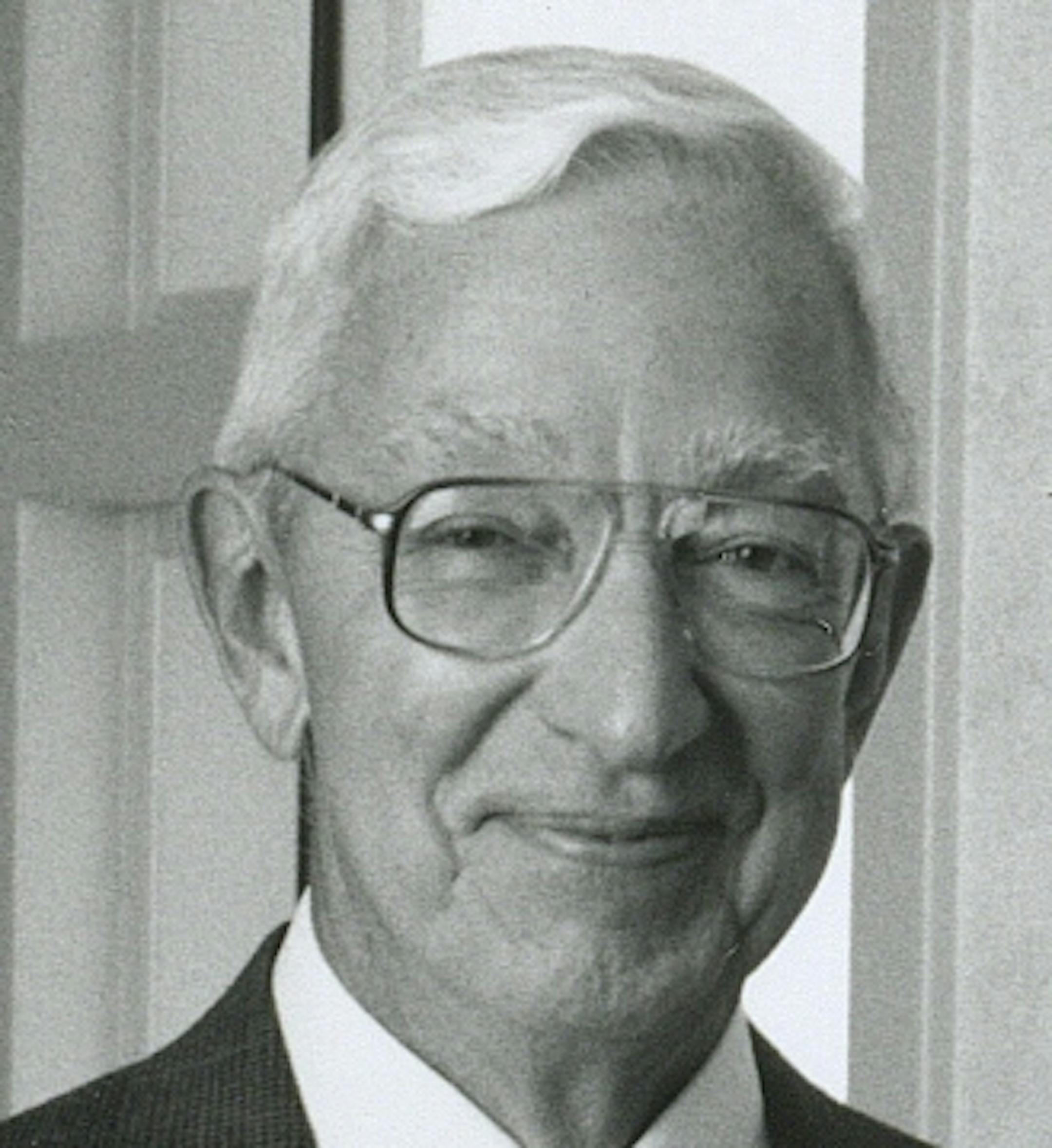
In many ways, the Mall of America will always be Robert Hoffman's legacy.
Hoffman, a savvy lawyer and onetime Bloomington City Council member, was best known for crafting the deals that brought the megamall to life. When powerful opponents and infighting threatened to bring it down in the 1980s, he was the one who kept it together.
"A lot of people would tell you it wouldn't have happened without him," said Jim Erickson, a friend and colleague for more than 40 years.
Hoffman, who died July 29 at age 85, was widely viewed as one of the major forces behind the Twin Cities' largest land developments, including the Mall of America and Target Center. He was also co-founder of one of Minnesota's most influential law firms, Larkin, Hoffman, Daly & Lindgren.
But it was his role in a small legal battle, over a zoning permit for a controversial church in Chanhassen, that seemed to capture him best, according to his eldest son, Michael Hoffman.
It was 1989, and the city planning commission was grilling his father about the intentions of a religious group, Eckankar, that wanted to build a church in Chanhassen. "He essentially said, 'Look, I'm a Catholic, and I'm old enough to remember a time when Catholics were discriminated against, and I hope that's not what you're doing here.' " His father won the argument, Michael Hoffman said, and the city issued the permit. Just last week, when he Googled his father's name, he came across the transcript. "I was proud of it," he said.
Robert Hoffman, who was born in Minneapolis, married his wife, Lulu, on the same day he graduated from the University of Minnesota Law School in 1955. Three years later, he and Jim Larkin started a two-man law practice that eventually grew into one of Minnesota's largest firms, with more than 70 attorneys.
"You could just see this kind of brilliance," said Bill Griffith, now president of Larkin, Hoffman, who joined the firm as Hoffman's associate in 1988. At the time, he said, the Mall of America was just a proposal facing a wall of resistance from the retailing community and "most of downtown Minneapolis."


