

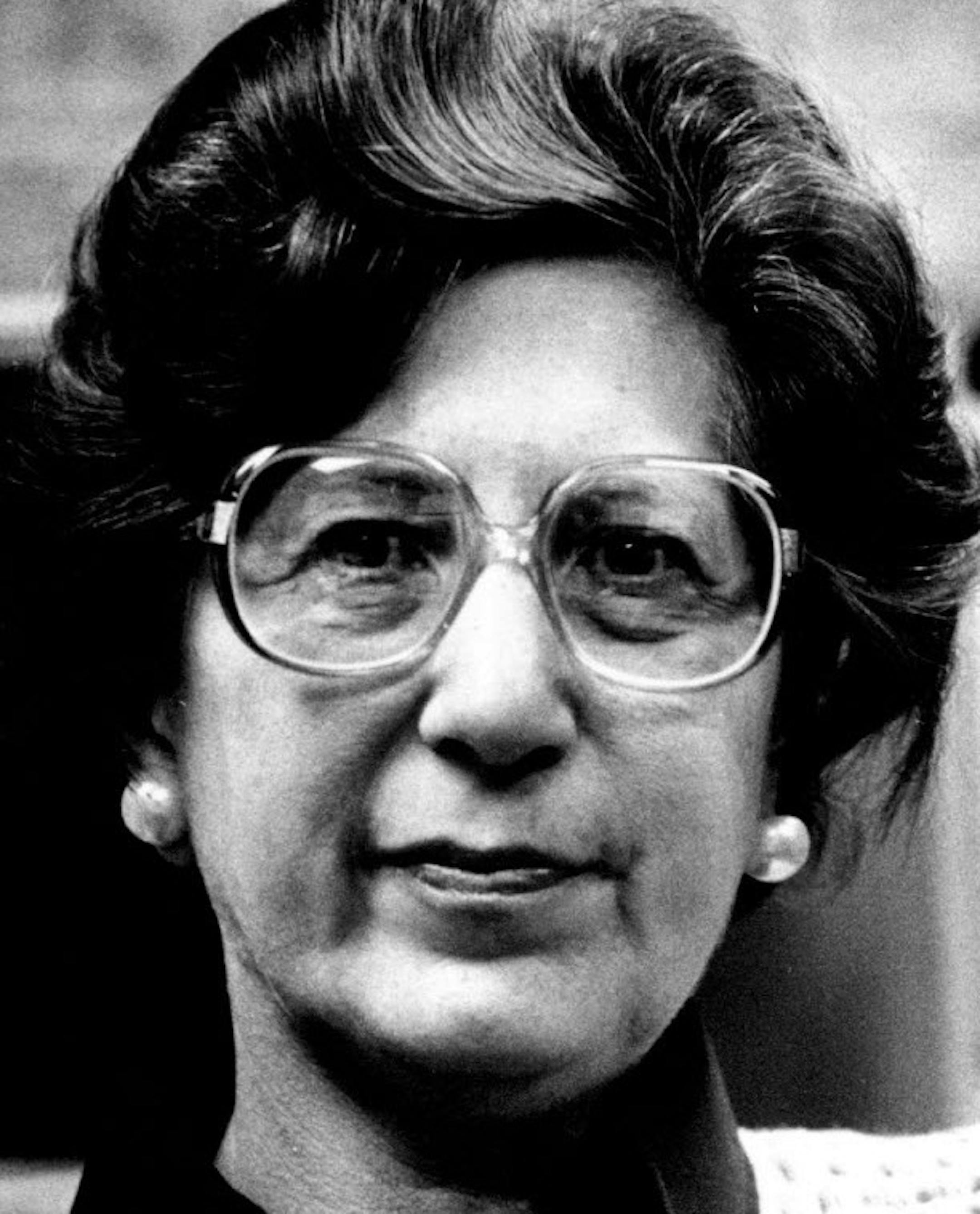
Marietta E. Spencer, a former executive at Children's Home Society of Minnesota, was a pioneering social worker whose research and work with families helped to revolutionize attitudes toward adoption.
A native of Austria, Spencer spent most of her adult life in Minnesota, where she touched the lives of thousands of adoptive families.
Spencer died at an assisted-living center in Roseville of natural causes. She was 95.
Spencer was perhaps best known for her 1979 article, "The Terminology of Adoption," which fundamentally changed how social workers and others communicate about adoption. In the article, and over her 50-year career as a social worker, Spencer pressed relentlessly for clear language that demystified adoption and wiped away stigmatizing terms that made adoption appear illegitimate or suggested a lack of caring by birth parents.
In Spencer's vernacular, there were no "real parents," but rather "birth parents" and "adoptive parents." Children were not "surrendered" or "given up"; instead, families made a "loving plan" for a child. While controversial at the time, Spencer's vocabulary has been credited with helping adoption gain broader acceptance worldwide.
She was also a pioneer in the area of post-adoption services at a time when the process was still shrouded in secrecy. As program director at the nonprofit Children's Home Society in St. Paul, Spencer crisscrossed the state holding post-adoption workshops to help families gain access to services and deal openly with issues such as rejection and abandonment. Spencer even invited unwed birth mothers to speak at her workshops, at a time when such mothers still bore a heavy stigma. From the early 1970s to the late 1980s, more than 14,000 people attended Spencer's post-adoption workshops, according to her own records.
"Marietta was a force of nature," said Meg Bale of Bloomington, who worked with Spencer at the Children's Home Society. "She also had no tolerance for insensitive language around adoption. I don't care if you were the president of the United States or the pope, she would correct you. And she didn't mince words."
Born in 1922, Spencer grew up in Vienna as the youngest of two children born to a merchant family in the jewelry trade. She moved to the United States during World War II after she received an academic scholarship to Reed College in Portland, Ore. While at Reed, she met her late husband, Robert Spencer, who became an acclaimed professor of cultural anthropology at the University of Minnesota.


