

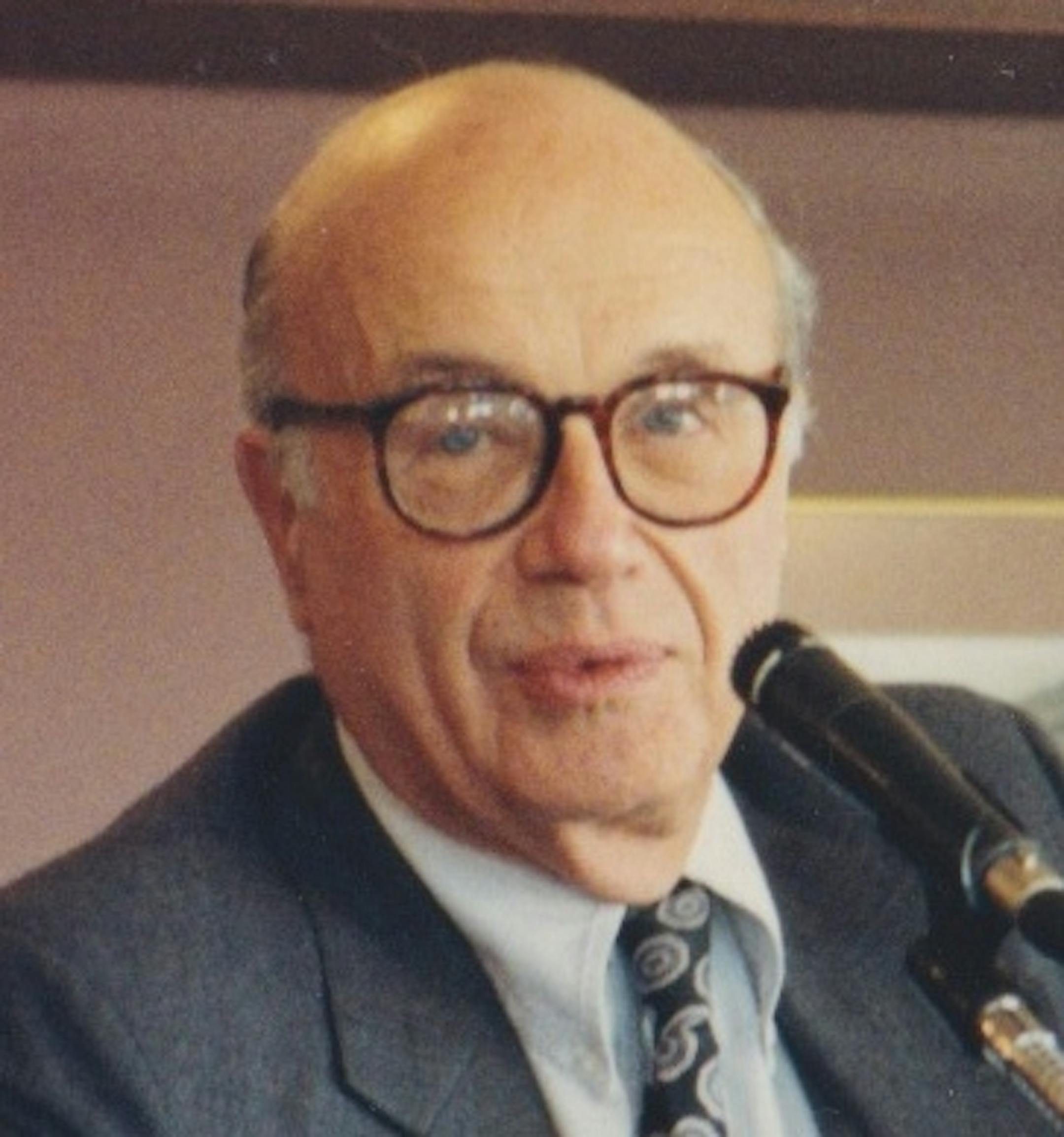
Living-room Scrabble games were vicious in the Kleeman home, where Dick Kleeman taught his children to love writing and language.
An education and political reporter for the Minneapolis Tribune, Kleeman earned friends in high places while working in the newspaper's Washington bureau during the 1960s. He also was a highly valued speaker of Japanese during his service in World War II, and he dedicated himself to the causes of free speech and freedom of information even after he left daily journalism in 1972. The unstoppable punster died earlier this month at age 91.
"He loved playing with language and he was a proud defender of the First Amendment,'' said David Kleeman, his son.
Richard Pentlarge Kleeman grew up in the Northeast, where his mother was a successful radio producer in New York City and his father was a banker. Kleeman attended Choate Rosemary Hall in Connecticut and then entered Harvard, where he graduated in 1944 despite having his studies interrupted by the war.
Kleeman's connection to Minnesota stemmed from his studies of the Japanese language, including time at Fort Snelling.
Starting at the Tribune in 1946, Kleeman covered education for more than a decade and traveled to Alabama in 1955 to report on segregated schools and the emerging civil rights movement. The upshot was a daring newspaper series called "Dixie Divided" that he wrote with Pulitzer Prize-winning reporter Carl Rowan. Kleeman contributed to Rowan's subsequent book, "Go South to Sorrow.''
Even before Kleeman was reassigned in 1966 to the Tribune's news bureau in Washington, D.C., he had become a political junkie at a time when his wife, Roz Kleeman, was heavily involved in Minnesota's Democratic-Farmer-Labor movement. Roz Kleeman died in July. She was an aide to Hubert H. Humphrey when he was mayor of Minneapolis and the Kleemans remained friends with Humphrey and Walter Mondale as those two politicians rose to the White House.
In a 1949 letter to Dick Kleeman, then-Sen. Humphrey talked at length about his desire to keep a safe distance from Minneapolis mayoral politics. "I miss you,'' Humphrey concluded in the letter. "Why don't you ask that City Editor of yours for a month off to come down here and cover my office? Believe me, we will give you something to write about.''


