

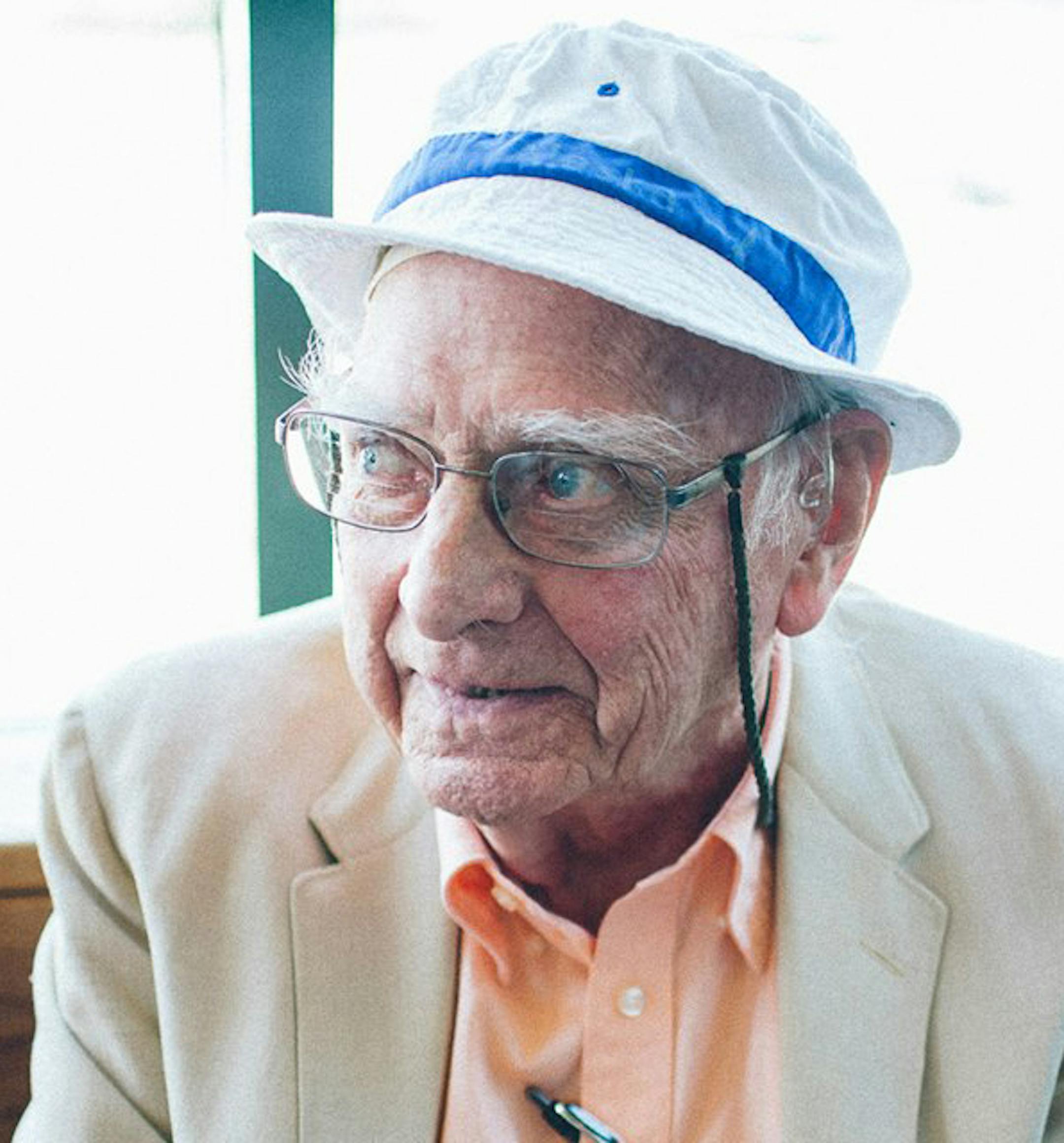
Hal Seymour was known as the "Gray Shark" at the old Minneapolis Star — a lanky editor with a slick ducktail and steely eyes who kept order in the frenetic newsroom with a tough but fair demeanor.
It was said that he could look a deadline in the eye and make the clock blink. Nobody in the newsroom, colleagues say, had a more loyal staff.
"He was that steadying force in the newsroom when everything was going to hell," said Gary Harvey, a longtime copy editor who worked under Seymour during the 1970s and '80s. "But what impressed me the most was that he always cared about the readers. He always said to us, 'Make sure the readers know what they need to know.' "
Seymour died Sunday from medical complications after suffering a broken hip days earlier. He was 85.
For Tim McGuire, who was named managing editor of the Star in 1979, Seymour was that invaluable force who could do all the little things that made the daily publication of a newspaper often seem miraculous. "He didn't crash," McGuire said. "He was judicious and thoughtful. Hal Seymour was a pro's pro."
Seymour came from newspaper blood. His father was an editorial writer for the Des Moines Register who, in the early 1950s, challenged Sen. Joseph McCarthy of Wisconsin for his Communist-baiting tactics. To the north, Seymour's uncle, Gideon Seymour, was to become the well-regarded, civic-minded executive editor of the Minneapolis Star and Minneapolis Tribune.
But instead of throwing himself into journalism, Seymour first pursued a high school interest in theater. He learned acting and stage production at the well-regarded Kendall Playhouse in Des Moines, where he found himself working alongside future stars Cloris Leachman and Julie Harris. He studied briefly at Iowa State University before signing up for a three-year stint in the Marines, then enrolled at Harvard University, graduating in 1953.
Instead of using his family newspaper connections, he went West and landed with the Associated Press, working as a reporter in Cheyenne, Wyo., and Denver. In 1955, he returned to Minneapolis to take a job at the afternoon Star, where he started out covering the police department before working his way up the newsroom hierarchy. When he retired 35 years later, he left a newsroom that had been transformed from hot lead type and Remington typewriters to electronic screens and computer systems.


