

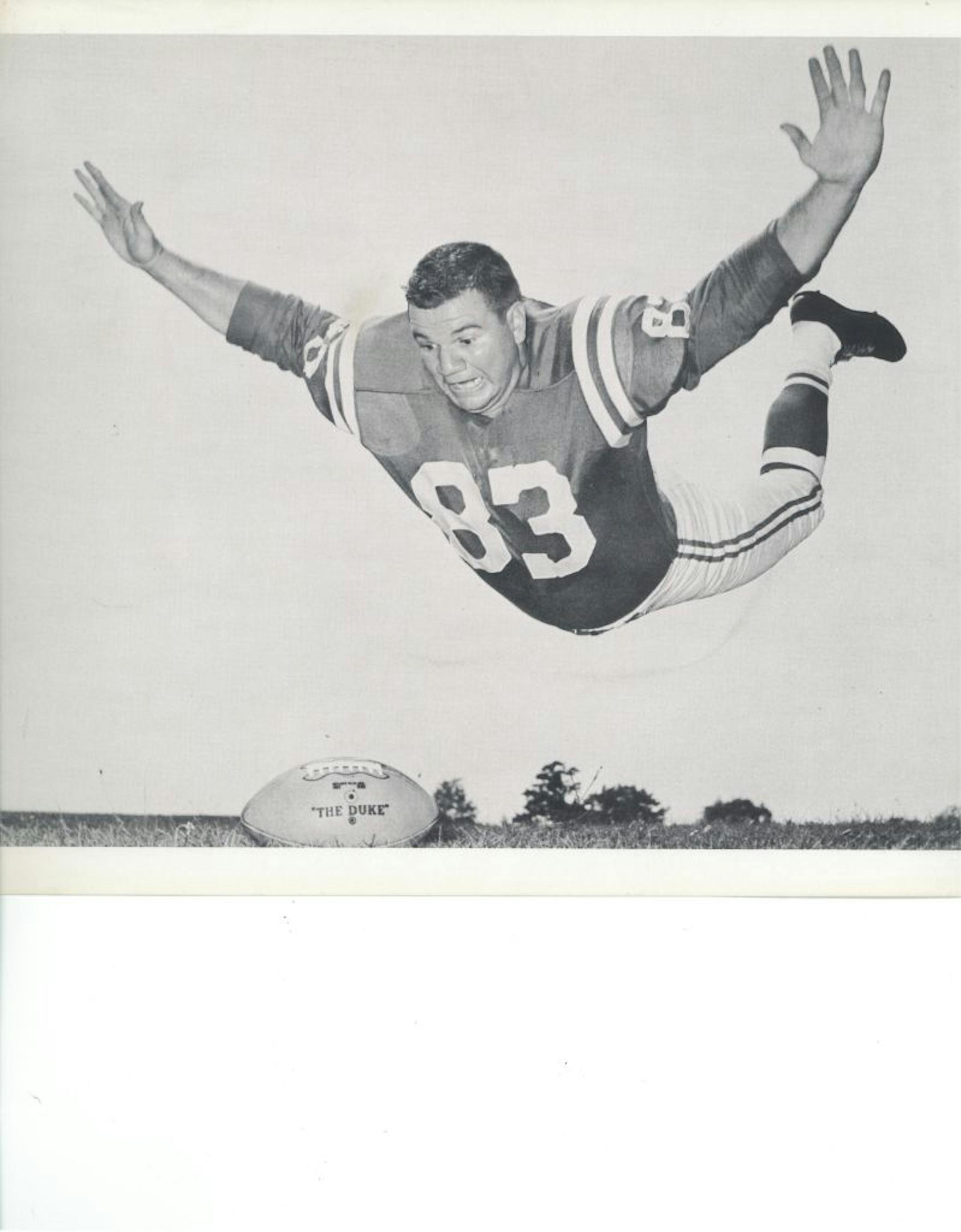
Donald Joyce probably would have scoffed at last week's revelation that New Orleans Saints players were paid secret bounties to purposely injure opponents.
Joyce, who earned a reputation as beyond tough during 12 years in the National Football League -- including a year with the expansion Minnesota Vikings -- might have replied that he came from an era when players gladly took on such challenges for next to nothing. In fact, he himself was the target of a small bounty in the 1950s because of his ability to single-handedly change the course of a game.
Joyce, who bragged, "I never lost a fight in the NFL," then went on to become a coach at DeLaSalle High School in Minneapolis and head scout for the Indianapolis Colts, died Feb. 26. He was 82.
"When he wasn't playing football, there was not a more kind gentleman than my dad," said his son Don Jr. "In 1954, the Los Angeles Rams had a $100 bounty on my dad for anyone who could knock him out of the game. My dad warned the player, Les Richter, that he'd rip his head off. It happened again, and my dad ripped the guy's helmet off and beat him with it. A hundred dollars was a lot of money back in those days."
Joyce was among the elite players who transformed a merely brutal sport into a part of the American culture.
In fact, he was there at the exact moment it occurred. Under the dusky skies of Yankee Stadium in December 1958, his Baltimore Colts, led by quarterback Johnny Unitas and running back Alan Ameche, beat the New York Giants in a championship overtime game, launching the sport into the television age. It came to be known as "the Greatest Game Ever Played."
Joyce came out of blue-collar Steubenville, Ohio, and earned notice as a high school player on a team known as the Big Red. After graduation, he headed to New Orleans and played at Tulane, earning All-America honors and getting drafted by the then-Chicago Cardinals. He played there until he was traded to the Colts in 1953.
It was a time when players wore "cowcatcher" facemasks and floppy jaw pads, where guys came on board with cool nicknames -- Joyce's teammate at the other end of that defensive line was a giant named Eugene Lipscomb, otherwise known as "Big Daddy." The most he earned was $10,000 to $12,000 a year, his son said.


