

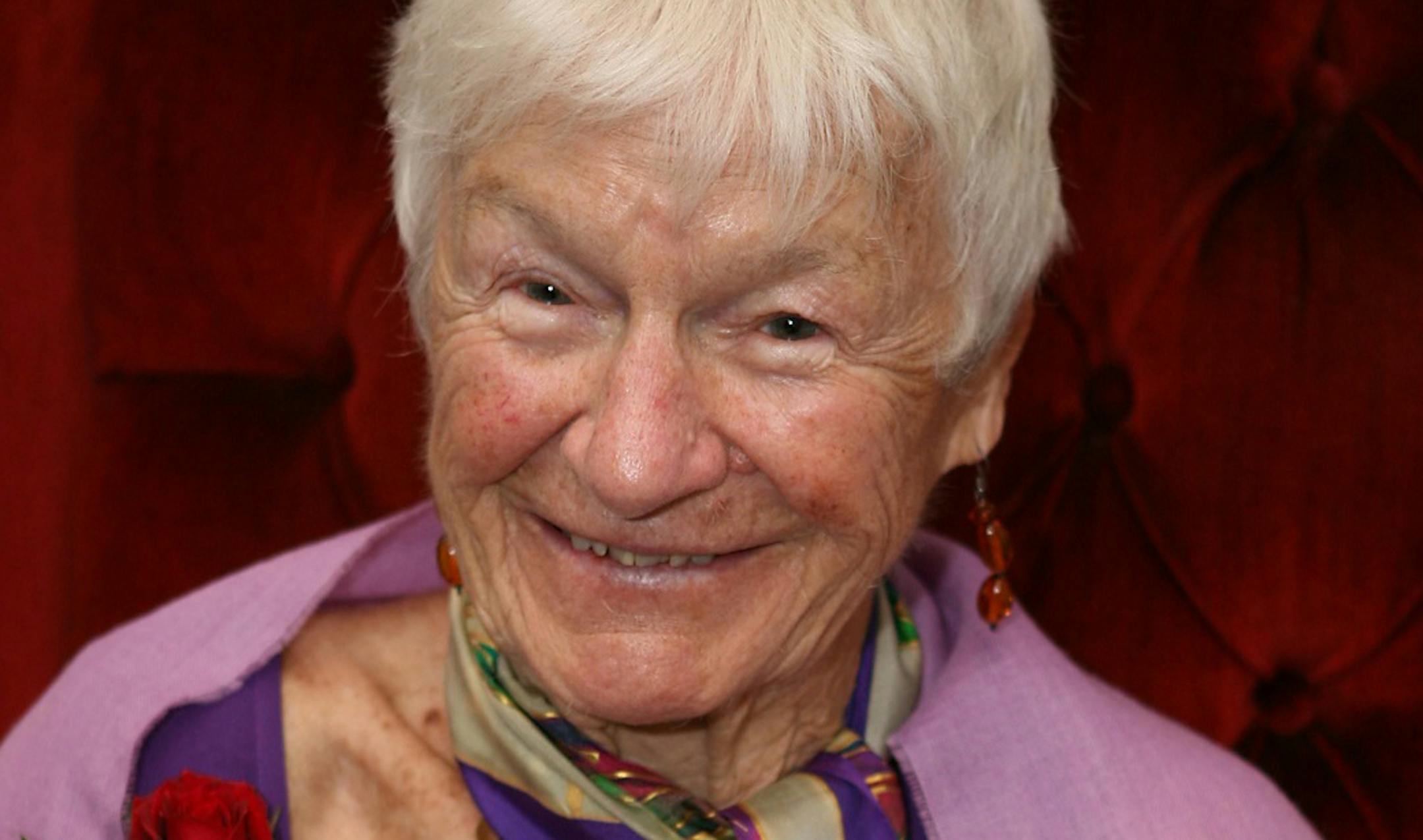
For a woman who survived years behind enemy lines, it seemed only natural to place the rest of her life on the front lines of a peace movement.
Dorothy Crabb devoted much of her adult life to fostering a culture of world peace — for her, the natural outcome of her experience as a young wife and mother trying to raise a family inside a civilian internment camp in Manila during World War II.
Crabb, 94, of Minneapolis, died in late September while flying over the Pacific Ocean to visit her sister, nieces and a nephew in Australia.
Crabb was born in Montreal and emigrated with her family to Australia as a youth. As a young woman, she married an American who was living in New Zealand. They left for the Philippines and were living in Manila when the Japanese invaded the island nation.
Unable to escape, they were interned in a civilian camp, where two of her children were born; a daughter contracted polio during that time.
For three years, Crabb and her husband struggled to raise their first two children in the captivity of an occupying army that could have turned on them and thousands of others at any moment.
"Being interned in that camp was the pivotal incident in her life," said Doris Marquit who was later a colleague in the Minneapolis chapter of the Women's International League for Peace and Freedom. "A very difficult time trying to survive, and she was a survivor."
Five decades later, at 80, Crabb would find herself on what became known around the world as "the Peace Train," traveling from Helsinki to Beijing. Over the course of 22 days, she and 200 other women would meet along the railways with mothers of Russian and Chechen soldiers, or women in the anti-nuclear movement in Ukraine, connecting with kindred spirits in the peace and feminist movements as they rolled through three continents en route to the International Women's Conference in Beijing.


