

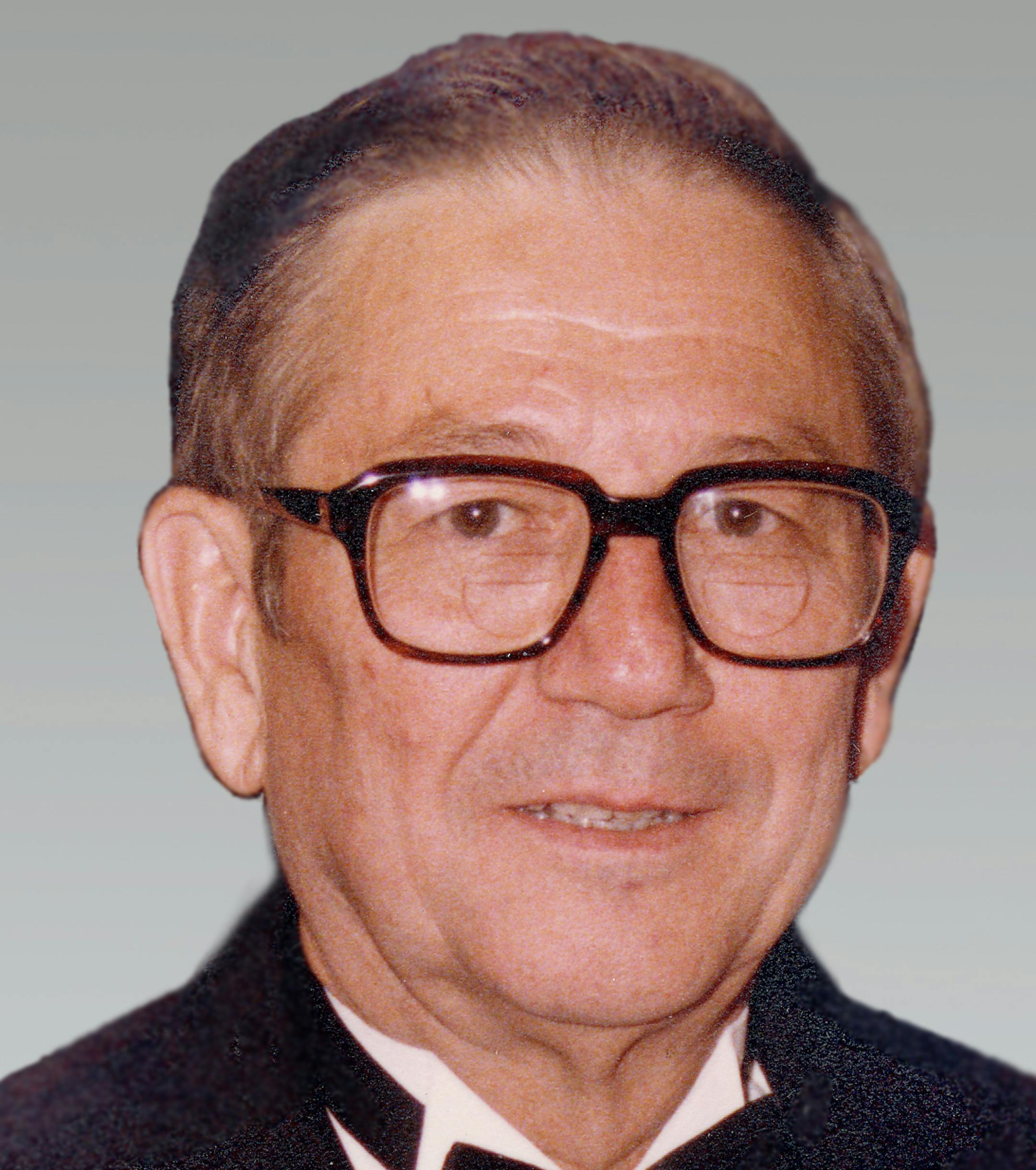
Long before there were desktop computers, engineer Wendell Wilson was part of a team developing refrigerator-size machines that were the granddaddies of modern computers.
He worked on Soviet code-breaking machines for the U.S. Navy during the early 1950s, then became a manager at Remington Rand Univac Corp. in St. Paul during a decade that saw the birth of a technology few imagined would revolutionize the world.
Wilson, 92, died July 3 at his home in Eden Prairie following a 35-year career in engineering.
"Those days, people thought it was the dawn of the atomic age, not the computer age," said his son, Wendell Wilson, of Tucson, Ariz. "For Dad, the computer was a fascinating technical challenge. Nobody had a concept of what it would grow into."
The elder Wilson, the son of John and Eugenia Wilson, grew up on a farm in Cottonwood County, moving to St. James after the family lost the farm during the Great Depression, the younger Wilson said. He graduated from St. James High School in 1941 and married Lorraine Haseman two years later.
He enlisted in the U.S. Army during World War II, receiving training as a radio and radar technician. In 1944, he was assigned to the 10th Army Air Force in the China-Burma-India theater.
Based in eastern India near the Burmese border, Wilson was a radar navigator on aircraft that took soldiers over the Himalaya Mountains into battle against the Japanese in Burma and western China.
"It was often called the Aluminum Trail because of the wreckage of so many aircraft," Wilson said. Members of the 315th Troop Carrier Squadron were awarded the Distinguished Unit Citation for "extraordinary heroism," he said.


