

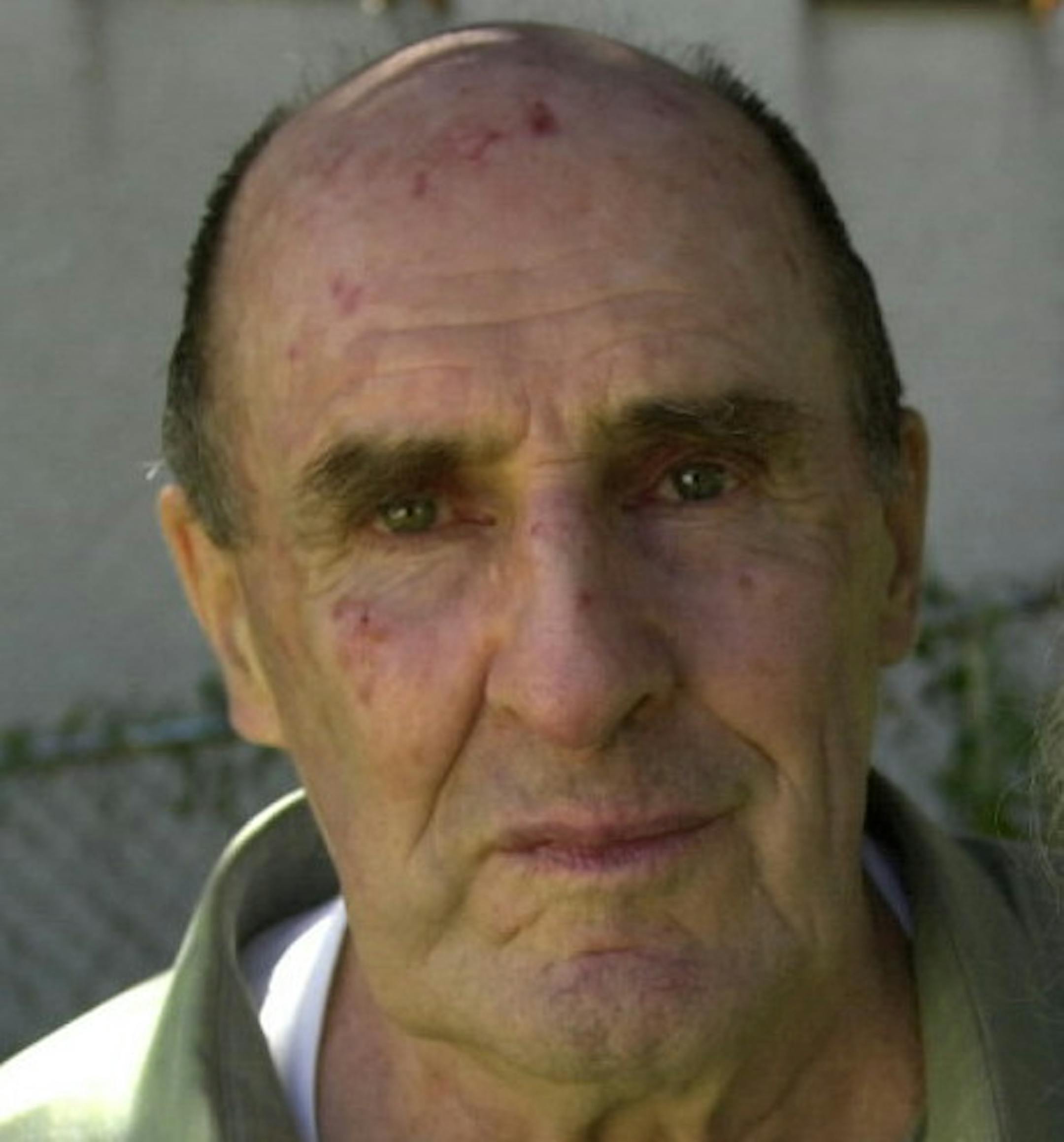
World War II veteran Richard Saholt would pore over magazines searching for just the right images, clip them out with his mother's tiny sewing scissors, then piece together his terrible yet magnificent montages.
Over decades, he composed more than 1,000 montages of disturbing images and words of death, war, child abuse and mental illness as a way to salve his inner wounds.
A paranoid schizophrenic who eschewed antipsychotic medication, Saholt would regularly ignore inner voices urging him to do brutal acts. Instead, he persevered to assemble the montages, which calmed him and gave his life a sense of purpose.
Saholt, of Minneapolis, died Jan. 12. He was 89.
"Richard created painstaking montages that effectively communicated his torment, many of which have been displayed in museums around the country," said Peter Schilling Jr., author of the acclaimed novel "The End of Baseball" and a freelance writer and sportswriter, whose work has appeared in City Pages, the Star Tribune, the Blotter and elsewhere.
"It was very important for him to express his struggle and tell his story," Schilling said.
"In one, you could see an American flag whipping in the center, while Richard's face stares out at the viewer in various stages — a young man, pensive, eager to be a soldier but perhaps terrified of the coming battle, and an older man, equally pensive, having endured not just the battle in the mountains and its attendant horrors, but many years of struggle when the war ended."
Saholt had stuttered horribly since his boyhood, and would later insist that he'd been abused by his mortician father. When Saholt enlisted in the Army in 1942, he was diagnosed as schizophrenic, but that was kept from him until 1969, Schilling said.


