

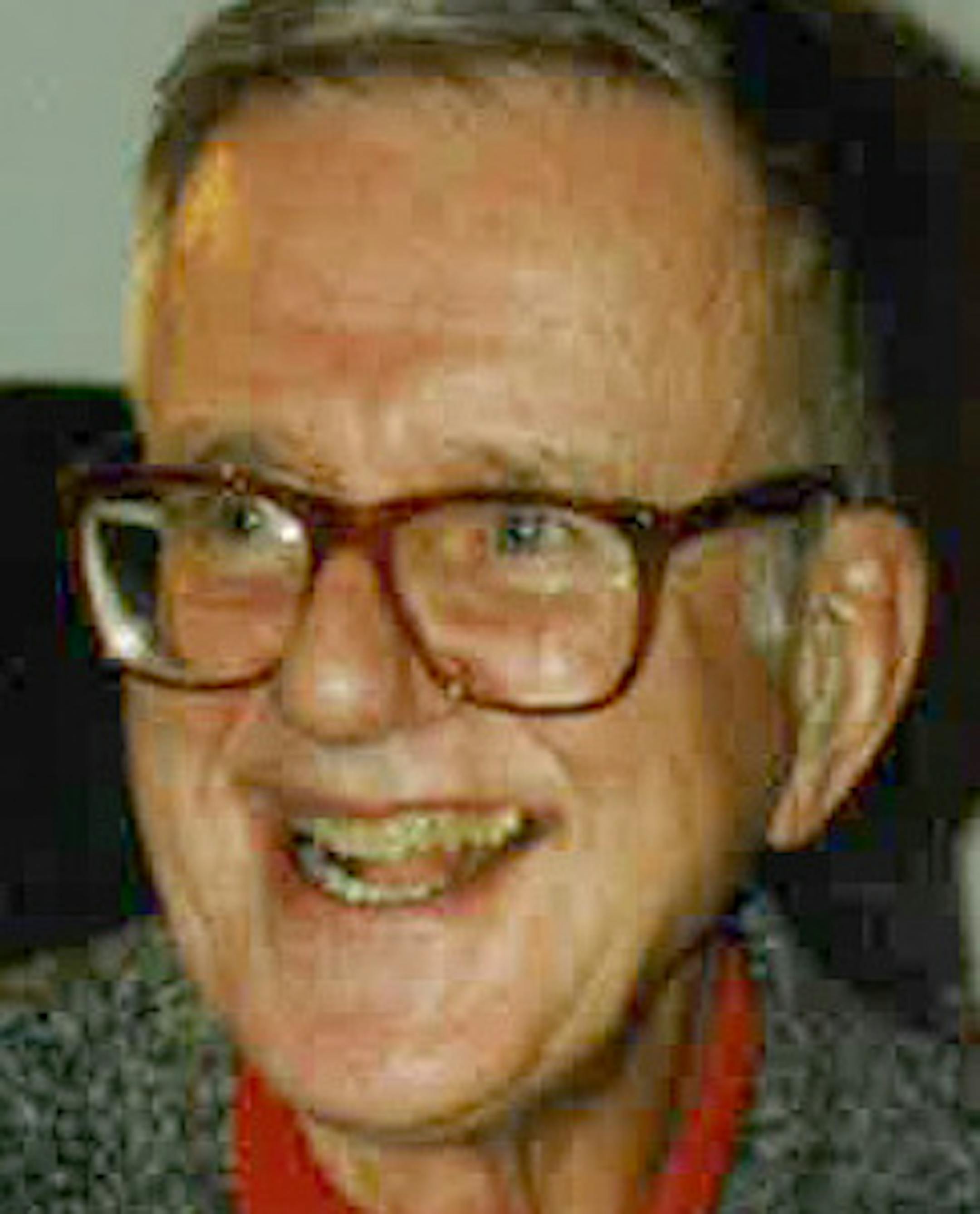
Alan Anderson lived in a world of elegance and sparkles but always tried to stay grounded and dwell in simplicity.
Anderson ran three Anderson's China shops, including one that was a landmark on Nicollet Mall in downtown Minneapolis. He died Oct. 17 at age 96.
When not roaming the sales floor in his trademark bow-tie, Anderson chopped firewood by the cord, stuffed his 6-foot-3 frame into a fuel-efficient compact car and dedicated his time to several nonprofits. And he was always delighted when a customer who came in search of a Herend or Wedgwood treasure went home with a copy of "Small is Beautiful: Economics as if People Mattered," which he kept on display in the stores.
"He believed that you shouldn't waste and that you should live gently on the Earth," said daughter Jane Howard.
Anderson was born March 6, 1920, at Abbott Hospital in Minneapolis, attended the Blake School and then went to Harvard for college and business school. He went into the Army during World War II and, when he returned, Anderson took over the family business.
Anderson's China specialized in fine china, crystal, glassware, silver and home furnishings, and was a destination for thousands of couples who used the bridal registry. In the mid-1950s, Anderson opened a second store in Southdale Center in Edina, one of the original tenants in the nation's first indoor shopping mall. In 1975, Anderson opened a third store in Wayzata.
By the early 1990s, Anderson sensed the retail world was changing. A Crate and Barrel store had opened across from his Southdale store, and it was obvious that people weren't giving the kinds of heirloom wedding gifts they once did, or collecting the way their parents did. In 1994, at age 74, he liquidated the business and retired.
He had plenty of other things to do. His intellectual curiosity ran deep, especially for history, theology, politics, global population balance and philosophy. He was involved in several local associations for professional and social causes, including retailing and mental health. He also served for three terms as chairman of World Population Balance, a nonprofit group focused on overpopulation. He was close to the group's founder, David Paxson, who said that Anderson helped keep the organization moving forward.


