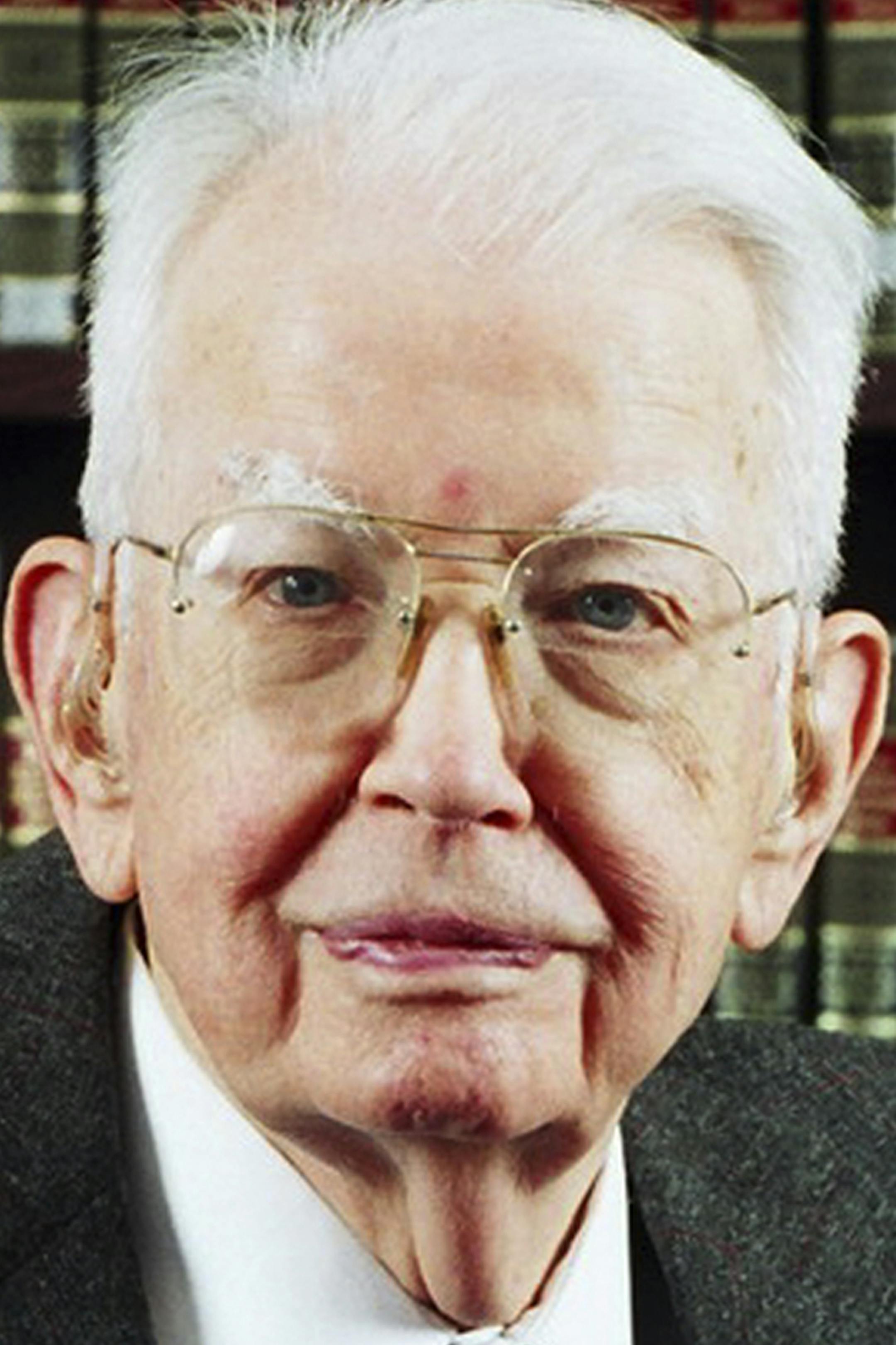
Ronald H. Coase, 102, whose insights about why companies work and when government regulation is unnecessary earned him a Nobel Memorial Prize in Economic Science in 1991, died Monday in Chicago.
By his own description, Coase was an "accidental" economist who spent most of his career teaching at the University of Chicago Law School and not its economics department. Yet he is best known for two papers that are counted among the most influential in the modern history of the science.
In one, "The Nature of the Firm," which was largely developed while he was still an undergraduate and published in 1937, Coase revolutionized economists' understanding of why people create companies and what determines their size and scope.
He introduced the concept of transaction costs — the costs each party incurs in the course of buying or selling things — and showed that companies made economic sense when they were able to reduce or eliminate them by performing some functions in-house rather than dealing in the marketplace.
The ideas laid out in the paper explain why, in the first half of the 20th century, companies tended to become more vertically integrated (for example, Ford Motor building its own steel mills and buying its own rubber plantations rather than relying on suppliers), and why, more recently, companies have tended to do the opposite, aggressively outsourcing even basic functions like paying their employees.
In the second of his groundbreaking papers, "The Problem of Social Cost," published in 1960, Coase challenged the idea that the only way to restrain people and companies from behaving in harmful ways was through government intervention. He argued that if there were no transaction costs, the affected parties could negotiate and settle conflicts privately to their mutual benefit, and that fostering such settlements might make more economic sense than pre-empting them with regulations.
The paper made the idea of property rights fundamental to understanding the role of regulation in the economy.
Ronald Harry Coase was born Dec. 29, 1910, in Willesden, England. Though he spent more than 50 years living and working in the United States, he retained his English accent and habits all his life.