

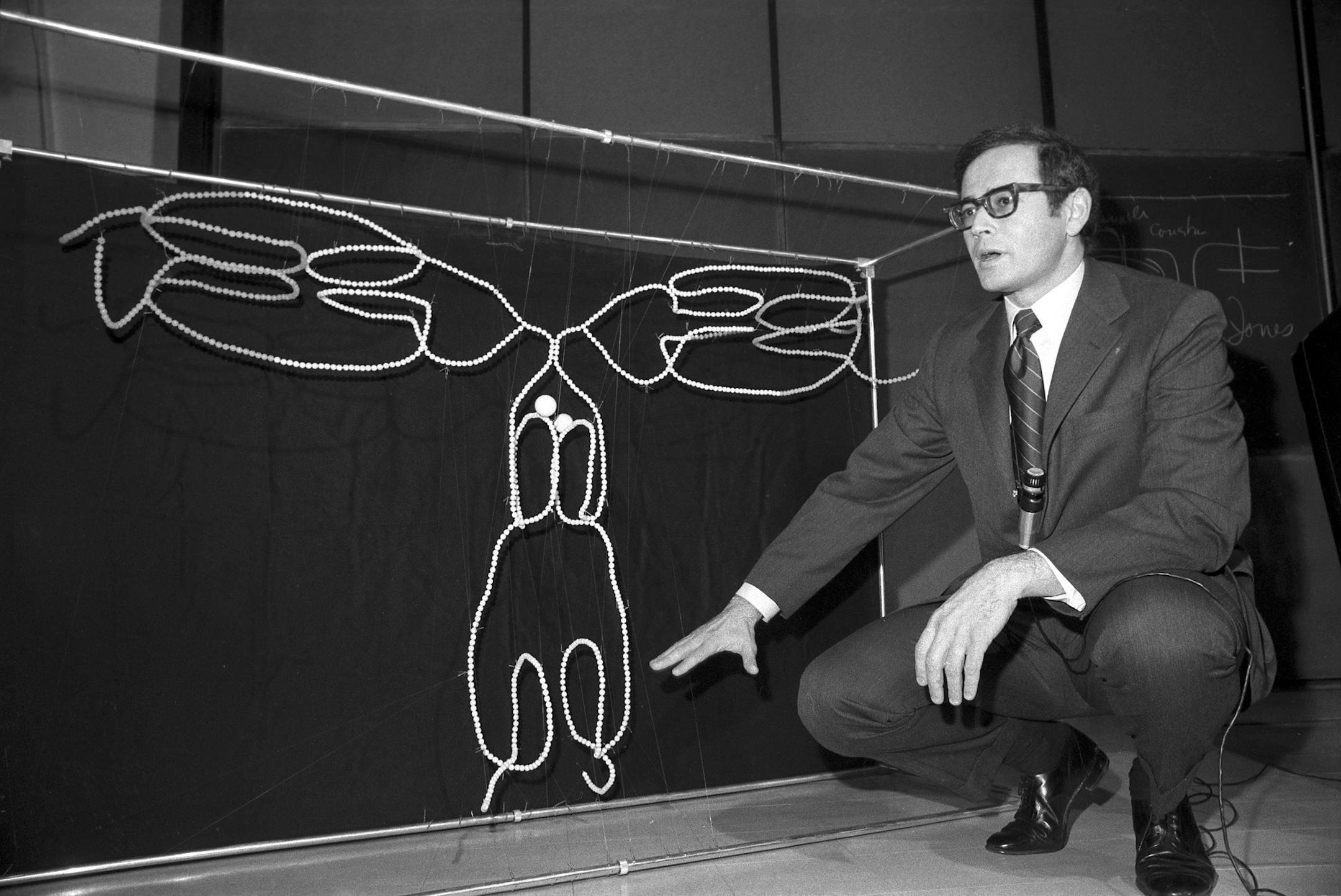
Dr. Gerald M. Edelman, 84, who shared a 1972 Nobel Prize for a breakthrough in immunology and went on to contribute key findings in neuroscience and other fields, becoming a leading if contentious theorist on the workings of the brain, died May 17 at his home in La Jolla, Calif.
Edelman had Parkinson's disease and prostate cancer, his son David said.
He was known as a problem-solver, a man of relentless intellectual energy who asked big questions and attacked big projects. What interested him, he said, were "dark areas" where mystery reigned.
In 1972, he received the Nobel Prize in Physiology or Medicine after more than decade of work on the process by which antibodies — the foot soldiers of the immune system — mount their defense against infection and disease.
He shared the prize with Rodney R. Porter, a British scientist who worked independent of Edelman. The Nobel committee cited them for their separate approaches in deciphering the chemical structure of antibodies.
Allan Folsom, 72, a struggling screenwriter whose first novel, an intricate thriller called "The Day After Tomorrow," was by some accounts the highest-priced fiction debut in publishing history when its rights sold for $2 million in 1993, died May 16 in Santa Barbara, Calif. The cause was metastatic melanoma.
After more than 30 years of trying to sell film and TV scripts, Folsom wrote "The Day After Tomorrow" about a U.S. doctor who becomes embroiled in a neo-Nazi cabal to resurrect Hitler.
Little, Brown and Co. and Warner Books bought the manuscript for a combined $2 million. After the international and movie rights were sold, Folsom had grossed nearly $5 million. The novel debuted at No. 3 on the New York Times' bestseller list, staying on for months.


