WASHINGTON - President Obama made the case Wednesday for slowing the rapid growth of the national debt while retaining core Democratic values, proposing a mix of long-term spending cuts, tax increases and changes to social welfare programs as his opening position in a partisan budget battle over the nation's fiscal challenges.
After spending months on the sidelines as Republicans laid out their plans, Obama jumped in to present an alternative and a philosophical rebuttal to the conservative approach that will reach the House floor Friday. Republican leaders were working Wednesday to round up votes for that measure and one to finance the government for the rest of the fiscal year.
Obama said his proposal would cut federal budget deficits by a cumulative $4 trillion over 12 years, compared with a deficit reduction of $4.4 trillion over 10 years in the Republican plan. But the president said he would use starkly different means, rejecting the fundamental changes to Medicare and Medicaid proposed by Republicans and relying in part on tax increases on the affluent.
"We don't have to choose between a future of spiraling debt and one where we forfeit investments in our people and our country," he said. "To meet our fiscal challenge, we will need to make reforms. We will all need to make sacrifices. But we do not have to sacrifice the America we believe in. And as long as I'm president, we won't."
Obama framed his proposal as a balanced alternative to the Republican plan, setting the stage for a debate that will consume Washington in coming weeks, as the administration faces off with Congress over raising the national debt ceiling, and into next year, as the president runs for reelection.
Obama named Vice President Joe Biden to lead the negotiations with Congress, which the administration hopes will produce the outlines of a deal by the end of June, although a detailed agreement might have to await the outcome of the 2012 election. Biden played a similar role in talks that averted a government shutdown at the 11th hour, over issues far less thorny than those on the table now.
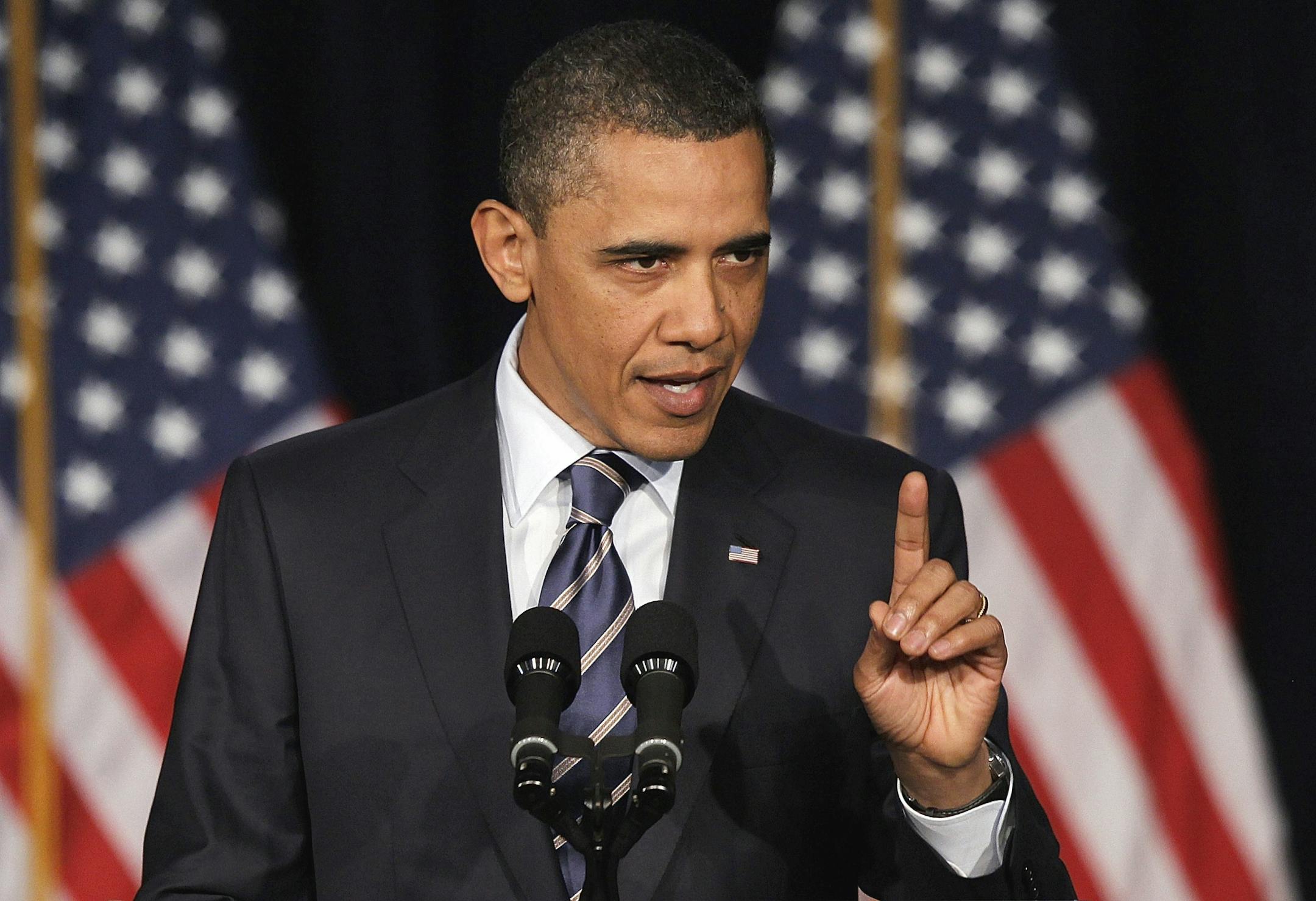
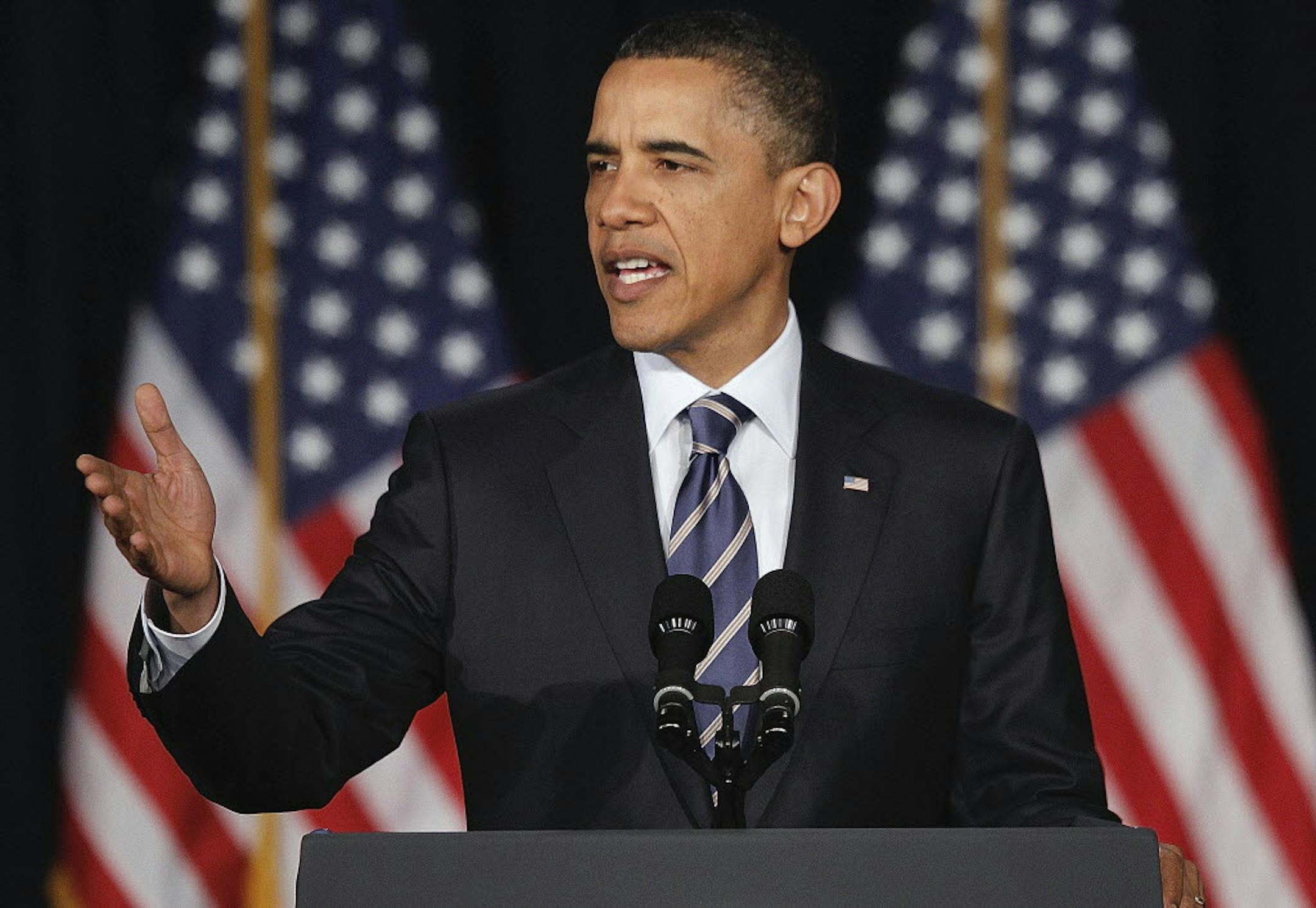
In a 44-minute speech to an audience at George Washington University that included Rep. Paul Ryan of Wisconsin, the author of the Republican plan, Obama was often combative and partisan, saying the Republican approach would hurt the elderly by driving up the cost of medical care, deprive millions of health insurance and starve the nation of investments in its future. "These are the kind of cuts that tells us we can't afford the America that I believe in," he said. "I believe it paints a vision of our future that's deeply pessimistic.
"There's nothing serious about a plan that claims to reduce the deficit by spending a trillion dollars on tax cuts for millionaires and billionaires," Obama continued, as Ryan sat stone-faced. "There's nothing courageous about asking for sacrifice from those who can least afford it and don't have any clout on Capitol Hill."