Obama says U.S. will 'take the fight' to ISIL

Airstrikes also target Khorasan, an Al-Qaida affiliate in Syria

September 24, 2014 at 3:53AM
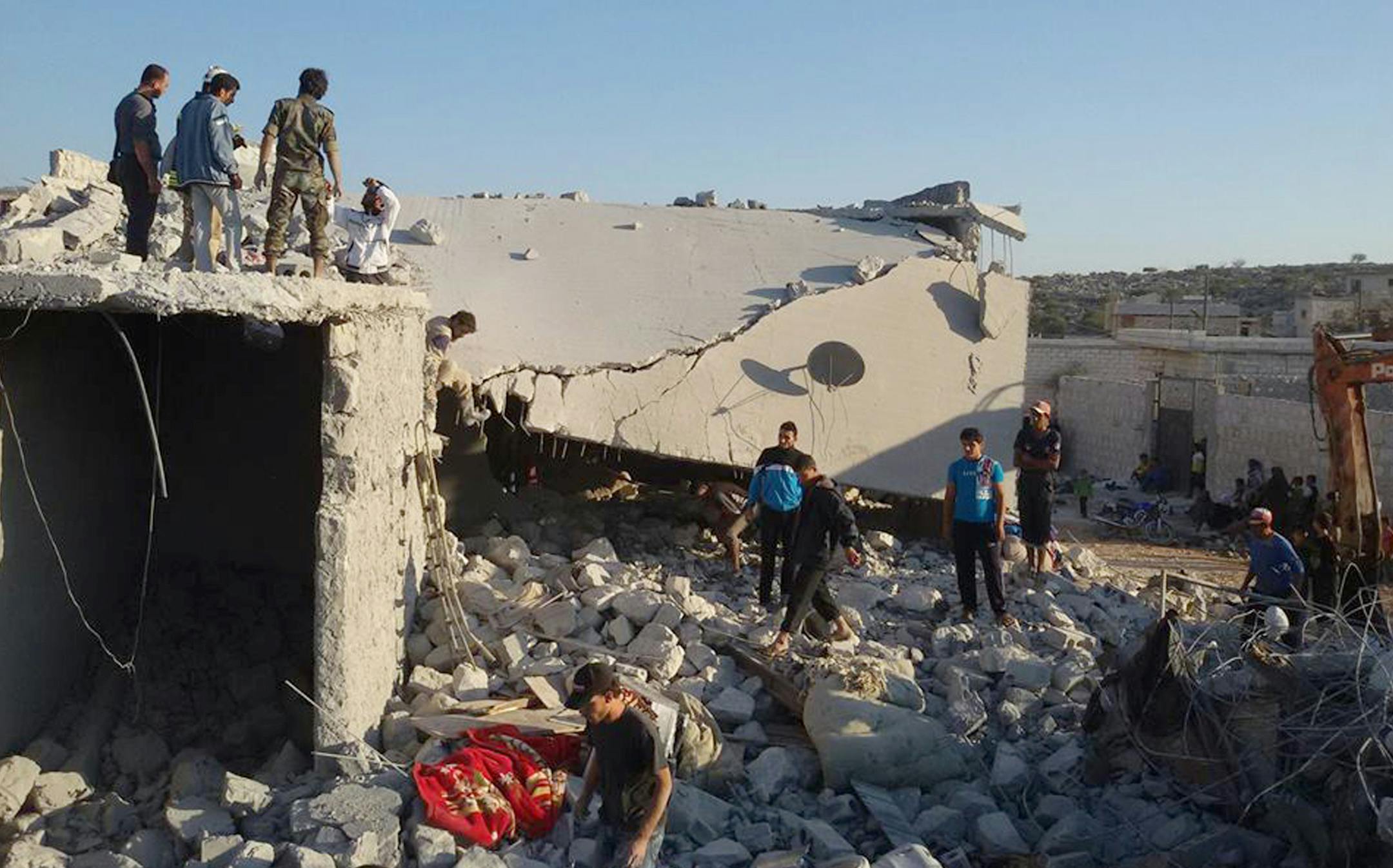
This photo provided by an anti-Bashar Assad activist group Edlib News Network (ENN), which has been authenticated based on its contents and other AP reporting, show according to them Syrian citizens check a damaged house that targeted by the coalition airstrikes, in the village of Kfar Derian, a base for the al-Qaida-linked Nusra Front, a rival of the Islamic State group, between the northern province of Aleppo and Idlib, Syria, Tuesday Sept. 23, 2014. Syria said Tuesday that Washington informed
This photo provided by an anti-Bashar Assad activist group Edlib News Network (ENN), which has been authenticated based on its contents and other AP reporting, show according to them Syrian citizens check a damaged house that targeted by the coalition airstrikes, in the village of Kfar Derian, a base for the Al-Qaida-linked Nusra Front, a rival of the Islamic State group, between the northern province of Aleppo and Idlib, Syria, Tuesday Sept. 23, 2014. Syria said Tuesday that Washington informed President Bashar Assad’s government of imminent U.S. airstrikes against the Islamic State group, hours before an American-led military coalition pounded the extremists’ strongholds across northern and eastern Syria. (AP Photo/Edlib News Network ENN) (The Minnesota Star Tribune)

By Mark Landler, Ben Hubbard and Helene Cooper • New York Times

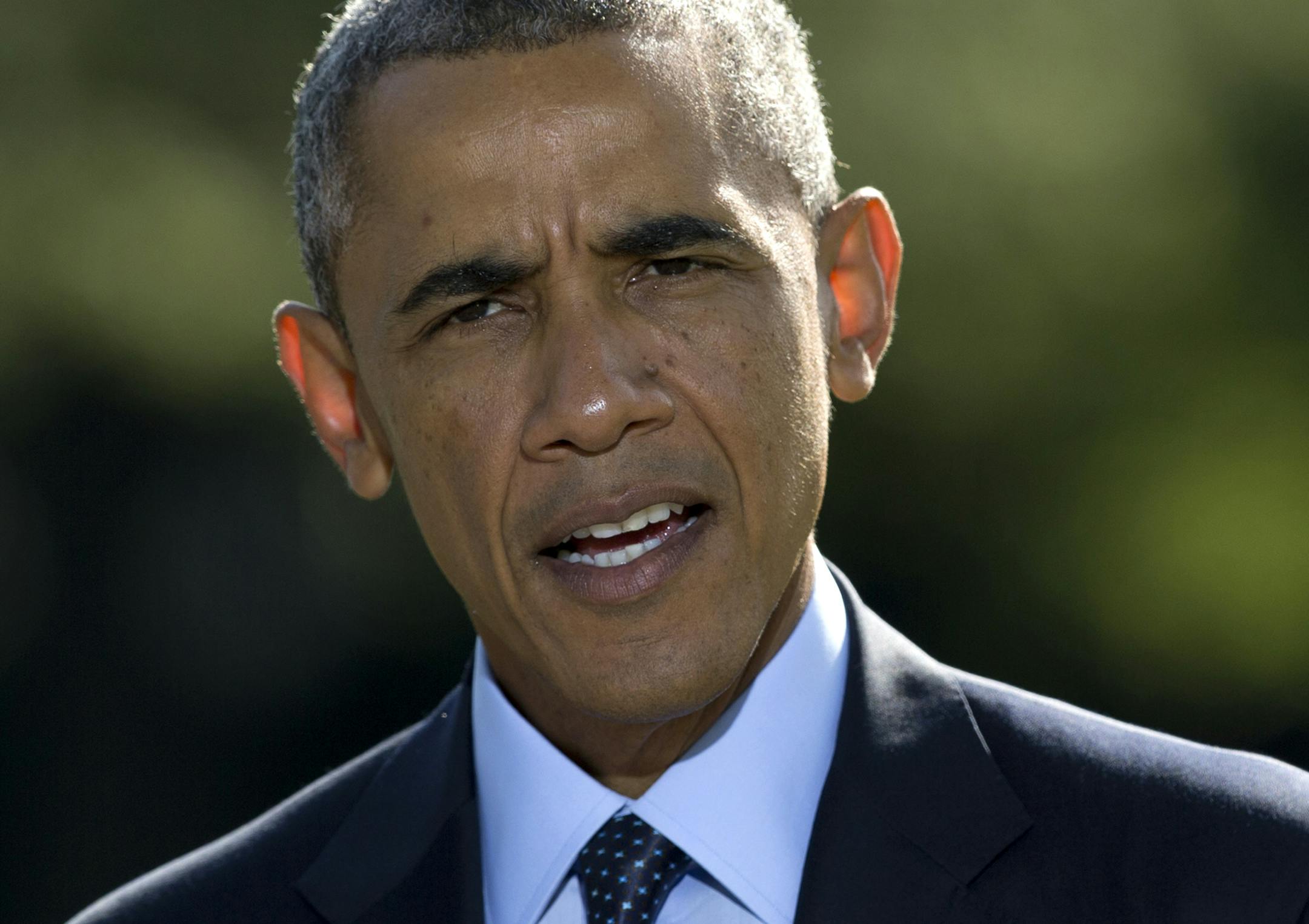
WASHINGTON – President Obama on Tuesday hailed the U.S.-led coalition that conducted airstrikes against the Islamic State in Iraq and the Levant (ISIL) in Syria on Tuesday, declaring, "We're going to do what is necessary to take the fight to this terrorist group."

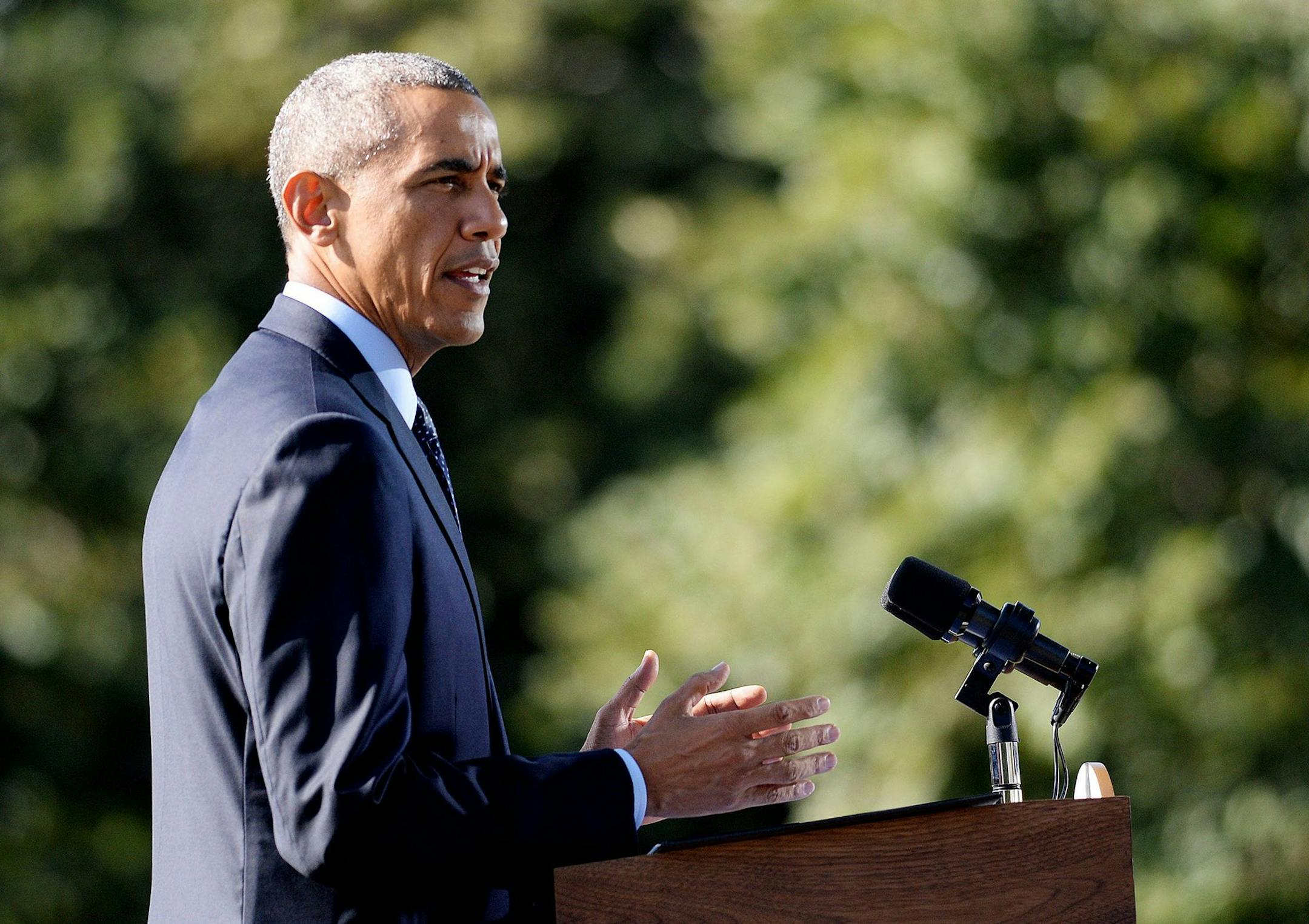
Speaking on the South Lawn of the White House, Obama said U.S. planes had also struck targets of another militant group, Khorasan, and declared that there would be "no safe haven" for the group, which officials say is linked to Al-Qaida and has been plotting attacks against Americans.

The United States already has bombed ISIL targets in Iraq at that country's request. But it did not seek permission to bomb the group in neighboring Syria.

The president emphasized that Saudi Arabia, Jordan, the United Arab Emirates, Qatar and Bahrain had taken part in the air operation.

"America is proud to stand shoulder to shoulder with these nations on behalf of our common security," he said. "The strength of this coalition makes clear to the world that this is not just America's fight alone." The fight, he said, "will take time."

Most of the strikes hit the extensive military and economic infrastructure of ISIL in northern and eastern Syria.

"In addition, the United States has initiated military actions in Syria against Al-Qaida elements in Syria known as the Khorasan group to address terrorist threats that they pose to the United States and our partners and allies," Obama said.
Reaction in Raqqa

In Raqqa, the Syrian city that is ISIL's de facto capital, the former governor's office used as a headquarters was reduced to rubble by the airstrikes. An equestrian club where fighters had lodged their families and a training camp near town also had been bombed.

Even after a year living under the fist of ISIL, where men with guns and a messianic vision controlled nearly every aspect of their lives, the people of Raqqa were surprised by what they found.

"I opened my shop at 8 a.m., and everything was ordinary," said shopkeeper Abu Khalil. "Then I heard from my neighbor that today's attacks were by the Americans, and not the regime."

The coalition hit training camps, headquarters and a recently captured air base. In Deir al-Zour province, along the border with Iraq, at least a dozen sites were hit, including an agricultural school turned into a command center.

At least one of the strikes killed civilians as well, raising suspicions of U.S. motives even among those who said they were otherwise happy to see ISIL pushed back.

"We know the history of American strikes in Afghanistan, Iraq and Yemen," said Ziad al-Ali, an unemployed university graduate in Raqqa. "When civilians are going to be killed, sorry is not enough."

Not a war on Islam

The participation of five Arab countries in the operation will bolster the president's argument that this campaign does not pit the United States against the Sunni Muslim world, but rather a broad coalition of Sunni Muslim and Western countries against a Sunni extremist group.

The air attacks were said to have scattered the jihadist forces and damaged facilities they have built in Syria that helped fuel their seizure of a large part of Iraq this year.

It was difficult to get a full picture on Tuesday of the toll taken by the airstrikes, in part because extremist groups in Syria generally do not report their casualties. It appeared that the great majority of those killed in the airstrikes were associated with ISIL or with the Nusra Front, the Al-Qaida affiliate in Syria.

At least 70 fighters from ISIL were killed in strikes in the north and east, according to the Syrian Observatory for Human Rights, an organization based in Britain that monitors the conflict in Syria. About 100 others were injured, the organization said.

Farther east, strikes on a group of villas abandoned by their owners killed about 50 people, the organization said, adding that most of the dead were foreign fighters.

The clearest reported case of civilian casualties came in the village of Kafi Daryan in Idlib Province, where 15 people were killed, about half of them civilians, including four children, the observatory said.

Witnesses in Syria, even those who oppose the airstrikes, acknowledged that they appeared to be precisely targeted, especially in comparison with the unguided bombs and exploding barrels regularly dropped by the Syrian government.

Separate from the attacks on ISIL, the U.S. Central Command said that U.S. forces acting alone "took action" against "a network of seasoned Al-Qaida veterans" from Khorasan in Syria to disrupt "imminent attack planning against the United States and Western interests."

Officials did not reveal where or when such attacks might take place.

Pentagon officials characterized the offensive in Syria as "very successful," and Rear Adm. John Kirby, the Pentagon press secretary, said that the strikes were "only the beginning" of a sustained campaign to destroy the Islamic State.

Airstrikes at midnight

Defense officials said the airstrikes began at midnight with the launching of some 40 Tomahawk cruise missiles from the destroyer USS Arleigh Burke at positions held in Aleppo by Khorasan. The majority of the cruise missile attacks were against Khorasan near Aleppo, but some were also launched at ISIL targets around the Sunni militant headquarters in Raqqa.

That first stage of the attack was conducted only by the United States. The second stage began soon after, and U.S. warplanes were joined by fighters and bombers from Saudi Arabia, the United Arab Emirates, Bahrain and Jordan, to target ISIL compounds, barracks and vehicles in northern Syria.

A third wave — which also included Arab countries — targeted ISIL positions in eastern Syria, Defense Department officials said. A senior military official said that during the three waves of strikes, the United States and its Arab allies dropped as many bombs in one night as the United States had during all of its previous operations against ISIL in Iraq.


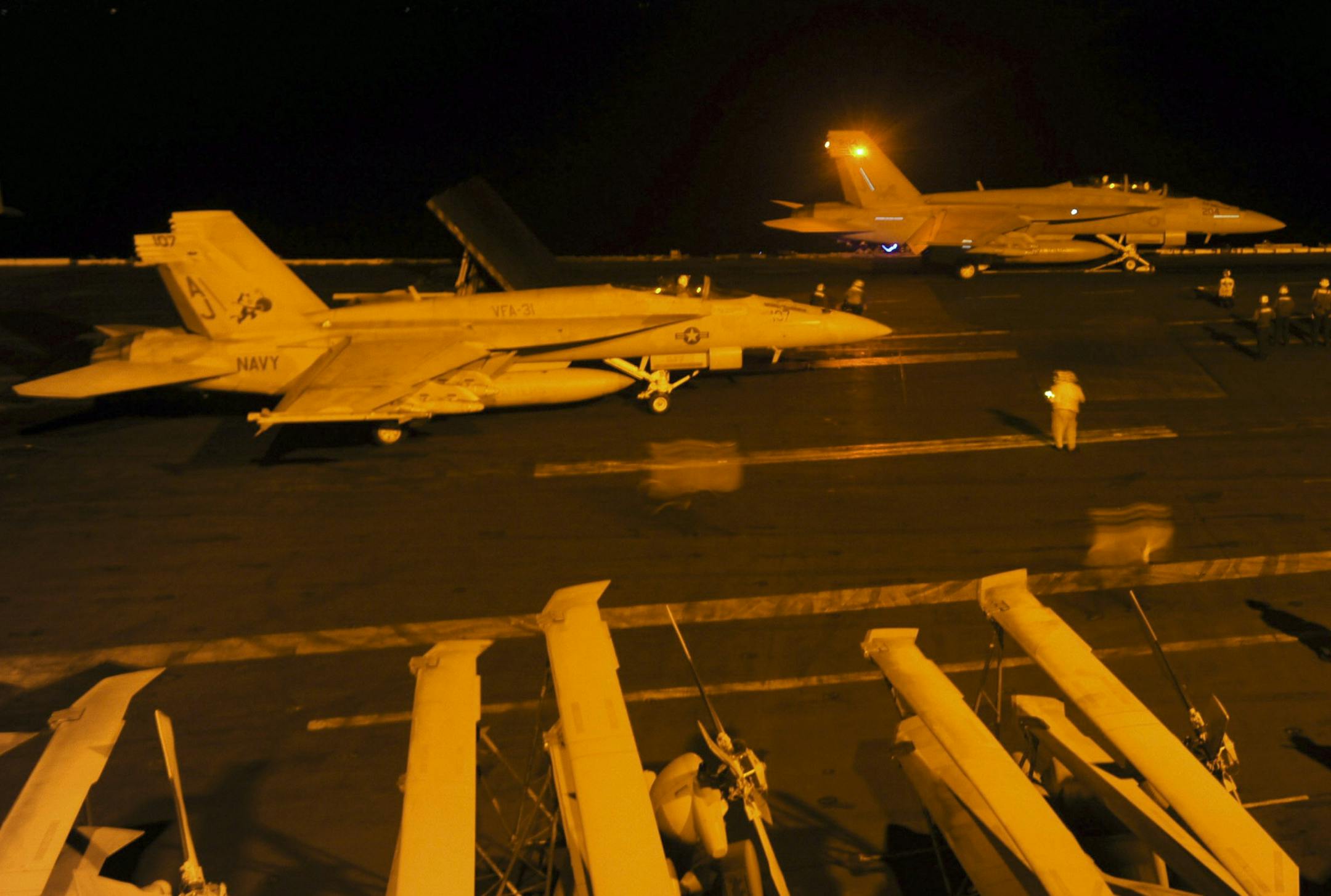
In a handout photo, an F/A-18E Super Hornet, attached to the U.S. Navy’s Strike Fighter Squadron 31, and another Hornet attached to Navy’s Strike Fighter Squadron 213, prepare to launch from the flight deck of the aircraft carrier USS George H.W. Bush to engage Islamic State targets in Syria, while at sea in the Persian Gulf on Sept. 23, 2014. Five Arab countries joined the U.S. in airstrikes against the Islamic State and at least one other extremist group i
War footing: A house damaged by U.S. airstrikes, top, in Kfar Derian, Syria; above, left, President Obama at the White House; above right, U.S. Navy fighters prepared to launch from the flight deck of the aircraft carrier USS George H.W. Bush on Tuesday. (The Minnesota Star Tribune)
President Barack Obama speaks about the participation of five Arab nations in airstrikes against militants in Syria., Tuesday, Sept. 23, 2014, on the South Lawn the White House, in Washington, before heading to the United Nations. The president said the participation of five Arab nations in airstrikes against militants in Syria "makes it clear to the world this is not America's fight alone." (AP Photo/Carolyn Kaster)
President Barack Obama speaks about the participation of five Arab nations in airstrikes against militants in Syria., Tuesday, Sept. 23, 2014, on the South Lawn the White House, in Washington, before heading to the United Nations. The president said the participation of five Arab nations in airstrikes against militants in Syria "makes it clear to the world this is not America's fight alone." (AP Photo/Carolyn Kaster) (The Minnesota Star Tribune)
President Barack Obama delivers a statement about the U.S. strategy against ISIS at the White House in Washington, D.C., on Tuesday, Sept. 23, 2014. (Olivier Douliery/Abaca Press/MCT)
President Barack Obama delivers a statement about the U.S. strategy against ISIS at the White House in Washington, D.C., on Tuesday, Sept. 23, 2014. (Olivier Douliery/Abaca Press/MCT) (The Minnesota Star Tribune)
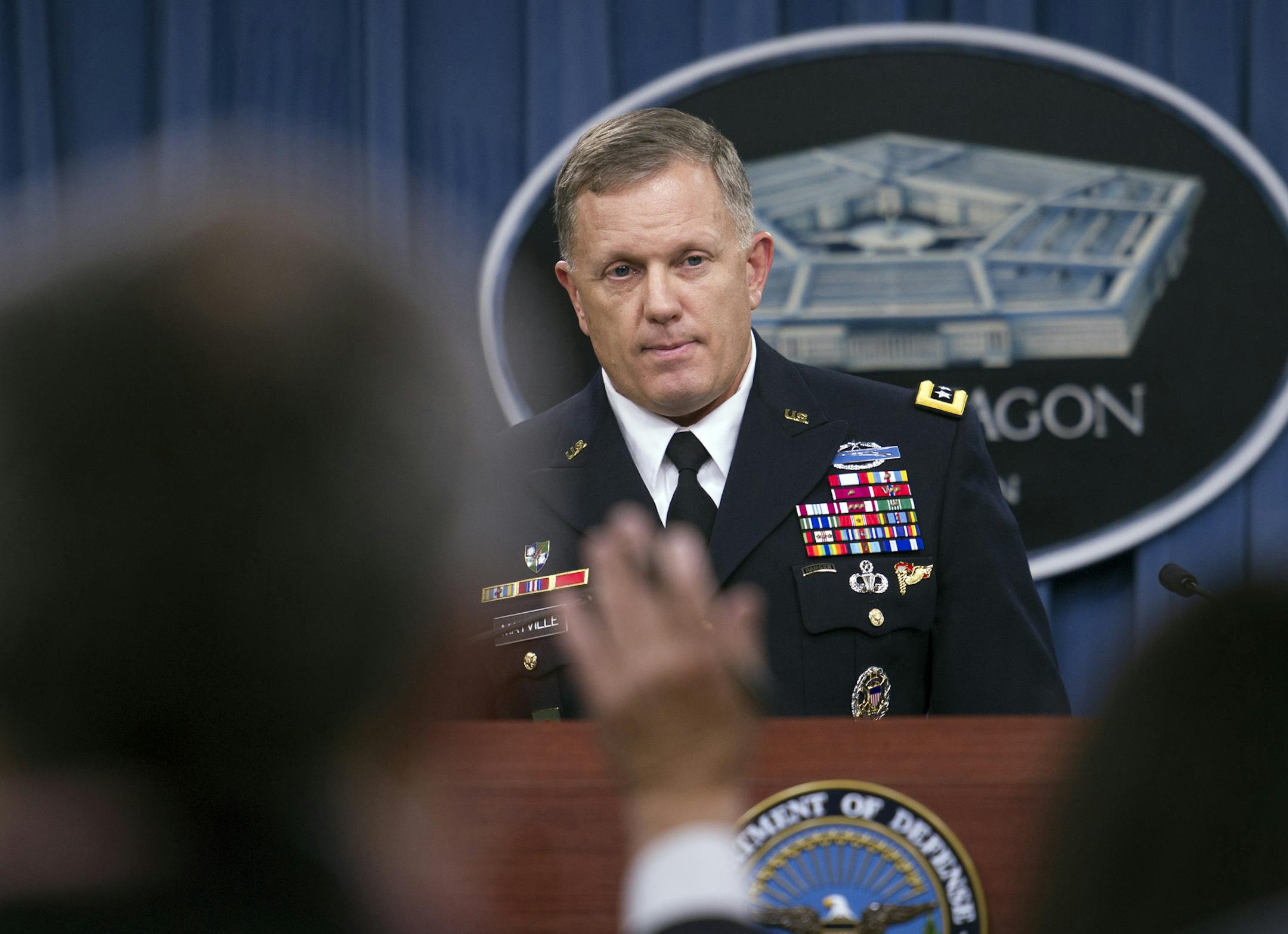
Army Lt. Gen. William Mayville, Jr., Director of Operations J3, takes a question while speaking about the operations in Syria, Tuesday, Sept. 23, 2014, during a news conference at the Pentagon. In a separate action from the air strikes against the Islamic State group, the U.S. bombed a cell of al Qaida militants in northwestern Syria after concluding they were close to attacking the U.S. or Europe, Pentagon officials say. Mayville, the Pentagon’s operations chief, said that the Khorasan G
Army Lt. Gen. William Mayville, Jr., the Pentagon’s operations chief, took a question about the operations in Syria during a news conference Tuesday. (The Minnesota Star Tribune)
about the writer

about the writer

More from No Section

See More
FILE -- A rent deposit slot at an apartment complex in Tucker, Ga., on July 21, 2020. As an eviction crisis has seemed increasingly likely this summer, everyone in the housing market has made the same plea to Washington: Send money — lots of it — that would keep renters in their homes and landlords afloat. (Melissa Golden/The New York Times) ORG XMIT: XNYT58
Melissa Golden/The New York Times

It’s too soon to tell how much the immigration crackdown is to blame.