

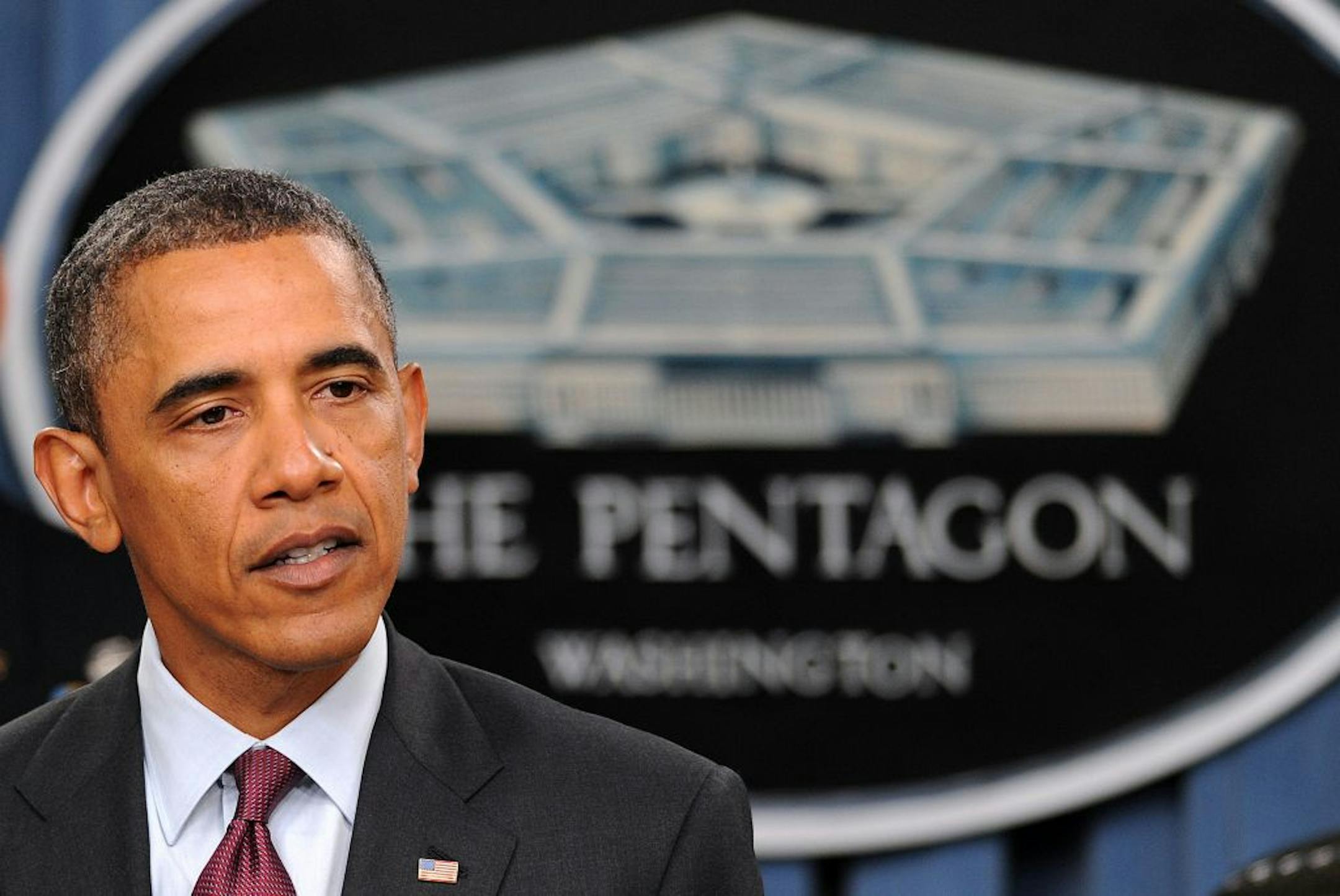
President Obama has put forward a generally pragmatic vision of how this country will organize and deploy its military in the 21st century, while also addressing its deep fiscal problems.
It is based on the idea that the country must be smarter and more restrained in its use of force -- a relief after President George W. Bush's disastrous war in Iraq. It will mean a significant reduction in the size of the Army and Marine Corps.
But it doesn't minimize the fact that the world is a very dangerous place and says the country must still be ready to fight a major land war -- although one lasting for years would require another buildup.
It argues, persuasively, that many of the challenges out there can be dealt with by air power, intelligence, special operations or innovative technologies like drones.
Obama plans to focus more resources on naval and air power in the Strait of Hormuz, to contain an increasingly assertive Iran, and in Asia, to moderate and counterbalance China's ambitions.
We agree that the United States needs to be more engaged in both areas, but the new Asia focus, in particular, must not be an excuse to avoid other needed budget cuts.
Republicans are predictably in high dudgeon over the decision to jettison the cold-war concept of being able to fight and win two conventional land wars simultaneously. It was always an artificial construct intended mainly to ensure the Pentagon got all it wanted.
Still, the United States must be ready to face multiple contingencies.


