

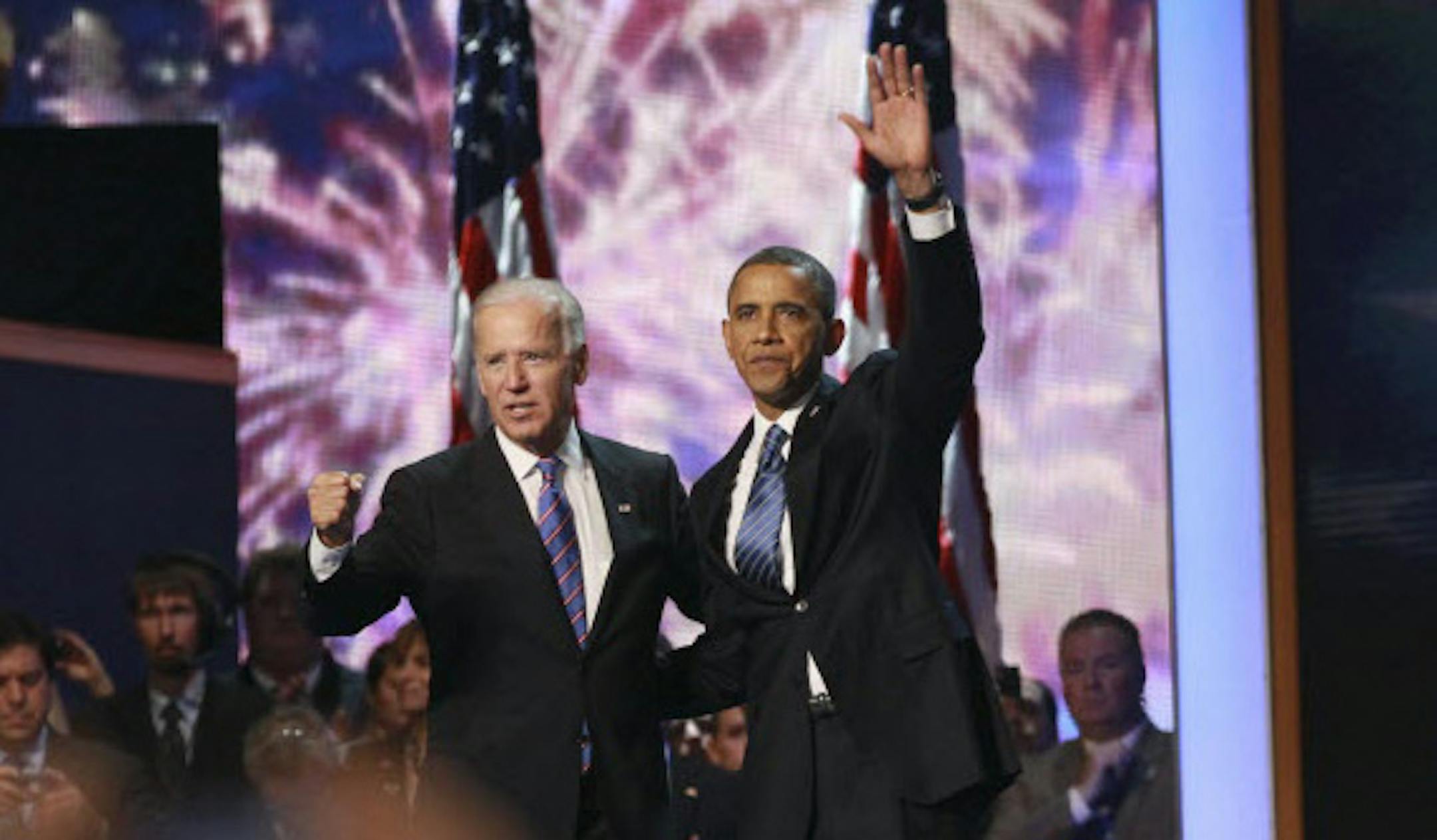
In his 2008 convention speech, Barack Obama's main challenge was rhetorical -- to frame and summarize a historical moment in which the choosing of a president could at least partially overcome the most enduring divisions of a nation.
He failed, and failed in a revealing way. Obama's Denver speech could have been delivered by any generic, partisan Democrat on any day of the last few decades. It was remarkable for its conventionality. In retrospect, it should have raised a question: Was Obamaism a great ideological movement or a great campaign poster?
Obama's 2012 convention speech also failed, revealingly. As literature, it managed to be simultaneously lofty and pedestrian. America faces a "choice between two different paths" and the rules must be the same "from Main Street to Wall Street" and we're "moving forward, America."
There were some nice sentiments on citizenship and community. But by the end of the speech, no boiler lacked a plate.
It was said of Bernard Baruch's rhetorical style, "Even a platitude dropped from a sufficiently great height can sound like a brick." In Charlotte, Obama dropped such bricks instead of balloons.
This year, however, Obama's test was not primarily rhetorical. There were no historical spirits in need of summoning, no national sins requiring absolution. A mediocre speech would have sufficed, if it had explained to Americans why they should remain hopeful during an anemic recovery and then provided a compelling rationale for a second Obama term. set for himself one prerequisite to win re-election -- what might be called the "one-term proposition" test. Soon after his inauguration, he said of economic recovery: "If I don't have this done in three years, then there's going to be a one-term proposition." This was a perfectly reasonable expectation, which Obama must now erase.
Our current economic recovery, by any measure, is pathetic. Under Obama, America pursued the most aggressive fiscal and monetary policy easing ... ever. Yet we have seen the worst performance of GDP and employment following any postwar recession. Real household incomes have fallen faster in the recovery than in the recession itself.
The most recent jobs report reveals an economy that only reduces the unemployment rate through despair, as Americans drop out of the labor force entirely. The civilian labor participation rate stands at 63.5 percent -- a 30-year low.


