

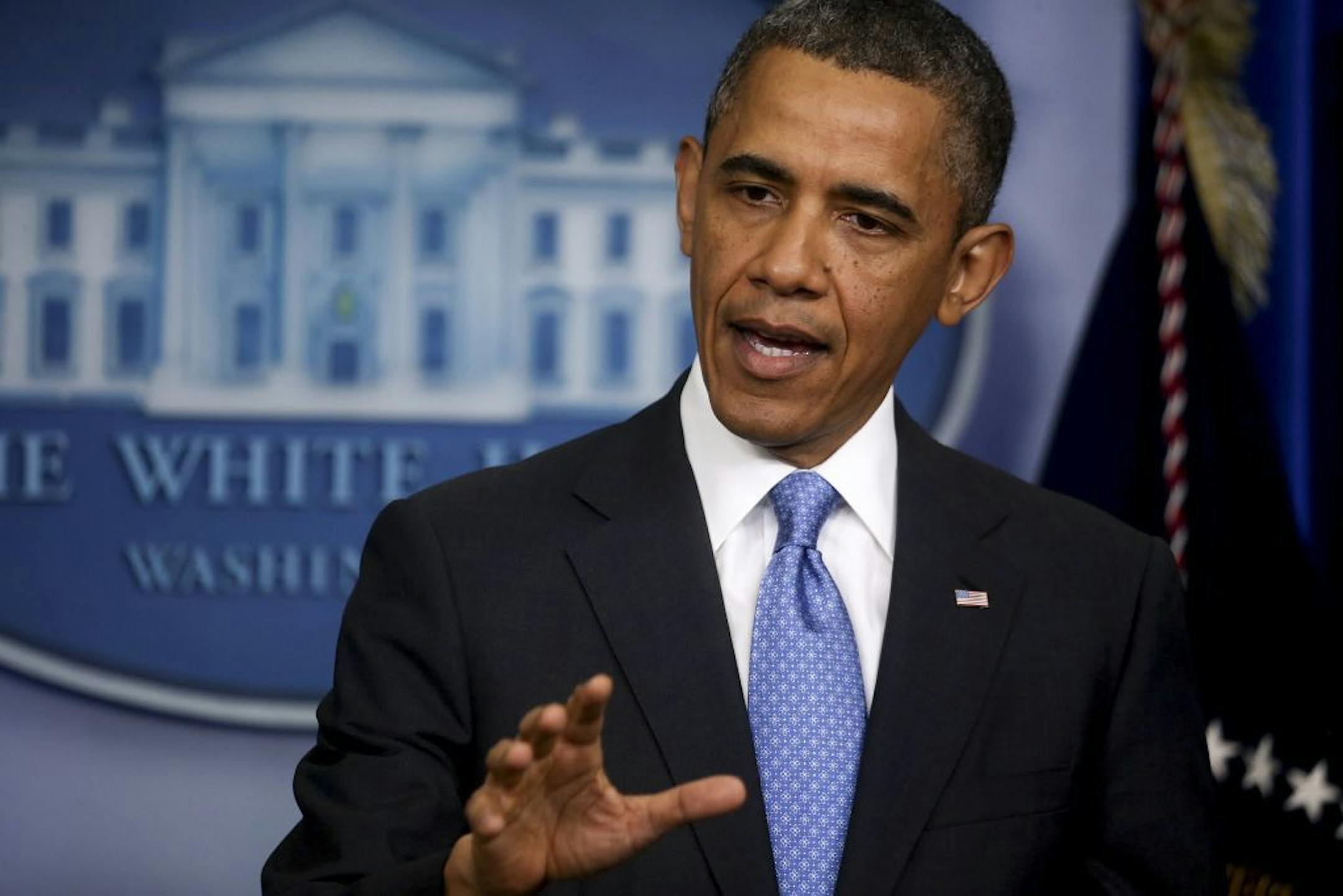
Well, that didn't take long.
Four months into a fresh four years, President Obama is already assuming the familiar crouch of a scandal-struck second-termer.
British Prime Minister David Cameron was visiting the White House on Monday morning, and the two leaders were scheduled to hold a news conference. By custom, the leaders field two questions per side from the British and American media, and sometimes many more, if the leaders are feeling expansive.
This time, White House officials said there would be only one question per side.
The motive was obvious, and counterproductive. Obvious, because Obama was trying to avoid an extended grilling on the two scandals of the moment: the IRS' targeting of conservative groups and the "talking points" following the attack on a U.S. diplomatic outpost in Benghazi, Libya. Counterproductive, because he was violating the cardinal rule of scandal management: Get it out quickly.
Obama assigned the role of sole questioner to the Associated Press' Julie Pace, who valiantly attempted to cram in three questions about the IRS and two about Benghazi.
But the one-questioner rule still achieved its purpose, because it allowed Obama to make unchallenged statements about the IRS and the talking points. There wasn't another American questioner, so he had no risk of a follow-up.
On the IRS, he portrayed himself as an innocent bystander: "I first learned about it from the same news reports that I think most people learned about this, I think it was on Friday." He proclaimed his distance: "The IRS as an independent agency requires absolute integrity." He argued against a rush to judgment: "The I.G. is conducting its investigation, and you know I am not going to comment on their specific findings prematurely."


