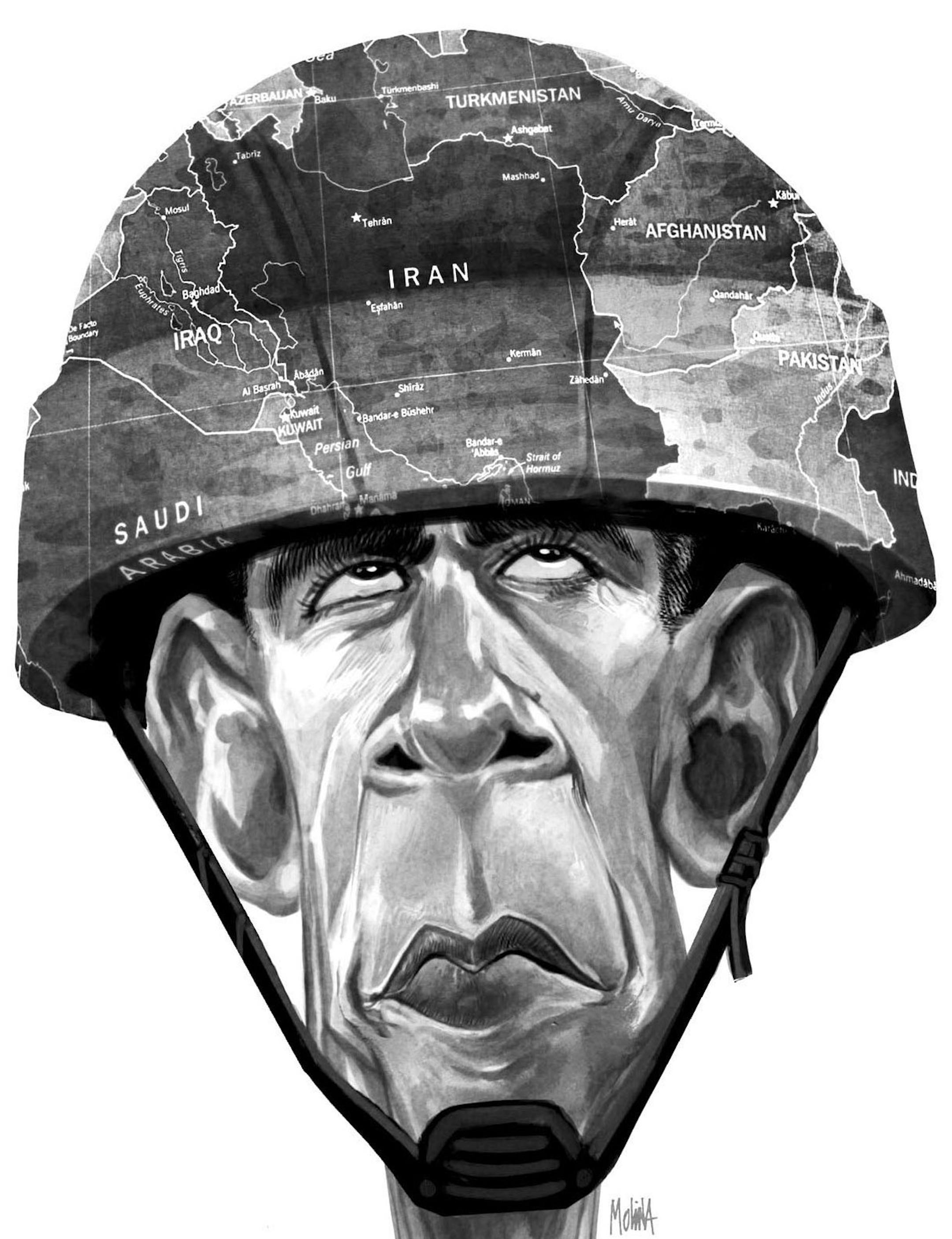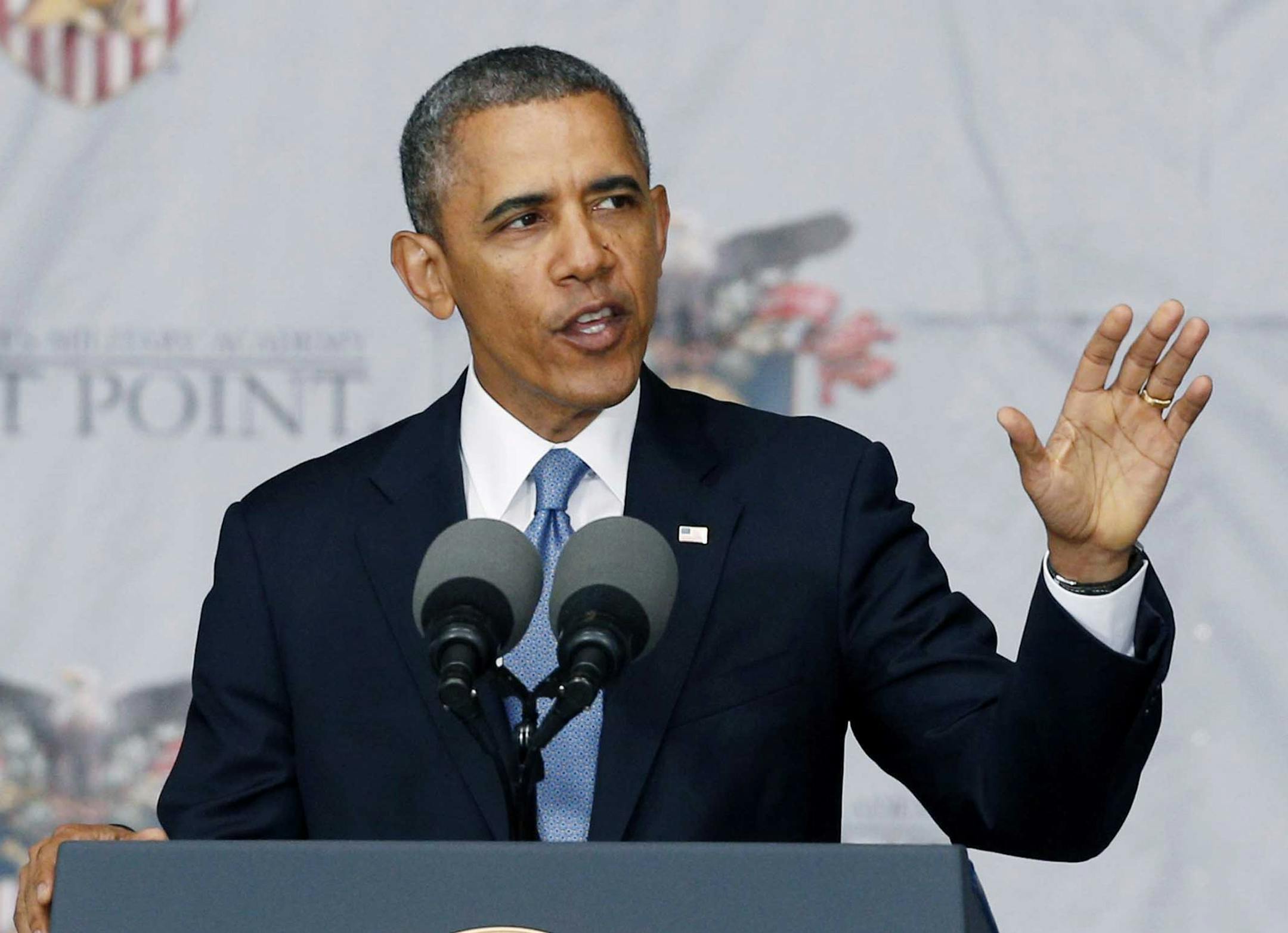
Returning to West Point, the site of his famous "Hello, I Must Be Going" Afghanistan speech in 2009 — when he broke new ground in foreign policy schizophrenia by announcing both our escalation and our withdrawal from that benighted country in the same set of remarks — the president sought this week to present his foreign policy vision in what the White House billed as a major address.
To borrow from the baseball metaphor the president offered up on his Asia trip when he spoke of a foreign policy made up of singles and doubles rather than home runs, this speech was a dribbler into the glove of the first baseman. It provided neither reassurance to allies nor anything remotely like a foreign policy vision.
The president wants to find a new low-cost, low-risk path to American leadership — a Wal-Mart foreign policy. He wants to lead. He asserted our exceptionalism. He asserted our indispensability. But most of the speech was a reiteration of the reasons he has already offered up for not taking action or not taking much action or not taking effective action in the past.
David Rothkopf, Foreign Policy
Obama's speech could be called a tribute to common sense, except that the sense it made is so uncommon.
The president's main point was to emphasize that not every problem has a military solution. He drew one other distinction. On the one hand, there are "core interests" — direct threats to America and its allies — that we would absolutely defend with military force, "unilaterally if necessary." On the other hand, there are crises that may "stir our conscience or push the world in a more dangerous direction" but that don't threaten our core interests. In those cases, "the threshold for military action must be higher."
This should seem obvious. The problem is, it isn't to the endless stream of politicians, pundits and Sunday talk-show mavens who routinely denounce Obama as the weakest president in American history without knowing anything about history or — most of them — unveiling the slightest hint of what they would do in his place.
It's a fair bet that the most propelling motive behind this speech was sheer exasperation. But Obama listed several things he did do, and they undoubtedly had an effect. Sanctions isolated Russia; reinforcements to Eastern European NATO members shored up their confidence. And as a result of all this, the Ukrainians elected a new president who seems capable of bridging the West and the East, and the prospects of a violent East-West confrontation have receded. Obama said that all this happened "because of American leadership ... without us firing a shot" — a boast that's hard to dispute.