

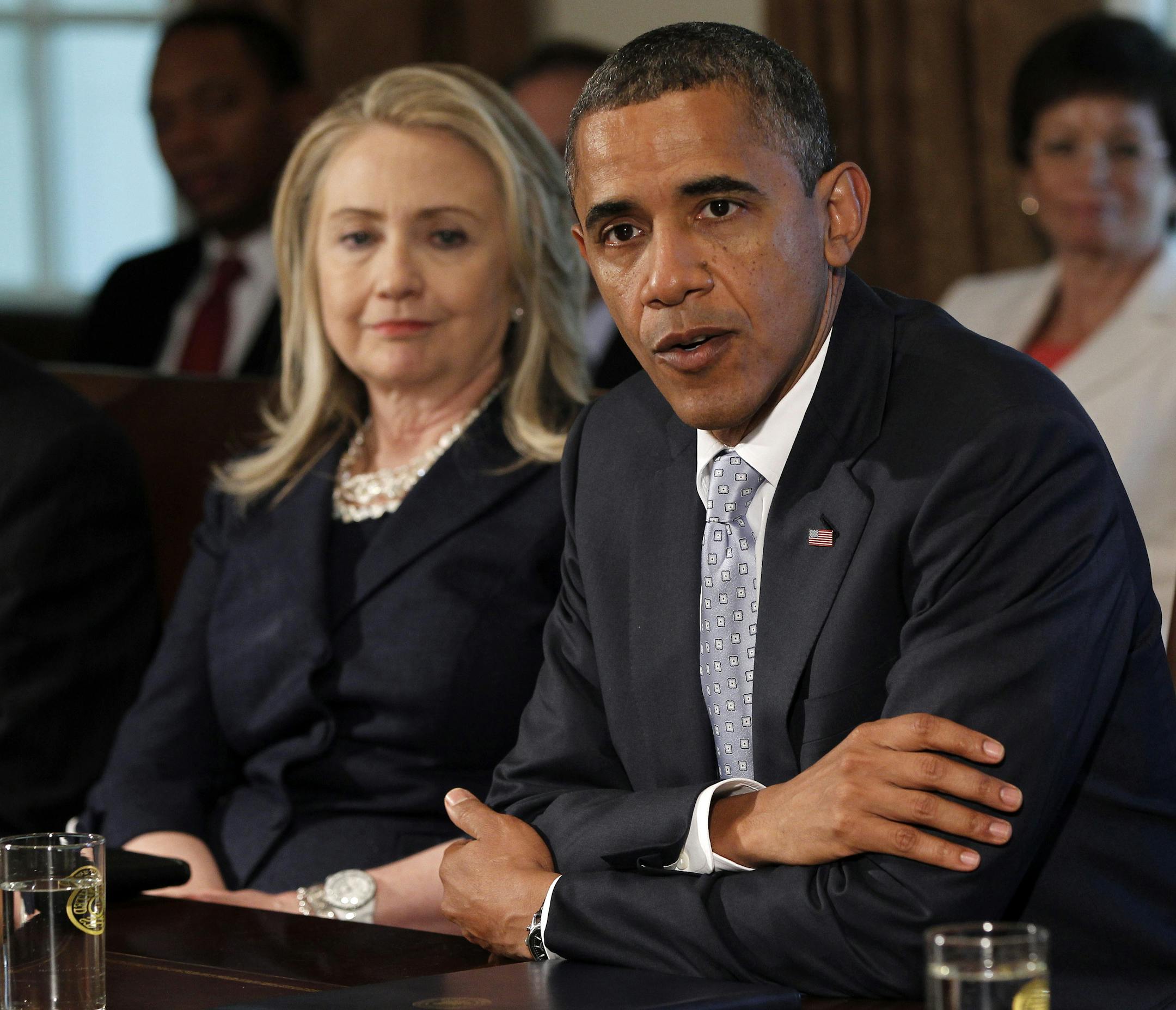
Although President Barack Obama is taking the credit for Wednesday's historic deal to reverse decades of U.S. policy toward Cuba, when Hillary Clinton was secretary of state, she was the main architect of the new policy and pushed far harder for a deal than the Obama White House.
From 2009 until her departure in early 2013, Clinton and her top aides took the lead on the sometimes public, often private interactions with the Cuban government. According to current and former White House and State Department officials and several Cuba policy experts who were involved in the discussions, Clinton was also the top advocate inside the government for ending travel and trade restrictions on Cuba and reversing 50 years of U.S. policy to isolate the Communist island nation. Repeatedly, she pressed the White House to move faster and faced opposition from cautious high-ranking White House officials.
After Obama announced the deal Wednesday, which included the release of aid contractor Alan Gross, Clinton issued a supportive statement distributed by the National Security Council press team. "As Secretary of State, I pushed for his release, stayed in touch with Alan's wife Judy and their daughters, and called for a new direction in Cuba," she said. "Despite good intentions, our decades-long policy of isolation has only strengthened the Castro regime's grip on power."
Yet Clinton played down her own role in the issue, which will surely become important if she decides to run for president. Top prospective Republican candidates, including Jeb Bush, Ted Cruz and Marco Rubio have all come out against the president's policy shift.
Clinton's advocacy on behalf of opening a new relationship with Cuba began almost as soon as she came into office. Obama had campaigned on a promise to engage enemies, but the White House initially was slow to make good on that pledge, and on the Cuba front enacted only a modest relaxation of travel rules. From the start, Clinton pushed to hold Obama to his promise with regard to Cuba.
"Hillary Clinton played a very large role," said Steve Clemons, a senior fellow at the New America Foundation who advocated for changes to U.S.-Cuba policy. "The president, when he ran for office and when he came in, thought that doing something on Cuba front would be smart. But as soon as he got into office, though, every other priority hit him."
Obama first met Cuban President Raoul Castro in April 2009 at the Summit of the Americas in Trinidad and Tobago and announced he wanted to discuss changes in U.S. policy toward the Havana government. But the president faced criticism when he got back to Washington, also because he had shaken hands with then- Venezuelan dictator Hugo Chavez.
"After that experience at the Summit of the Americas, the White House feet had been burned, they basically didn't do much. The National Security Council didn't do anything, but the State Department continued to try hard," Clemons said.


