

The foreign-policy maxim that "nations have no permanent friends or allies; they only have permanent interests" has never seemed more true than in the case of U.S.-Yemen relations.
After a marriage of convenience sustained by Yemen's willingness to work with America to fight extremists -- mainly Al-Qaida on the Arabian Peninsula -- the Obama administration reportedly has decided that it can no longer back America's onetime ally, President Ali Abdullah Saleh.
Saleh was useful to successive administrations because his government had just enough of a will and capacity to combat terrorists behind attacks within Yemen, as well as against America, including the bombing of the USS Cole and the attempted 2009 Christmas Day airline bombing.
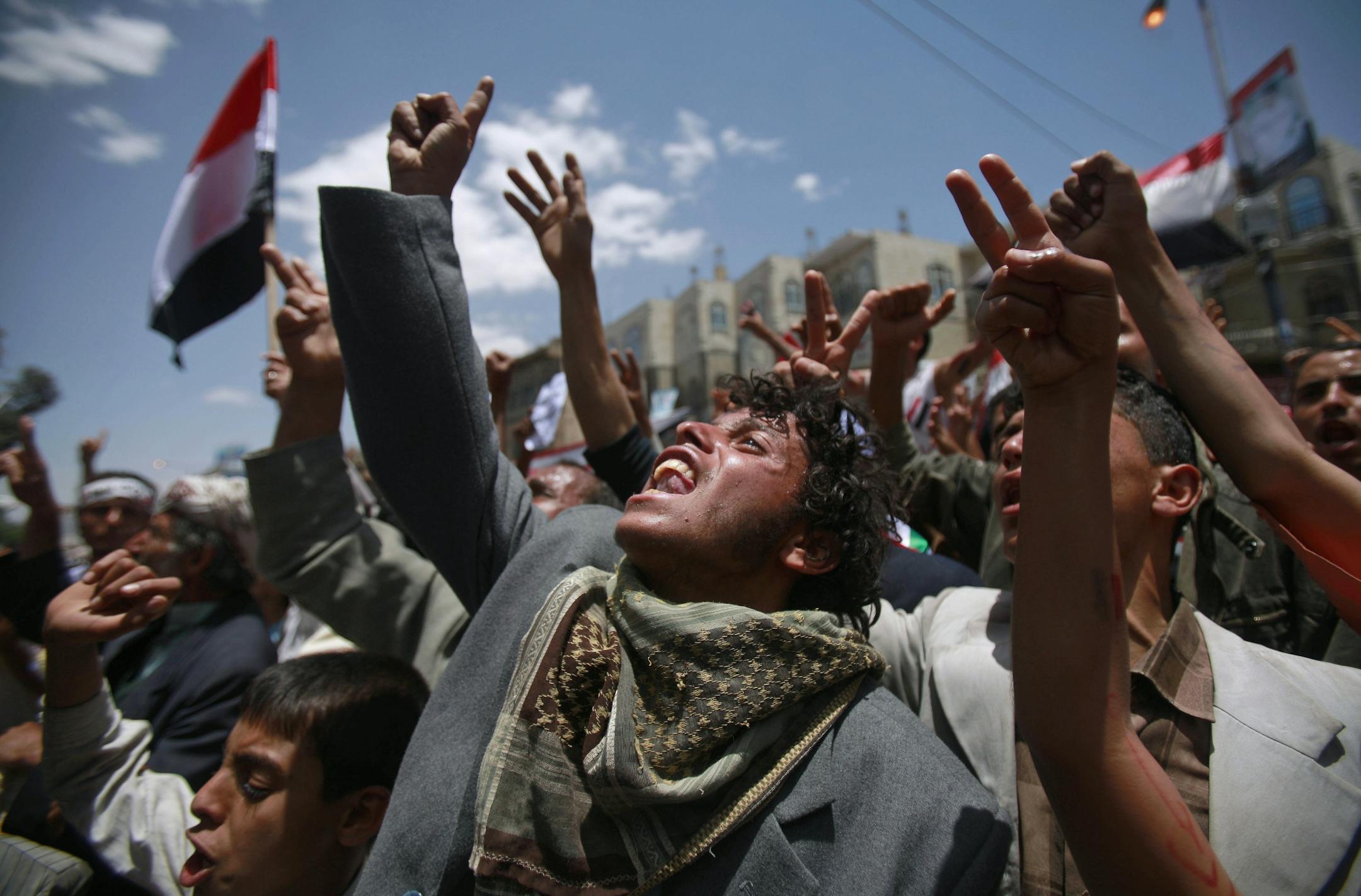
But now Saleh's ability to take the fight to Al-Qaida has been compromised because he is fighting protesters who think his near-33-year reign should end.
Since January, thousands have taken to the streets of Sanaa, the capital, as well as other cities. The images are reminiscent of the relatively peaceful protests that led to regime change in Egypt and Tunisia, but Saleh's response has been more similar to those in Bahrain and Libya, where repressive rulers were able to get security services to kill their fellow citizens.
In Yemen, an estimated 125 lives have been lost, including 24 in 24 hours earlier this week. The bloodshed has brought a stern rebuke from the United States, United Nations, European Union, Britain and Italy.
Now the Gulf Cooperation Council reportedly has offered to mediate a solution, which is a welcome development. But the only real solution is Saleh's leaving office.
The lethal backlash has ended any last legitimacy he could claim. He has basically acknowledged as much, first by promising not to run for reelection when his term expires, and more recently by offering to step down at the end of this year (an offer on which he may renege).


