

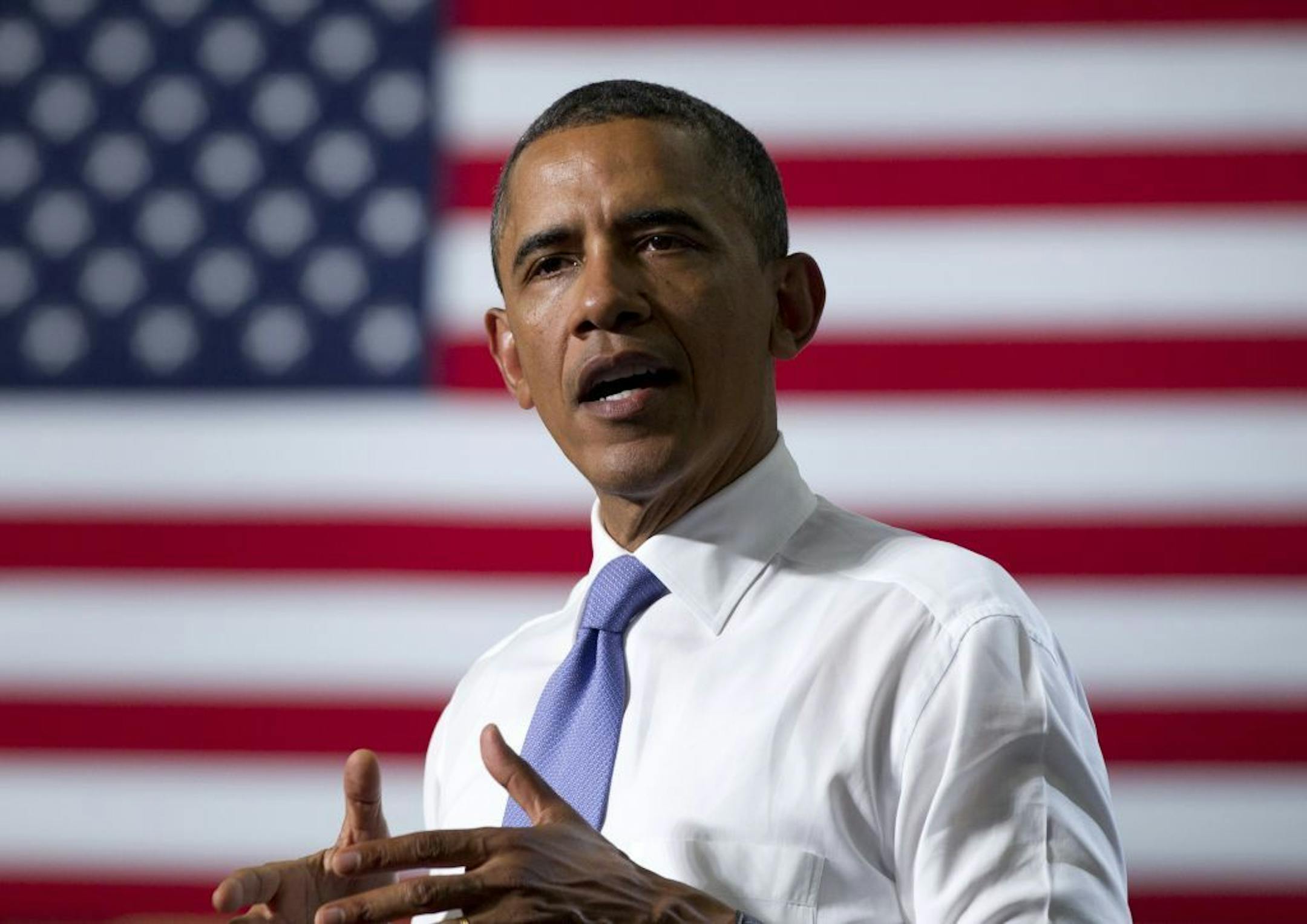
The controversy surrounding President Obama's admonishment that "if you've got a business -- you didn't build that. Somebody else made that happen" has defied the usual election-year pattern.
Normally a political faux pas lasts little more than a news cycle. Weeks later, Obama's comment is still a big deal.
Although supporters pooh-pooh the controversy, claiming the statement has been taken out of context and that he was referring only to public infrastructure, the full video isn't reassuring. Whatever the meaning of "that" was, the president on the whole was clearly trying to take business owners down a peg, dissing their accomplishments.
As my Bloomberg View colleague Josh Barro has written, "You don't have to make over $250,000 a year to be annoyed when the president mocks people for taking credit for their achievements."
The president's sermon struck a nerve in part because it marked a sharp departure from the traditional Democratic criticism of financiers and big corporations, instead hectoring the people who own dry cleaners and nail salons, car repair shops and restaurants -- Main Street, not Wall Street. The president didn't simply argue for higher taxes as a measure of fiscal responsibility or egalitarian fairness. He went after bourgeois dignity.
"Bourgeois Dignity" is both the title of a recent book by the economic historian Deirdre N. McCloskey and, she argues, the attitude that accounts for the biggest story in economic history: the explosion of growth that took northern Europeans and eventually the world from living on about $3 a day, give or take a dollar or two (in today's buying power), to the current global average of $30 -- and much higher in developed nations.
That change, she argues, is way too big to be explained by normal economic behavior, however rational, disciplined or efficient. Hence the book's subtitle: "Why Economics Can't Explain the Modern World."
McCloskey's explanation is that people changed the way they thought, wrote and spoke about economic activity. "In the eighteenth and nineteenth centuries," she writes, "a great shift occurred in what Alexis de Tocqueville called habits of the mind' -- or, more exactly, habits of the lip. People stopped sneering at market innovativeness and other bourgeois virtues." As attitudes changed, so did behavior, leading to more than two centuries of constant innovation and rising living standards.


