

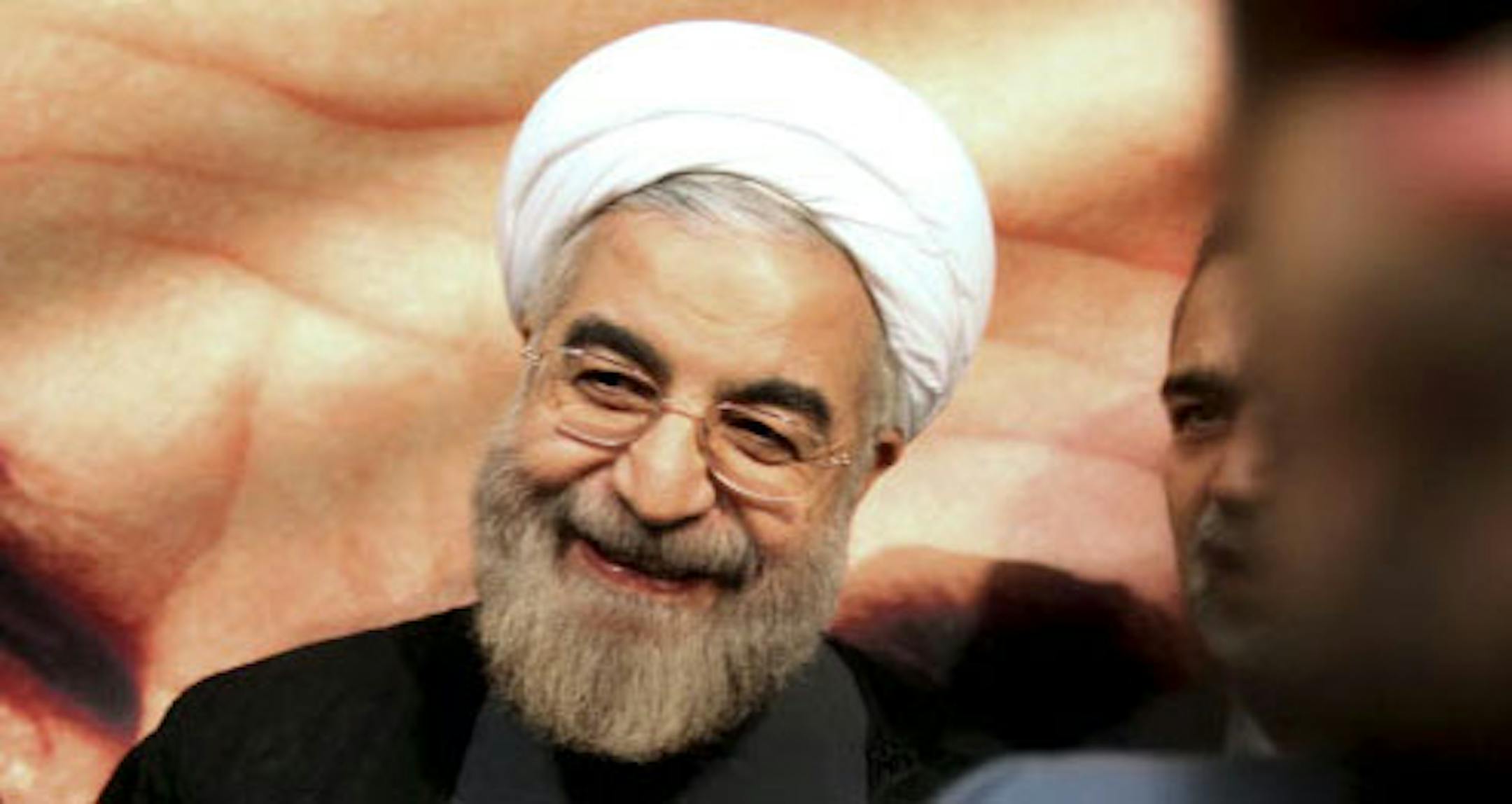
WASHINGTON – President Obama's top foreign policy aides said Sunday that they planned to press Iran's newly elected president to resume the negotiations over his country's nuclear program that derailed in the spring.
But while the election of the new president, Hassan Rowhani, a former nuclear negotiator who is considered a moderate compared with the other candidates, was greeted by some administration officials as the best of all likely outcomes, they said it did not change the fact that only the country's supreme leader, Ayatollah Ali Khamenei, would make the final decision about any concessions to the West.
Even so, they said they wanted to test Rowhani quickly, noting that although he argued for a moderate tone in dealing with the United States and its allies when he was a negotiator, he also boasted in 2006 that Iran had used a previous suspension of nuclear enrichment to make major strides in building its nuclear infrastructure.
On the CBS program "Face the Nation" Sunday, Denis McDonough, Obama's chief of staff, said of Rowhani's election over the weekend: "I see it as a potentially hopeful sign. I think the question for us now is: If he is interested in, as he has said in his campaign events, mending his relations — Iran's relations with the rest of the world — there's an opportunity to do that." But McDonough said doing so would require Iran "to come clean on this illicit nuclear program."
Another senior administration official, speaking on the condition of anonymity, noted that for Rowhani, "wanting to end Iran's isolation is different from agreeing to move the nuclear program to a place where it would take them years to build a weapon."
Iran strategists critical of Obama
Many of the leading strategists on Iran from Obama's first term have become increasingly critical of the president's handling of the issue this year. Early optimism that Iranian negotiators were ready to discuss the outlines of a deal — one that would have frozen the most immediately worrisome elements of the country's nuclear program in return for an acknowledgment of the country's right to enrich uranium under a highly obtrusive inspection regime — faded in April, when the talks collapsed.
But Obama chose, after some internal debate, not to allow the breakdown in talks to become a crisis, partly because he was immersed in the debate over U.S. intervention in the Syrian civil war.
"There were a lot of distractions," said one former senior official who remains involved in the internal debates.


