
NYC subway tragedy a symptom of social breakdown

This breakdown puts passengers in tense situations where the proper course of action isn't clear.

The New York Times
May 15, 2023 at 10:30PM
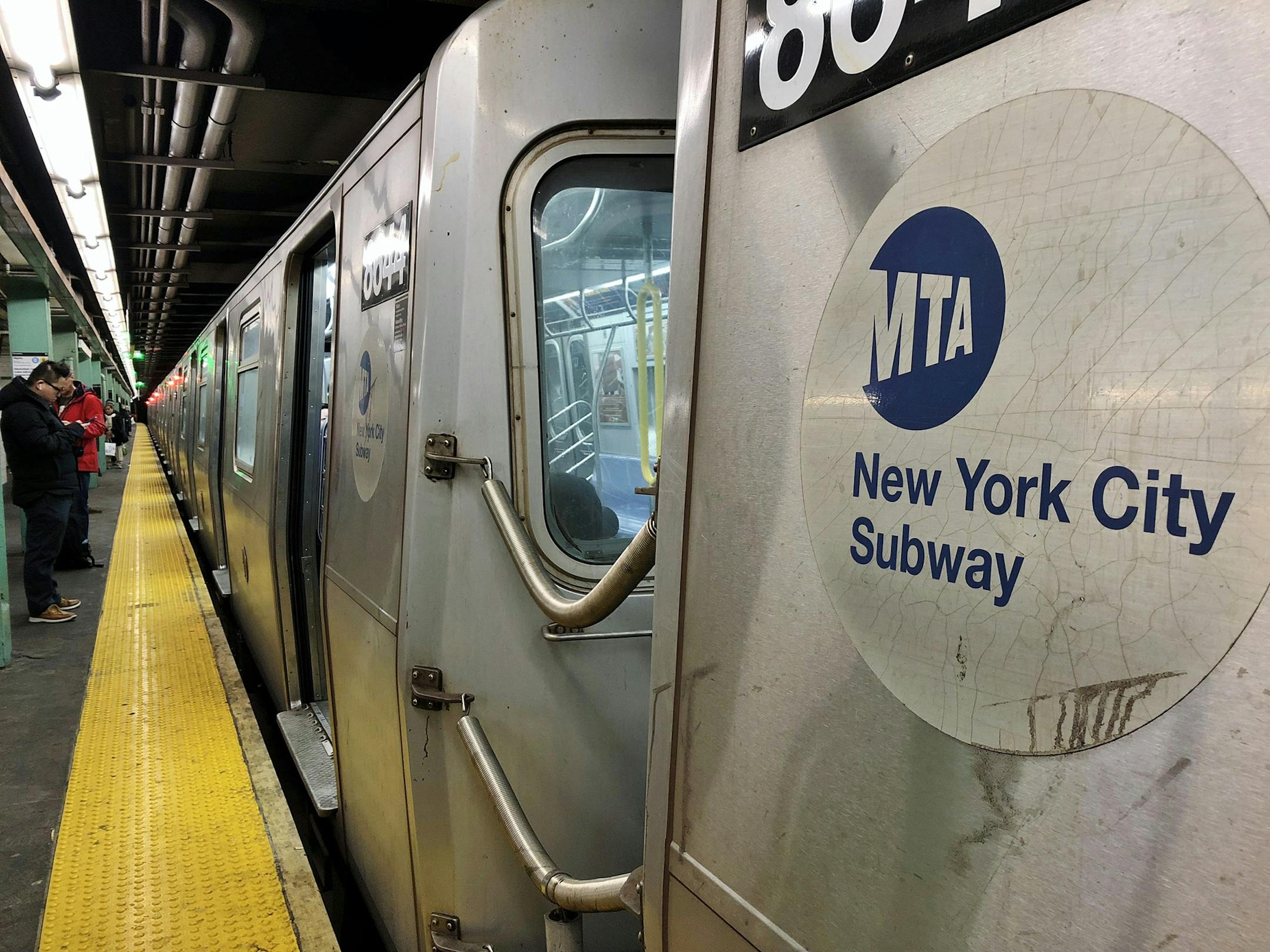
A subway train waits in New York City. (Dreamstime/TNS) ORG XMIT: 72348622W (Dreamstime, TNS - TNS/The Minnesota Star Tribune)

Opinion editor's note: Star Tribune Opinion publishes a mix of national and local commentaries online and in print each day. To contribute, click here.

•••

Civil society cannot exist when the rule of law fails, and that includes on the nation's streets and public transit systems. The rule of law has to apply to the most and least powerful citizens, or we will create a culture of impunity that can disrupt daily lives and, ultimately, dangerously destabilize communities.

That's why it's important to pay attention to the tragedy of Jordan Neely — and to the man who killed him with a chokehold on a New York City subway train on May 1, Daniel Penny. The rule of law is failing on New York's subways. In this case, Neely was obviously the principal victim of this failure.

But he was not the only one.

The statistics are sobering. In 2022, subway crime rose by 30% from the year before. In February, the Times reported that while subway ridership was rebounding since the pandemic began, many women were "reluctant to return." The first sentence of the story states the problem clearly: "Many women riding New York's subway have stories of being leered at or harassed and have become used to raising their guard on public transit."

And while recent public safety efforts have had promising early results, it's far too early to declare that law and order are truly making a comeback in the subway.

Behind every statistic is an individual case, and it's not hard to see how the law failed Neely. He had been arrested more than three dozen times, largely for minor transgressions, though in four cases for punching people, twice in the subway. He was on a list maintained by the city of the 50 homeless people in greatest need of urgent assistance.

Most notably, in November 2021, Neely punched and seriously injured a 67-year-old woman as she exited the subway. An assault of that kind is profoundly dangerous, and any person who commits such an act should face meaningful consequences.

Neely spent 15 months in jail while the case awaited resolution, but ultimately he was not sentenced to prison. Instead he was told to report to a treatment facility, where he was to remain for 15 months and stay drug-free. He left after 13 days. A warrant was issued for his arrest, but in spite of subsequent encounters with outreach workers, and at least one with the police, he was not taken back into custody.

Think of the many failures that put Neely on the train that day. Treatment efforts were inadequate. The sentence for his unprovoked assault did not match the severity of the crime — and, in any case, it was not enforced. When he walked away from the facility, police failed to arrest him again.

One can both be troubled by the problems of mass incarceration and also recognize that just sentences for violent crimes should remove the perpetrators from the streets for substantial periods.

In short, Neely should not have been in that subway car; he should have still been in the treatment facility, or in jail. But he was on the subway, and his conduct was deeply disturbing. While reports are incomplete, Neely was reportedly aggressive and menacing toward his fellow passengers. A witness stated that he was yelling, "I don't have food, I don't have a drink, I'm fed up." He also reportedly said: "I don't mind going to jail and getting life in prison. I'm ready to die."

There is no evidence that Neely assaulted anyone, but Penny acted to restrain him anyway, placing him in a chokehold. According to a video of the incident, at least one other person helped restrain Neely by grabbing his arms. Penny held Neely until he went limp, then Neely was turned on his side in what appears to have been an effort to prevent him from choking on his saliva. After police arrived, he was taken to the hospital, where he was pronounced dead.

On Friday, 11 days after Neely's death, prosecutors charged Penny with second-degree manslaughter. To prove the charge, they will have to demonstrate beyond a reasonable doubt that Penny "recklessly" caused Neely's death. Under New York state law, a person is deemed to act recklessly when he "engages in conduct which creates or contributes to a substantial and unjustifiable risk that another person's death will occur."

The key word in that definition is "unjustifiable." That's because New York state law provides a defense of justification, which permits a person to use physical force on another when it is "necessary to defend himself, herself or a third person from what he or she reasonably believes to be the use or imminent use of unlawful physical force by such other person."

Even if some restraint was justifiable, Penny may face conviction if the restraint is deemed excessive. Thus, he has two primary points of legal peril: the initial decision to restrain Neely and the nature of the restraint itself, a prolonged chokehold.

No one should be certain of what the outcome of the case will be. There is still much we don't know, including the perceptions of other passengers on the train and the reasons Penny held Neely for so long. But one striking aspect of the public commentary surrounding Neely's death is the sheer number of people who have shared stories of their own disturbing and dangerous encounters on New York City's subways. In The New Yorker, Adam Iscoe wrote about his encounters, including watching a young man start masturbating in public. On the site UnHerd, Kat Rosenfield wrote that she was "groped, flashed or masturbated at probably two dozen times" when she lived in New York.

Viral videos of violent harassment show the cost of tolerance for public disorder. Should passengers stand by when, say, an angry man yanks the hair of a woman next to him? Or when a man assaults a gay passenger in a violent homophobic attack?

I'm a former resident of New York City and a frequent visitor. I can easily think of tense moments when I had to ask myself whether it would be more or less dangerous for me and others if I stayed in my seat. How passive should we be when unstable people act out in public, especially when police are nowhere to be found?

It's a failure of the rule of law that these questions come up so frequently. It puts passengers in tense situations where the proper course of action isn't clear. Both action and inaction have risks. What if Penny had done nothing? Would everyone — including Neely — have emerged from that subway car unscathed? We can't know for certain, and that lack of certainty creates the conditions for violence.

The best way to resolve these problems isn't through trials of those who take it upon themselves to intervene (as necessary as those trials may be), but rather through the preservation of public order by the just application of the law and the generous provision of public support. Regardless of the outcome of the case against Daniel Penny, we know this: New York City failed Jordan Neely. And it also failed the passengers on that train.

about the writer

about the writer

David French

More from Commentaries

See More
card image
card image