

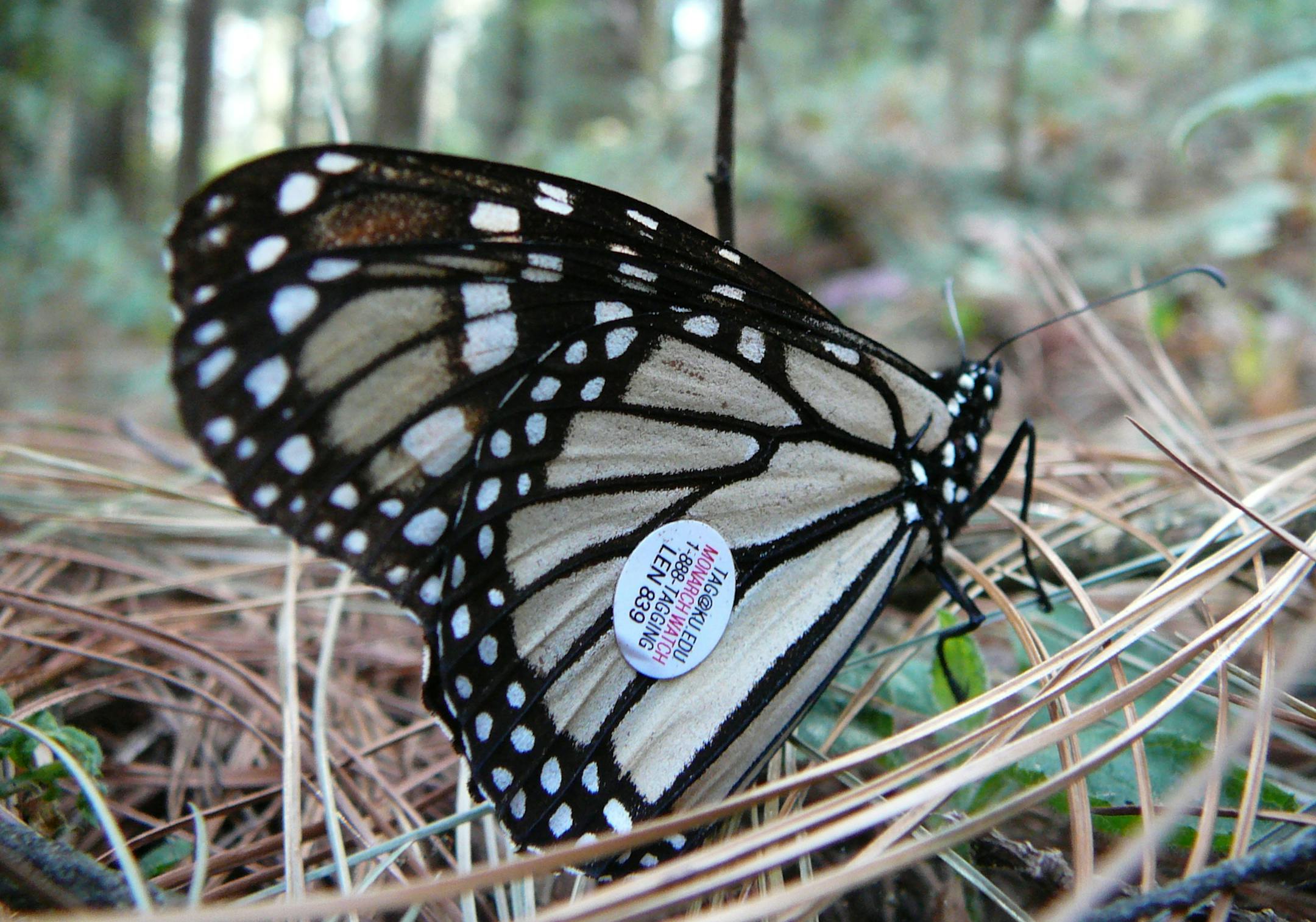
The number of monarch butterflies migrating to their winter grounds in the forests of Mexico sank to its lowest level in two decades this year, thanks to a deadly combination of drought, loss of habitat and the widespread use of agricultural herbicides that have eliminated their host plant, milkweed.
An annual survey conducted by Mexican conservation authorities and the World Wildlife Fund (WWF) found that the monarchs occupied only 3 acres of mountain forests — a 59 percent decrease from last year, the previous low. At their peak, in the winter of 1996-97, dense clouds of the gaudy orange and black butterflies covered nearly 45 acres.
"We all knew that the population was going to be very low," said Karen Oberhauser, a monarch specialist at the University of Minnesota. "But everyone was surprised — it's incredible."
The monarch, one of the most widely distributed of all butterflies and a regular guest in elementary school classrooms, is also regarded as a sentinel for the health of many other species. Its popularity and extraordinary migration to Mexico make it easier to track, but other butterflies, bees and pollinators are equally at risk, scientists say.
Officials from the WWF-Telcel Alliance and Mexico's National Commission of Protected Areas said the sudden one-year drop was due in large part to last year's drought in the Midwest, where three-fourths of the migrating monarchs forage and lay their eggs in the spring and summer months.
"Temperatures above 95 degrees can be lethal for larvae, and eggs dry out in hot, arid conditions," said Omar Vidal, head of WWF-Mexico.
But the number that make the trek to Mexico has been declining for years, regardless of weather, said Chip Taylor, an insect ecologist at the University of Kansas and the founder of Monarch Watch, a national monarch education group.
Changes in farming
Last year Oberhauser and scientists from Iowa State University tied that decline to the growing use of herbicide-resistant corn and soybeans, which make it possible for farmers to kill everything in a field except what they plant. Between 1999 and 2010, the same period in which such crops became the norm across the Midwest, the number of milkweed plants in farm fields declined by more than half, and the number of monarch eggs declined by some 81 percent, they found.


