

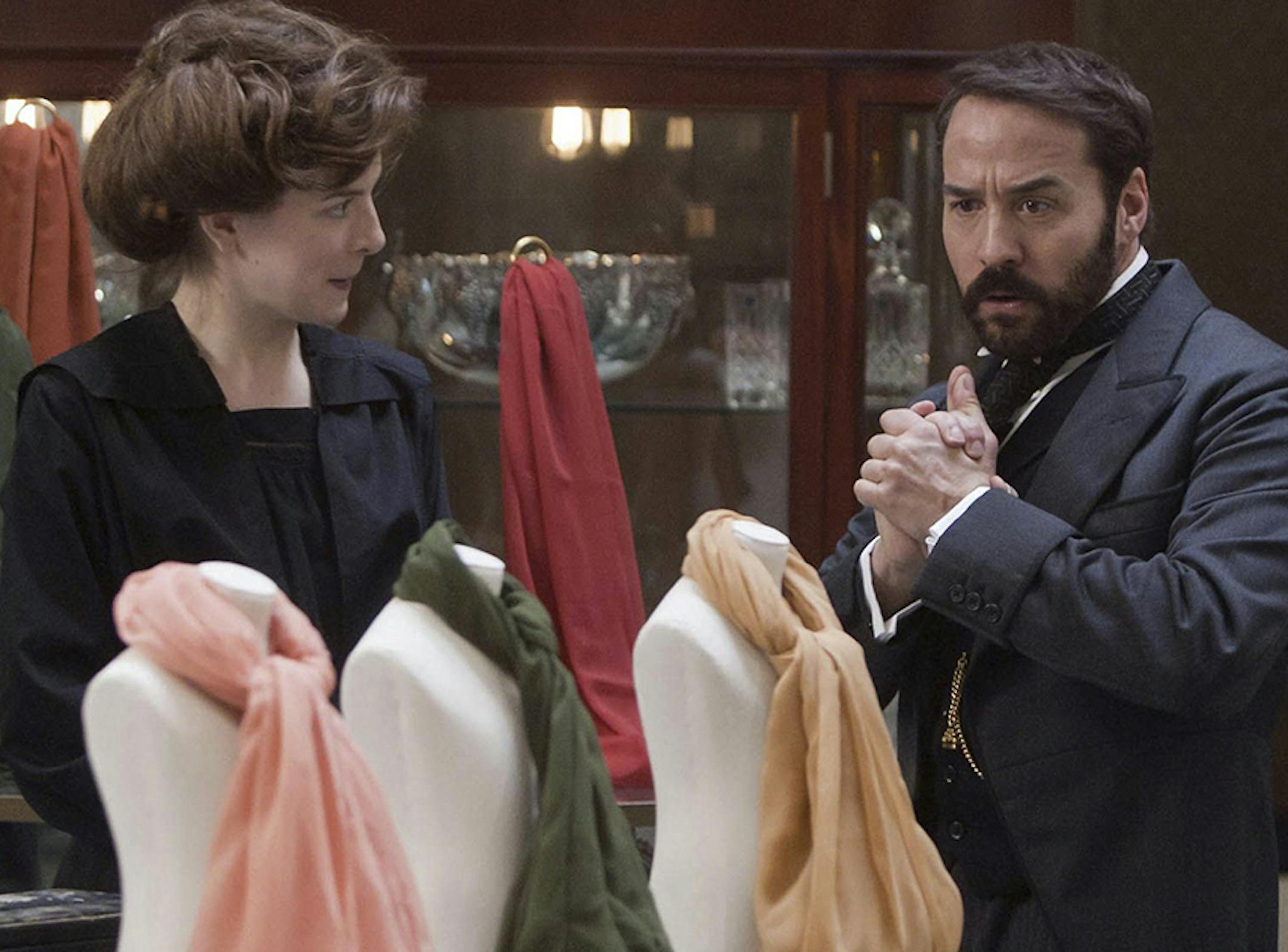
When the British drama "Mr. Selfridge" debuted on PBS last week, American viewers saw two things rarely on display in contemporary popular culture: a businessman hero and a version of commercial history that includes not just manufacturing but shopping.
The show stars Jeremy Piven as Harry Gordon Selfridge, the American-born founder of the London department store. In the first episode, he arrives in 1909, determined to shake up British retailing with techniques that made him a success as a partner at Chicago's Marshall Field's: showmanship, advertising, and displays that let customers handle merchandise. In the second, he displays perfumes and powder right by the store's front door.
Ambitions that an American drama might treat as self-centered greed become, in a British context, a bold strike against class privilege. "You show great potential," Selfridge tells the talented shop girl Agnes Towler (played by Aisling Loftus), the show's working-class heroine. "You remind me of myself when I started out — grasping for every chance, keen as mustard to learn. You love it, don't you? The customers, the selling, the feeling of the merchandise under your hands …"
A hit for ITV in Britain, which has ordered a second season set on the eve of World War I, "Mr. Selfridge" isn't the only department-store period drama hitting small screens. Its BBC competitor, "The Paradise," transplants Emile Zola's 1883 novel "The Ladies' Paradise" from a Parisian grand magasin to a midsized English city. It, too, features a self-made hero and an upwardly mobile heroine with a genius for merchandising.
Better written than "Mr. Selfridge," which also suffers from Piven's bombastic delivery, "The Paradise" benefits from a more-intriguing historical setting — the 1870s, when the idea of a department store itself was still novel. "The Paradise" will air on PBS beginning in October.
If these shows' entrepreneurial heroes are unusual, it's their focus on retailing that fills the real cultural lacuna. Not even Ayn Rand deigned to celebrate shopping.
Yet like railroads and telegraphs, the department stores of the late 19th and early 20th century were transformative institutions. They pioneered innovations ranging from installment credit to electric lighting. They brought together goods from all over the world and lit up city streets with their window displays. They significantly changed the role of women, giving them new career opportunities and respectable places to meet in public. They even invented the ladies' room.
When department stores were new, people understood that they were significant — liberating or corrupting, but obviously important. Nowadays, we treat shopping as silly stuff.


