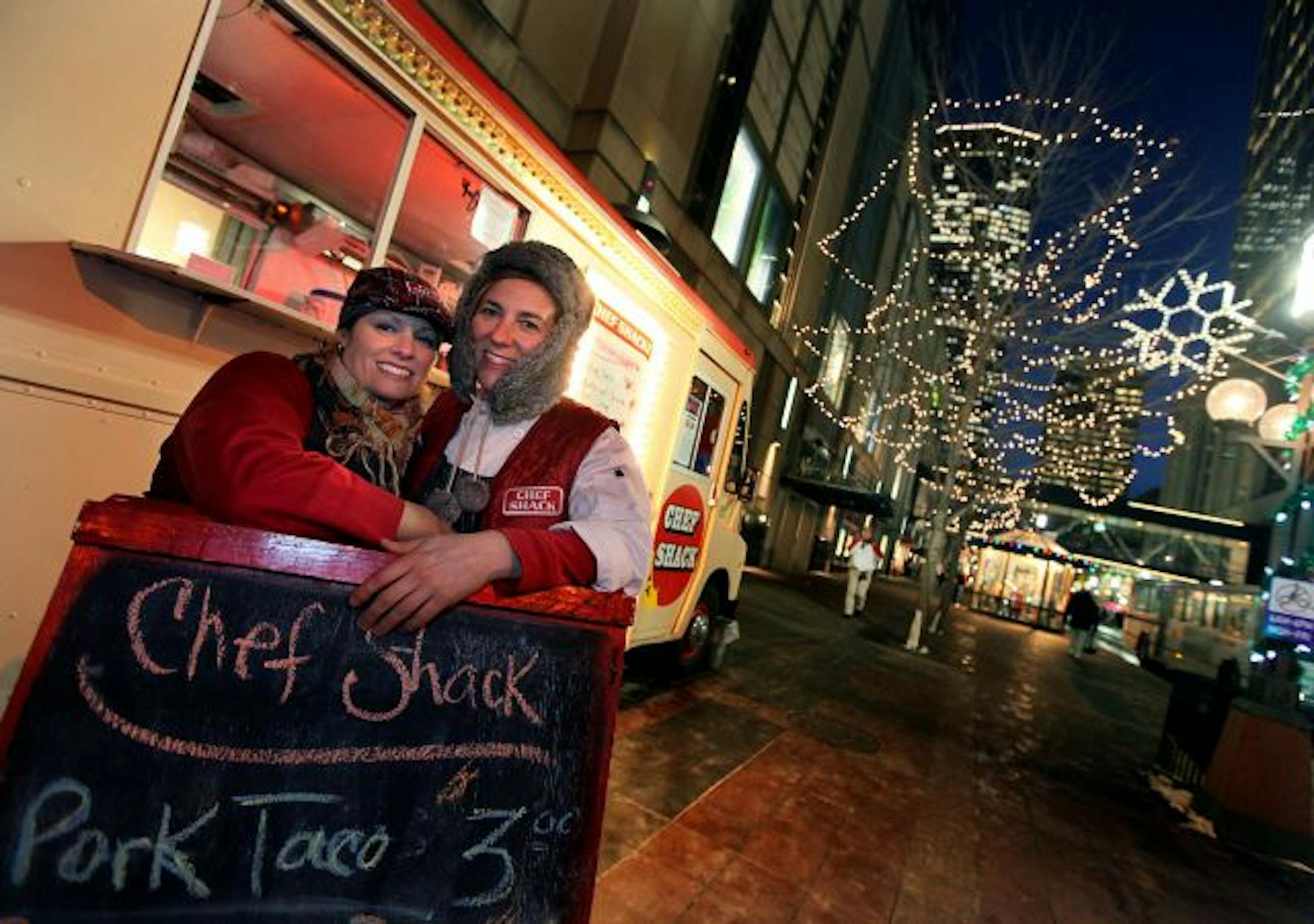
If Lisa Goodman and Doug Kress have their way, buying a chef-made taco or other portable nosh from a downtown Minneapolis street vendor is about to get a whole lot easier.
The City Council member and her staffer are leading the charge to untangle and rewrite an unruly jumble of city ordinances governing food carts. Other cities, from New York City to Austin, Texas, to Portland, are experiencing an explosion of curbside fare. But a tangle of outdated regulations and attitudes -- along with, let's face it, some less-than-cooperative weather -- has prevented the trend from taking off in the state's largest city. Goodman does not see the required changes as insurmountable.
"It's one of those it's-always-been-this-way kinds of things, coupled with the people who think that if they eat a chestnut off a street cart they're going to get salmonella," she said. "It's kind of like the people who think you can't bring a dog into a restaurant because they're dirty and evil, but service dogs are OK. That doesn't make sense, because then it's clearly not a health issue, it's an attitude issue."
Pertinent state health codes are another matter. To that end, Kress is working with the city's intergovernmental agencies to unsort and address the state code issues. "The big one that came up is that a vendor is limited to 21 days in any one spot annually," he said. "Our idea is that we want mobile units in spots where their clients will come to know they will be. If you move your location often, then you also risk losing your regular customers."
Location, location, location
Another thorn? Private-sector territorial issues. "I'm sensitive about the competition issue, but not that sensitive," said Goodman. "If you talk to most restaurant owners, they all say that more is better. Still, let's say you're a Pizza Lucé. You're paying rent and paying taxes. Do you want Rick's Pizza out on the sidewalk in front of your restaurant?" Goodman said she's leaning towards requiring cart owners to have a bricks-and-mortar location with a commercial kitchen somewhere in the city, a proposal that isn't too far out of line from existing state regulations governing licensed kitchens.
Another major issue is preserving the public right of way; carts cannot block pedestrian sidewalk traffic. Goodman doesn't think that opening up parking meters for street-parked vehicles is a viable solution, either. "We're leaning towards 'No' on that one," she said. "We don't want people making money where other people could be parking."
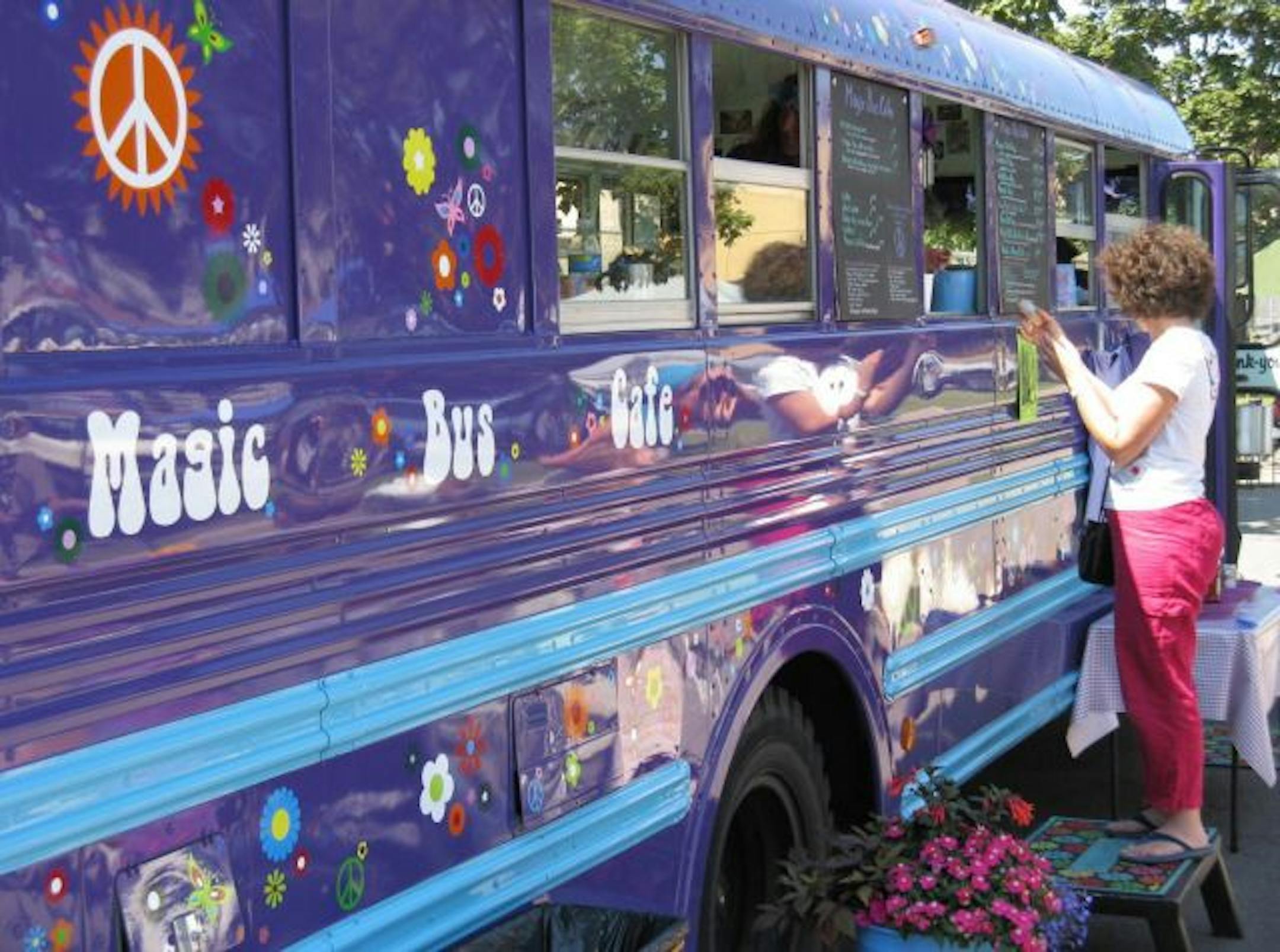
Regulating cart size and appearance is another critical matter. In the past few years, food vendor vehicles have blossomed far beyond the no-frills hot-dog push carts that have been Nicollet Mall staples in summers past. "There are cool, hyper-designed food carts in use all over the country," said Goodman. "They just have to fit within our parameters for sidewalk use."